
When Democracy Gets Too Big
Idealists and sentimentalists hearken back to early Athens as they pine for a meaningful democracy. If only it were possible, but it isn’t. There was little in the way of bureaucrats, specific departments, even career politicians. Government was run by citizens, lots of them. Of course, they were elites and protected their class with every vote, but then again, they had to serve as soldiers in times of war and as overseers of public concerns in peaceful years.
In other words, a citizen was all these things, all at once, delving in and out of numerous responsibilities. If they had a good life, it was because they had helped to create it. Democracy to them meant active responsibility transcending daily personal concerns. The idea that they could select representatives to serve for them would have been inconceivable. Most posts lasted a year in duration, but each moved through succeeding posts as part of civic responsibility. If they wanted the privileges of democracy then they had to step up, create and develop them, and ultimately, protect them.
Overall it worked. Why? Because there weren’t too many of them and each was required to serve the larger society. It was a different time, with smaller populations. As Plato saw it: “Ten men are two few for a city, and if there are 100,000, it is a city no longer.” He saw anything larger than 100,000 as unmanageable and therefore unfit as aa theatre of active governance. While true that it was all about men – something we continue to contend with some three millennia later – the focus was about citizens and their responsibilities. There were few examples of it in history.
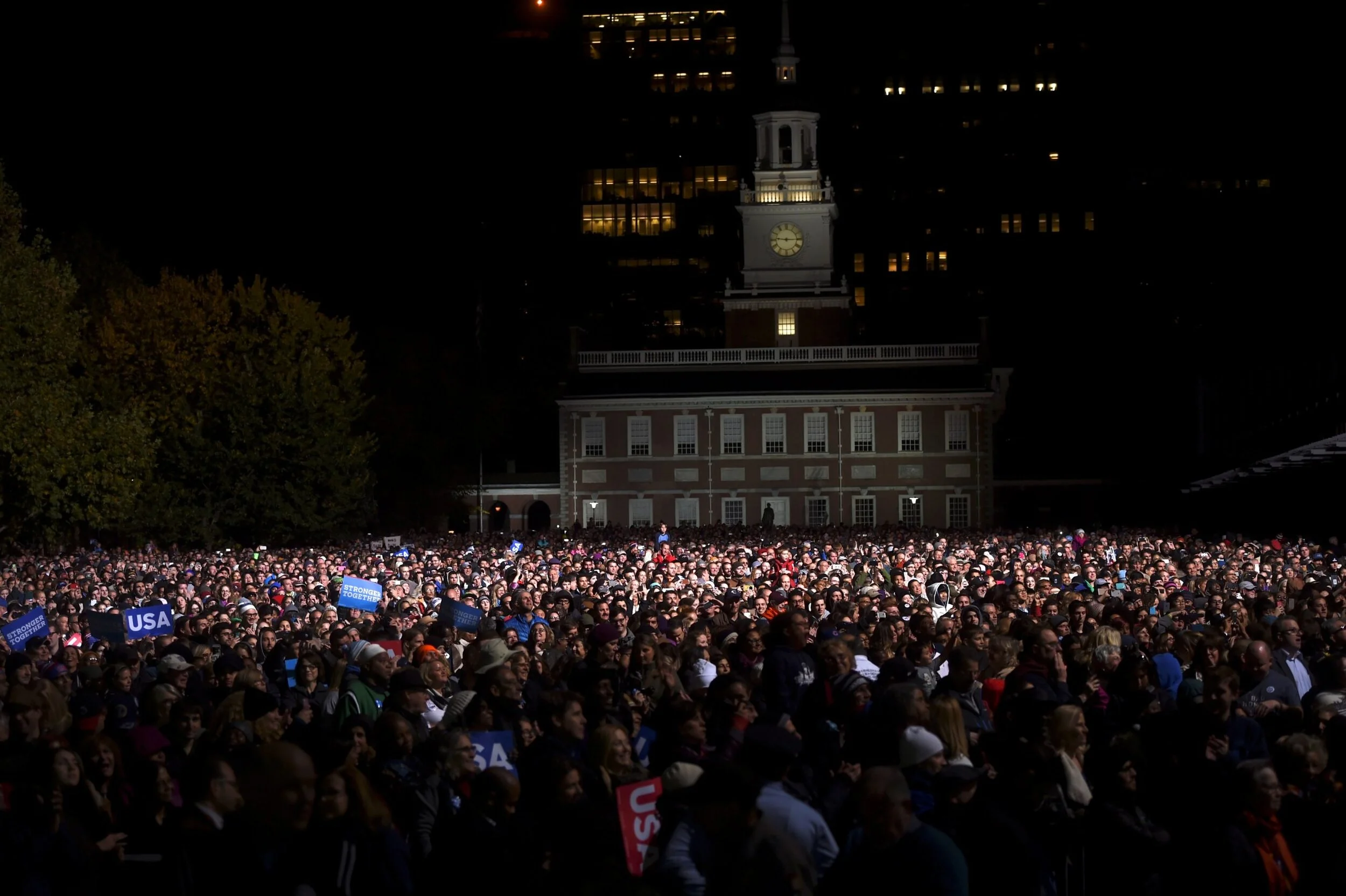
But there were some, and the founding era of American democracy is perhaps the greatest illustration of all. Only 42 Founding Fathers gathered at Philadelphia’s Independence Hall and put together what was perhaps the greatest political document humankind had seen 0 the Constitution. When they voted on its acceptance, 39 voted in favour and 3 refused. The signed document was an ode to respect, to the admission that shared beliefs should be greater than those things that divided the new nation at the time. It wasn’t about race, creed or class, but about the shared practice of freedom, accountability, local governance and supposed opportunity for all. Naturally, as men of their age and era, they overlooked those issues like slavery that would eventually challenge the very “commonality” they professed. They cited the Constitution, not just as a remarkable achievement of shared aspirations, but a belief that their fellow citizens were worthy of respect rather than acrimony, understanding as opposed to umbrage.
That was then. It’s not looking so much like that at present. The problems are easy to express, rolling off our tongues as easily as the negative reports on our favourite television channel or social media platforms. But perhaps we need to consider how a democracy, consisting of millions and millions of citizens, can possibly build the hegemony necessary to move forward as nations?
As late as 200 years ago, the majority of the global population lived in autocracies or colonial empires. But slowly democracy began to grow and move into various corners of the world, to the point that 3.25 billion people now live under democracy’s roof. How do we quantify that? The measure of human greed, aspirations, violence, compassion, nationalism, tribalism, humanitarianism and political identity are beyond anyone’s ability to capture.
The train wreck that was the first presidential debate in America last night reveals once again just how difficult democracy has become to manage. In Canada, we are more fortunate. Nevertheless, the strains and divisions are here, and the bigger we get the harder it will be to both combine and contain. As mutual respect diminishes, dysfunction will ascend, and the ability to talk through our problems will resemble more a yelling match than an exercise in debate and decency.
This is why our local communities have become so essential to our future. They break down the burgeoning, frequently chaotic, mass into sizeable chunks of possibility. Presidents, prime ministers, premiers are vital in the democratic firmament but they can no longer manage the outbreak of disengagement and turmoil. That task, given the size of our respective populations, falls on our mayors, reeves, councillors, even schoolboards and neighbourhood associations. This is not only the place where democracy is closest to the people, but where our politics themselves can be rescued.
We are in serious times, occasions that would normally bring populations within each other’s orbits, but people are seriously losing the ability to understand things from the point of view of others. Most often, we either turn away or turn on those people who hold to a different point of view.
Democracy could be better envisioned by politicians, but ultimately it will be citizens that reignite and reform it. Any politician or political party is up against it when it comes managing the huge democratic state before them. They can only succeed with the infusion of serious citizenship. We all have a part in this, something we already know. But it must be a serious part, one that puts society in general above the endless personal pursuits so many are engaged upon. We must break democracy down to its workable parts – public interests that only citizens can truly engage and understand.