
Stop Digging: The Time for Planting Has Begun
You remember what this time of year was like right, before the Coronavirus changed everything? We had got it down to something of a science – relax in the summer and build up our energies for the inevitable fall season, with its back to business and back to school pressure. There was a clear break between the two and the passage between was frequently eventful and stressful at the same time.
Now it’s all different. Some things remain familiar, but most of our routines have broken from their usual patterns and in their place, we get, well, something a little more laid back. One friend told me she remains in her pajamas, sometimes right through till the afternoon. Another, like so many of us, took up the numerous tasks of renovating and repairing his residence. Most of us spent more time with the kids, more time on the phone or Internet with loved ones and friends, and more time settling in and watching online movies and TV shows.
It’s likely that a good majority of us would now side with philosopher Søren Kierkegaard in his observation that, “Of all ridiculous things, the most ridiculous seems to me, to be busy.” Charles Buxton once said that you will never find time for anything when relentlessly busy, and that if you want time you must take it. Lots of us weren’t very good at that, but COVID-19 provided that opportunity – a gift in the midst of uncertainty.
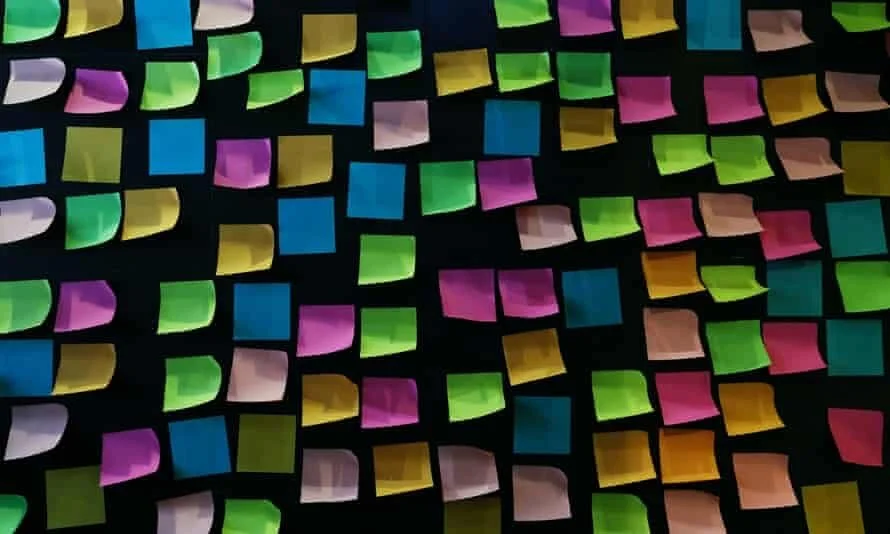
For me, things didn’t turn out that way. I still have stickies of “to do” things everywhere. A summer’s day seemed like any other day, filled with food bank pressures, projects, and endless ZOOM calls on poverty. The pandemic did that – forced the marginalized into more marginalization and community groups charged with their care had to step up to respond. It was honour to take on such challenges, but with the inability of going to the theatre, or eating out for a nice dinner, unable to travel or go to a ball game, one day just ran into the next, sometimes abruptly, and the ability to relax never materialized.
But I yearned for what we are talking about here: the opportunity to step off the endless escalator, to move over into the slower lane, and assess life from a more leisurely pace. Speed isn’t all there is in our lives; the ability to be steady enough to reflect is of more value, surely.
Truthfully, none of us expected this. We were adjusting to it all as we went along, hardly knowing what would come next. Other than certain health guidelines or government directions, none of us had a map and no one in our circle could profess any experience with this kind of thing (the last such pandemic this big was over a century ago). When it began we were confused and stressed, but over time we developed a certain rhythm as a way of dealing with it. And that rhythm was slower than anything we had experienced on a daily basis.
And the busyness? Well, for most it was held in suspended animation. When one observer on CNN noted that life wasn’t really stripped down as much as it was distilled, we got what he meant. Life wasn’t being reduced but expanded in its priorities. Other things, perhaps more meaningful things, were coming into more profound relief. Realities like family, the garden, Nature, neighbours, good conversation, dedication to the vulnerable, time to think and create, were filling our days and we felt more holistic in our outlooks and thoughts. Other realities also crept in, though, the kind we get ourselves too busy on purpose to distract us from them – loneliness, alcohol or drug dependency, the sense of alienation, depression, even suicidal thoughts.
It’s very likely that, at some point during this pandemic, we have come to grips with the fact that the life we were living only a year ago was perhaps not so great. It seemed less human and more robotic, less compassionate and more narcissistic, less real and more artificial, less about community meaning and more about elite fixation with wealth. We had fallen into the trap business guru Peter Drucker warned us about: “There is nothing so useless as doing efficiently that which should not be done at all.”
Somewhere, along the decades, we had lost the ability to stay focused on the big things that really matter. We need that concentrtion to prioritize so that the million little things in our lives don’t overcrowd and encumber us like weeds in a garden, choking out the sunlight.
We are all in this together, as they say, but we’re not all experiencing it in the same way. For some it’s liberating and for others it’s stifling. And it’s likely things will never be the same from this point forward, regardless of when a vaccine is developed and distributed. But, really, is where we were coming from something still to be desired? For most of those I have spoken to the answer is a definite no. That includes businesses and organizations, not just individuals. We are in a time of adjustment and it’s disconcerting and challenging, but it is different and that’s the point. Perhaps different can lead to a better place.
As Will Rogers once noted during the Great Depression: “If you find yourself in a hole, stop digging.” Could that be the very best advice of all – stop digging and start growing instead. The rate race is over; the time for planting has begun.