
Our Three Deaths
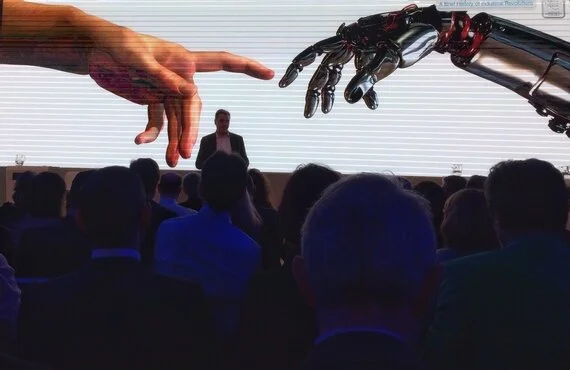
Romanian technology guru Marius Ursache points out in intriguing fashion that every person doesn’t go through just one death but three. “There is the moment you lose control of yourself, the moment the body actually passes away, and there is the last time anyone speaks your name.”
That last observation is stunning and something of a revelation and it could be the aspect that troubles people most as their time here nears its end.
In previous generations, this fear of being forgotten to memory or history was primarily reserved for large groupings of people lost in one calamity or another. “We will remember them,” is the phrase we all whisper each Remembrance Day. The individual names of such an occasion are reserved for families, but the grouping of those who tragically died in so many conflicts is recalled in nuanced and meaningful fashion.
My wife and I were in Washington not all that long ago and recalled how moved we were seeing the Vietnam Memorial for the first time years previous. On those dark granite slaps gouged into the ground are the names of the 58, 220 lost in the conflict. We watched as family members and friends located the name of the person they lost and laid flowers at the wall’s base or, with paper and pencil, traced the person’s name for posterity. But a deep aspect of emotional travail was incurred with just the view of the memorial itself. It created a vast cumulative effect, perhaps greater than the sum total of all those blessed names.
This kind of remembrance perhaps reached its most moving practice in terms of the Jewish Holocaust of the Second World War. The Jewish people formed their own ways of honouring the departed that are as haunting and moving as anything in human record – a vital part of which is the utterance of the names of those lost.
In reading Ursache’s observation this week, I realized that a generation like ours, dependent on digital technology and frequently isolated in that world, would be deeply concerned about that last of three deaths. I know some folks who must constantly refresh their social media screens to see if they have a new friend or if their tweets got read and forwarded in an effort to be relevant. I have occasionally been guilty of this myself. Their digital presence has eclipsed their physical connections. And in a time of pandemic, being isolated inevitably leads to more screen time, not less.
Understanding this need for people to be remembered, Ursache has created his own start-up that, for a subscription, will gather all your social media data and create your own personal avatar that can be left to posterity. It puts immortality back in the mainstream of possibilities – only this time the resurrected you will be your digital self, not the real one.
Yet, it’s an appealing possibility. Imagine if those who had perished in the concentration camps of World War Two had left behind avatars that friends and family could call up and reacquaint themselves with the departed all over again. In fact, “departed” would be the wrong word, since they would always be with us.
I have been thinking about this theme consistently for the past few days as I watch the Covid-19 death numbers climb around the world. The ebb and flow of those numbers entrance us, summoning our emotions on the basis of our own survival possibilities. By the time this is over, however, millions around the world will have left us – their personal presence forever gone. It will be a civilizational tragedy of major proportions and we will recall these days for the rest of our natural lives.
The problem is that these millions will eventually fall on a graph somewhere, along with images of past pandemics and it is in those graphs and charts that the victims will abide – not real but researched, not lives but lists, not personalities but points on a timeline.
We have a responsibility to do all that we can to remember those the pandemic has claimed, but it remains a difficult exercise. This isn’t the kind of war where loved ones fight and fall in battlefields somewhere else. The key soldiers in this battle are our frontline health workers, our essential services, and they live and move among us every day, because the battle lines are in our communities and not some foreign location.
But we, too, are soldiers in the great battle – not by reason of engagement but of withdrawal, of isolation, of being locked in and attempting to self-isolate. We, too, are combatants in this war and if anything, that knowledge should drive us to remember the millions just like us who fell in battle, in their hands not weapons but the hopeful fingers of loved ones to see them on to their next phase of the journey.
Our duty as this new kind of solider is to fight for those next to us and to always remember the sacrifice our fellow global citizens made. It does us no good to recall them as avatars, digital renditions of who they really were, but as human beings who lived in a time of tragedy and were eventually claimed by it. We will remember them, ultimately because they were human and one of us and just a set of numbers on a database.