
Covid-19. History Returns ... With a Twist"
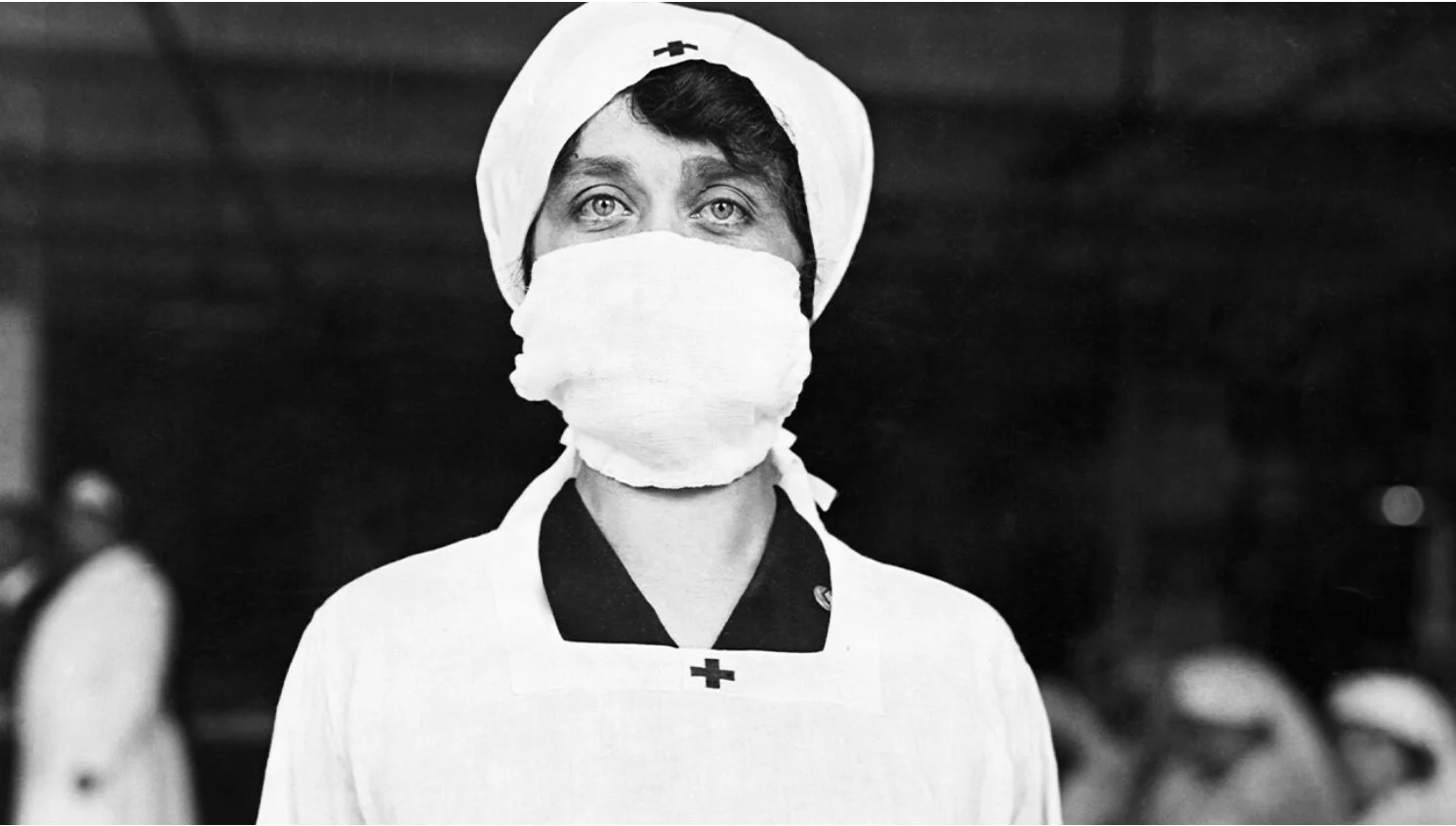
Covid-19 is bad, real bad, and we still don’t know what it’s ultimate trajectory will be. Being global in scope and effect, we nevertheless focus on our country, and others in the West, to get a gauge of the circumstances, but we really have little idea of what is about to shake down in poorer regions of the world, like Africa and remote parts of the globe.
There is a story in the history of such things if we care to read it, and it has its own warnings for us.
The 1918 Spanish flu pandemic is the worst the world has faced to date, eventually infecting one-third of the global population. Like Covid-19, it is “novel,” meaning it was new to the scene, but unlike the coronavirus, it mostly affected those under the age of 50. There were no vaccines to combat it and scientists experienced great difficulty in understanding its origins. Hygiene wasn’t as well understood then and how it was transmitted was little-known. And it’s unlikely they could have compelled people to social distance, since it coincided with the end for the First World War and millions of combatants and support personnel were in the process of heading home at the end of the conflict – carriers of a flu to all parts of the world.
SARS was recent (2002-2004) and deadly. It was a type of coronavirus that also came from China and infected respiratory systems. But its symptoms were severe from the outset, making it easier to identify and trace. Perhaps most important, it was a “weak” virus, not having the tenacity or strength to continue in the human population. This was ultimately what made it beatable and treatable.
H1N1 was a flu that, for a time, wouldn’t quit. When it emerged, there was no vaccine and it was another “novel” virus that was new to scientists and took time to understand. When it emerged only a decade ago (2009) and claimed 12,000 lives in the United States, a vaccine was quickly discovered and it became treatable and controllable.
There have been others that are becoming better known the longer Covid-19 endures without a vaccine. Here’s a brief list, in no particular order:
- Typhus – 4,000,000 deaths
- H1N1 – approximately half a million deaths
- Hong Kong flu (1968) – 1 million deaths
- Russian flu (1890) – 1 million deaths
- HIV (1981 to present) – 25 million deaths
- Black Plague (1384) – 75 million deaths
- Spanish flu (1918) – 50 – 100 million deaths
- Cholera (abiding) – 3 million deaths
- Measles (abiding) – 200 million deaths
- Smallpox (abiding) – 300 million deaths
Add all of these together and we are approaching the 1 billion death level. We’ve known about such developments, such darker sides of history, but unless one was affected by the more recent versions, we’ve mostly put them to the back of our minds.
Covid-19 is changing everything – and it’s terrifying us. What should really be worrying us, however, is the frequency with which these challenges are occurring. And in an information-savvy age, being more aware of such lethalness, the unpreparedness of nations upon the arrival of Covid-19 is worrying. There are institutions in most countries charged with gearing up the defenses against such intrusions, and yet the world seems to have been caught flat-footed. And our health systems have been stretched far too thin through the lack of proper investment in recent decades. If the secret to survival is experience, it seems as though we’re not doing very well at it. In fact, only a month or so into the pandemic, and without a vaccine, millions are urging their governments to open the economies, even knowing the dangers. Perhaps we’re not quite as intuitive as we think we are.
As a civilization, we have cooperated on so many impressive levels – knowledge, trade, travel, cultural exchanges, technology, sharing of scientific expertise, religion, political systems, peace and security initiatives – and now that we’ve encountered another global pandemic following a string of earlier warnings, one would presume we’d be prepared. But we’re not – not even close. While the scientific and research communities have overall shared their discoveries and lessons globally, that has not been repeated within the government and financial sectors.
It is time for the corporate community to acknowledge that the ultimate cost of chasing the bottom line has been the loss of consumers and their buying power. It is time for government to get back to global cooperation instead of chasing the domestic vote at the cost of everything else, including our health. And it’s time for us as citizens to invest far more in our health cards than our credit cards.
If the 1918 deadly flu pandemic teaches us anything, it is that something as serious as a global virus doesn’t come in just one stage, but numerous waves. The first, in 1918, came in the spring, but the worst arrived a few months later in the fall, taking most of the lives. We are now being told that a second wave of Covid-19 will come in the fall and has the potential of being more fatal than this first wave.
We are a species – a highly sentient one believing itself to be at the top of the evolutionary ladder – but we are woefully ill-prepared for what we are facing. If survival were to depend on knowledge alone, we’d be in the clear, but since it ultimately depends on our sacrifice and preparedness, we are in trouble. It’s time to clear the board and build better.