
"The Forest Secret" - Chapter 20
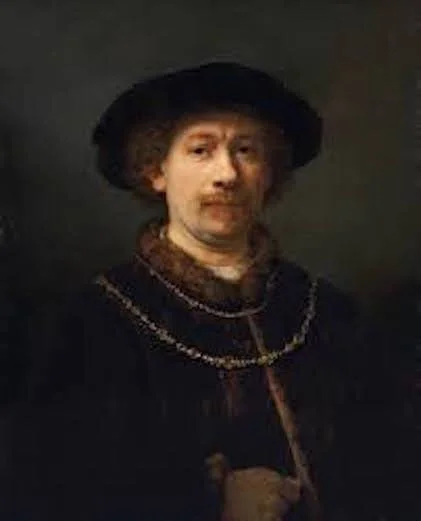
The entire group, along with the two curators, sat around the table, the Minister having asked that coffee and tea be brought in for what was clearly going to be a remarkable conversation. He looked around at the faces, as if attempting to think of what to say next.
“I am somewhat at a loss,” he began. “This painting has been one of the top objects of priceless value that the Nazis stole and it was never recovered. The conclusion of most art historians is that, since it hasn’t turned up in the last 70 years, the Angelhas been destroyed. Few even speak of it anymore. This will no doubt shake up the art world, in part because there is no direct owner of it. The family from whom it was originally stolen will be contacted and we will go from there. If there is any trouble, we will make the arrangements necessary to secure it a place in the Louvre.”
“How did this painting come about?” asked Charley. “Do we know of its background?”
Denis waited for the curators to answer but, with the trail having gone cold on the masterpiece, they had forgotten much of what they had known about it.
When they didn’t respond, he cleared his throat and said: “Rembrandt was Dutch, as you likely know. It was believed that this piece was one of his later works - say around 1660. We have some assurance of that date because of the facial features of Titus. There were other portraits of him by his father, and this looks like one of the later ones. With only a grainy black and white photograph to go on since the war, it was difficult to discern some of the finer features in the piece.”
Denis drank some of his coffee while providing a moment for the curators to weigh in. When no one said anything, he continued.
“Rembrandt’s works depict a wide range of styles and subject matter, from portraits and self-portraits to landscapes, genre scenes, allegorical and historical depictions, biblical and mythological themes, as well as animal studies. His contributions to art came in a period of great wealth in his country, so there were many patrons to drive forward the art industry. But his personal life was marred by tragedy - three children died and only Titus survived. Rembrandt ran into significant debt, but he outlived Titus by a year. With no money, Rembrandt was buried in what they called a “poor grave” and no one ever knew where that was because there was no marker. After 20 years, the remains of the buried poor were taken away and destroyed. So, there is no record of anything to do with his burial.”
There was silence at the very thought of it. Even those in the room who were knowledgeable about art had not known that final fact.
“When can the painting be verified?” asked Moreau.
“Because it has been housed in protective containers for the last half-century and not exposed to sunlight and polluted air, it should only take a matter of hours with the use of our sophisticated X-ray capabilities. The signature definitely seems to be his.”
Without prompting, a number of them crept forward and examined the cursive sweep of the letters in the bottom right of the photo - something they had overlooked earlier. With the shock of the identity slowly wearing off, they spent more time scrutinizing the brush strokes, the light and shadow, the kindness in the eyes, and the transparency of the robe.
Bernard turned to face Mary, asking, “Did you ever think that the two of you helped to save such a priceless treasure?” Others turned to look at the older woman who, until this moment, had contented herself in silence and reflection.
“I knew more than most my age about art because of my father’s interest and collections. But a Rembrandt? No. There was much in the newspapers in those days of the looting of Europe by the Third Reich, but it was also a time when a number of the pieces were turning up in private art collections, many of them quite famous. So, I think Aramis and I thought this piece was just some small part of a vast stockpile of works being discovered almost monthly. Even had we examined it, other than the signature, I’m not sure we would have comprehended its value.”
“Funny, from reading through so much of his journals, one gets the impression that the world of art was something he was comfortable navigating,” observed Denis.
“He was,” she responded. “But he loved art for its effects on the human spirit, not so much because of who composed the pieces. He quoted to me once from George Bernard Shaw: ‘You use a glass mirror to see your face; you use works of art to see your soul.’ And Aramis saw his soul in many things, including the majesty of Notre Dame, which he regarded as a giant concave mirror that reflected his inner being back to him. He was unique in how he expressed such things.”
“Something that he has poignantly stated a number of times in his journal entries,” Denis added.
Bernard realized that Moreau had no idea what they were talking about. Still, the minister remained respectfully silent. Bernard then explained to him about Caron, the painting in his apartment, and how it led them to Canterbury and Mary. It was then an easy segue to their lifting it from the warehouse all those years ago and, now, the locating of the Rembrandt in the Forest.
Moreau looked at his old friend, still confused. “So, you were never after the Angel,but Caron?”
“That’s right,” Bernard answered. “It just so happens that the love between Aramis and Mary happened to coincide with the Rembrandt in ways we could never have determined … or discovered.”
“Mystère,my friend. It is amystère,” Moreau said softly while shaking his head.
“And now we have the problem of two narratives,” the editor continued. “We began with Aramis and the Cathedral. Then it evolved into Aramis and Mary, which has now become the two of them and the discovery of a long-lost Rembrandt treasure. This is a series of remarkable events.”
“You’re worried about losing the original idea of why we all came together - the cathedral,” Denis noted.
The senior editor simply nodded.
“That might not be correct.”
They all turned to see Charley looking at the photo. She lifted her eyes to Bernard’s. “The one thing that draws it all together is Notre Dame and the blaze. It drew Aramis. Then Mary became a key actor in the drama, and she, in turn, brought in Canterbury and her family’s story. And, perhaps finally, the Cathedral housed and protected one of Europe’s - the world’s - great treasures until the time of its unveiling.”
“You forgot one thing,” Mary said quietly. “It provided the ultimate place for Aramis to lay down his life in a noble cause.”
“That’s right,” Charley said. “Don’t you see, Bernard? It started with Notre Dame and ends there. Even in its agony of flames it produced miracles and created mystery, as the Minister says. The cathedral did what it always has done - brought people together and produced a remarkable outcome.”
The editor looked at Charley, then at the photograph, and back again. “Your story,” he said quietly.
“Yes, the reason why I came,” she responded with a faint smile. “If only journalism could always be this delicious.”