
The Big Surprise
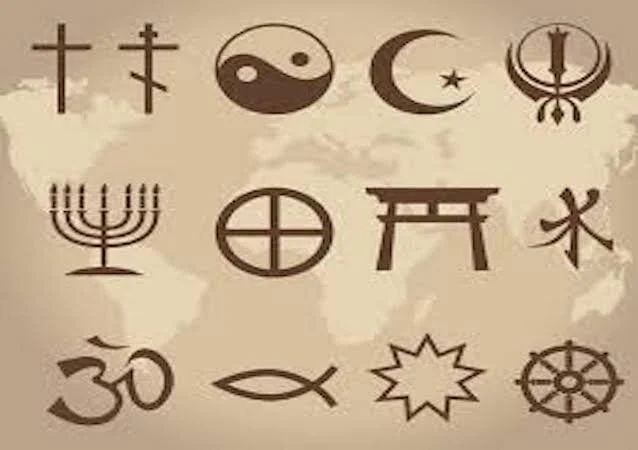
We’ve been hearing it for years. Religion is dying. God is dead. The church is on history’s ash heap.
It’s a popular belief of modernity, but the problem is that it doesn’t bear out in reality. Let’s start with the research showing that 84% of the global population identifies with a religious group. In round numbers, that’s 5,880,000,000 people (almost 6 billion). Moreover, religious people are getting progressively younger. Living in the West, we just assume that the world is heading in the same direction we are, but that’s no true when it comes to religion.
Let’s break it down by numbers. Christianity claims 2.5 adherents. Muslims stand at 1.8 billion, while Hindus number 1.1 billion and Buddhism has 500 million. Followers of the Jewish faith are about 14 million.
What’s truly significant about these numbers is not their size but that they are growing and getting progressively younger. Part of that is due to culture or upbringing, but an increasing portion concerns an awakening of younger generations to spiritual illumination. The average age of the world’s population is 28, yet both the Muslim and Hindu faiths come in under that age. Those saying that don’t hold to any faith affiliation have an average age of 34.
We aren’t surprised when we read that religion is in decline in Europe and North America, yet studies are showing that the difficulties in these regions is also producing a new sense of spiritual awareness – not necessarily related to an established religion but nevertheless seeking answers and solace in things non-material, non-economic. Among millions living in the West there is a sense that much is being lost – ideals, principles, truth, the common good, respect, trust, integrity, transparency. We have yet to see how all this inner yearning will manifest itself, but it is becoming clearer that the emptiness of societies driven by materialism is beginning to have an effect.
Many are surprised to discover that the world’s penultimate economic gathering in Davos, Switzerland each year – the World Economic Summit – recently invited the major faiths to become official partners in the global effort to bring more equity to the world. This was no convenient gesture, but a strategic decision recognizing the importance of religious faith to the developing countries of the future, especially in the emerging economies.
But there will be problems, many of them violent. A number of the world’s growing religions find themselves in minority situations and increasingly face opposition to their presence. Many nations find themselves attempting to manage populations split along religious and ethnic lines and as religious groups grow, so do the possibilities of increased violence.
And yet, as the World Economic Summit leaders have discovered, the leaning of most faiths towards peaceful co-existence and care for the marginalized makes them vital partners in the global effort for more equitable economies and increasing social inclusion. And while it is true that over 100 nations have no preferred or state religion, people of faith in those same countries exercise a powerful influence. There is no denying that religious faith has historically carried elements of division and extremism, but it has also had significant impact in areas of the world where humanity’s pain is most keenly felt – refugees, the poor, outcasts, the homeless and hungry, the misunderstood. The role of religious ardour in a world of climate change shouldn’t be underestimated either. In some of the most historically difficult places on earth, individuals of noble religious motivations are there, working on the foundations of peace, social justice and environmental sustainability.
As religions grow, the propensity for good or ill grows along with them. Harnessing the best parts of that increased presence, as in politics or economic efforts, will prove pivotal to the earth’s future.
For most in the West, news of the increase in faith numbers comes as something of a shock, revealing how naïve we often are to what takes places outside of our own spheres of interest or our information filters. Our ignorance of other religions and cultures can turn us into unaware bigots unless we do a better job at understanding our world.
Elie Wiesel watched the damaging prejudices of the West grow in real time before his passing only three years ago and he called it for what it was:
“No human race is superior; no religious faith is inferior. All collective judgments are wrong. Only racists make them.”
This constitutes the great danger for the Western mind, as the rise of hatred and intolerance in places like Canada, America and Europe has shown. If we aren’t careful, our spiritless secularism can become just as damaging to the human condition as the worst of religion. The rise of faith presents huge possibilities for civilization or it can create huge enmities. We must guard against the possibilities that the lack of religious faith can generate the same outcomes.