
You. Me. Maybe Us.
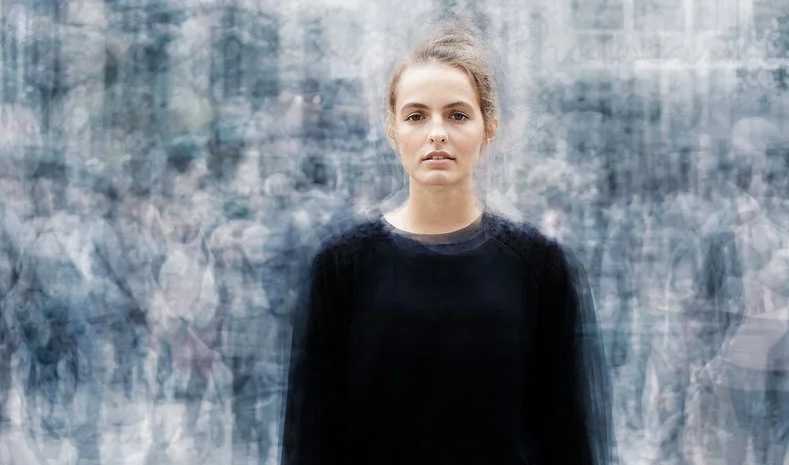
Modern societies in the West have been so predicated on the idea of individual liberties and personal pursuits that we've forgotten what things would be like if there were no "us."
Historically, things have gone like this.
For many, society is but an aggregation of self-interested individuals pursuing what they perceive to be their own destinies. Yet for others it is rather like an organism composed of interacting, interdependent living parts. A thing is called organic when it is made up of parts which are quite distinct from one another but which are destroyed or vitally altered when they are removed from the whole. The human body is organic because of these characteristics. The organic view of society is similar.
While the life of society is nothing but the life of individuals as they act upon and influence one another, the life of the individual would surely be something utterly different if he could be separated from society. In fact, a great deal of him wouldn't exist at all, for in many ways his individualism is grounded in the social condition of the society he lives in. Even if he could stay physically existent but socially independent, like Robinson Crusoe, his mental and moral being would be something quite different. By language, by training, by simply living with others, each of us absorbs into his system the social atmosphere that surrounds us.
The individual owes more to the community than is often recognized. Under modem conditions she is too much inclined to take for granted what the State does for her and use the personal security and liberty of speech which it affords her as a vantage ground from which she can, in safety, do merely what she wishes, even if that is to criticize the State - she chooses the right to be in or out of the social system as she chooses. She relies on the general law which protects her, and emancipates herself from some particular aspect which she finds oppressive to her conscience. She forgets, or does not take the trouble to reflect, that if everyone were to act as she does the social machine would grind to a halt. All of these privileges - which is exactly what they are - are the result of a consensus mutually agreed upon by citizens throughout the society.
There is no side of a citizen's life which is unimportant to society, for whatever that citizen is, does, or thinks may affect his own well-being and may directly or indirectly affect the lives of others. A citizen is much more than his opinions or actions. The real citizen is something more than can ever be adequately expressed by terms his peers can understand. It goes deeper than colour, race or gender and should form the real basis for social contract within a community. Citizens can grow. Without this understanding, citizenship is doomed to failure. By hard individual or collective effort, personality can develop and can be placed in conditions where it can grow and expand – or degenerate. The foundation of liberty is the idea of growth.
Democracy is a gamble. It casts its future on the belief that society can be safely founded on this self-directing power of personality and that this growth is the only foundation upon which a true community can be built. This form of liberty becomes not so much a right of the individual (which, sadly, is the only the form most citizens see) as it is a necessity for society.
Citizenship is more than a label. He who has no sense of a civic bond with his fellows or of some responsibility for civic or national welfare is not a true citizen whatever his legal status. Identity and virtue invest the concept of citizenship with an essential power. Durkheim spoke to this when he wrote: “Man is the more vulnerable to self-destruction the more he is detached from any collectivity.” A sense of togetherness derives from a sharing of common interest, territory, culture and pride.
The great challenges we see on our media screens every day – Brexit, hatred, racism, populism, hyper-partisanship, to name a few – are directly possible because average citizens have chosen to withdraw into their own personal securities rather than combine their efforts to take on the insecurities now plaguing our modern societies. If citizenship is to have any hope of defeating the challenges now before democracy, it will require the majority of us to turnabout and face that future together. Without the collective will, the individual is totally exposed to the excessive forces of the age. Or as Abraham Lincoln put it:
When we were the political slaves of King George and wanted to be free we called the maxim that all men are created equal a self-evident truth; but now that we have grown fat and lost all dread of being slaves ourselves we have become so greedy to be masters that we call the same maxim a self-evident lie.