
On Politics as Entertainment
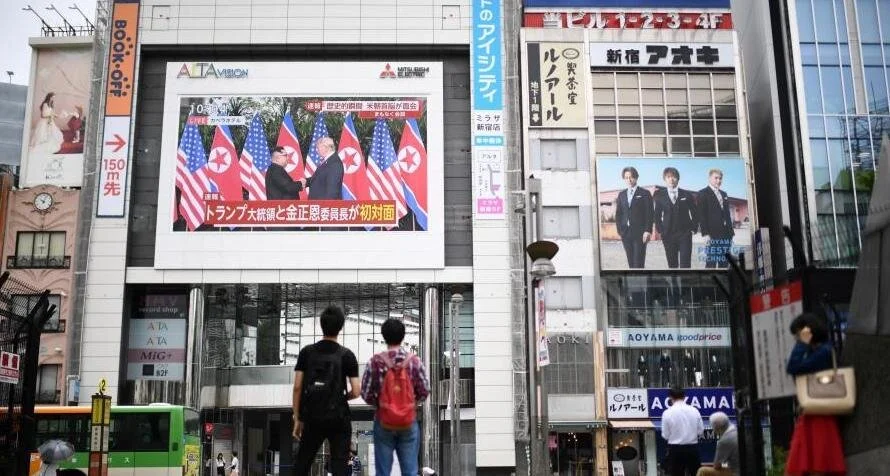
We can't get enough. In fact, we're all rubberneckers now. Far from being the boring kind of stuff that we mostly spent our time bypassing on our way to our favourite sitcom or sports event, politics has now become the destination point for millions of us. The transformation has been so complete, so total, that our politics has become entertainment. We've all become spectators in an industry the only keeps thriving.
And we're seeing the results - turbulence, broken promises, the rise of identity politics, riots, scandals, racism, hatred, anger and resentment. That's the exciting stuff, the images that fill our screens no matter where we are. Then there are the subtle shifts that we never see - low voter turnouts, citizens growingly fed up with all the angst, turning away from one another.
Can we ever get to the point where we understand that all this constant drama surely isn't good for us. One of the great dangers of being in politics (I speak with a modicum of experience) is the constant 24/7 of political life. You always have to be on your game. Forever travelling from one meeting to the next or one crisis to the next, you become a person in perpetual motion, never able to rest or, more problematic, to reflect on your condition. Health studies of politicians reveal that living in such a perpetual and never-ending world hurts the mental and physical health of the subjects and can frequently lead them to exhaustion, obesity, tension and depression.
The thing about politicians is that they can't escape such a life - in becoming the paramours of power, they also become its slave. It's a hard life and we wish them well with their survival skills.
But we are under no such compunction. In having never signed up for that life, we aren't required to immerse ourselves in it. And yet we do - over and over again, with ever greater indulgence. And just as with devoted politicians themselves, we face the consequences of our addiction.
It's no surprise to learn that our infatuation with politics makes us more irritable, while at the same time laying the foundation for our increased dysfunction as a society. We become more polarized than ever, even at a time when we grow increasingly turned off by what we behold. A recent Pew Research poll spanning America, Britain and Canada discovered that some 75% of respondents are feeling less hope and more concern for the future of their respective nations. A large part of that is because of what they are seeing displayed on their screens or in their newspapers.
Democracy has always been about disagreement - it's a foundational part of its genius. But it's how we handle such disagreements that determines whether politics is good or bd for us. And the more we treat politics as a spectator sport, the more we get fed up with it at the same time as we grow more enmeshed in it. Any free society thrives on disagreement and opinions, but when its politics becomes extreme, it's only a matter of time before it becomes personal one way or another. Rather than clarifying issues, it blurs them and it feels impossible to find a way ahead.
There is plenty of room in free societies for disagreement. But, when the political divide becomes extreme and personal, it blurs our ability to see and do what’s right. As journalist John Herrman points out,
Weaponizing the words of politics wraps the fabric of civilian life in a linguistic fog of war.."
There are definitions that describe those who grow continually enraptured with something that ultimately hurts or damages them - addiction, dependence, obsessed, fixated, enslaved, to name a few. Without realizing it, millions of us have wandered into such dangerous political territory without ever realizing it. We could never acknowledge it, but it's likely many of us sense it.
Politics was meant to assist us to become engaged in our world and, better yet, to help to shape it. It works best when we craft it, not get consumed by it. Partisans, especially the hyper-partisan kind, feed off of the disagreements in their tragic "duel to the death" with those of opposing views. But if this is the variety of politics that so turns off the majority of us, why are so many of us entranced by it? If a collective peaceful spirit can only be found by discovering common ground and respect, just how far will the raging politics of television or the Internet move us in that direction?
Bud Wilkinson was both a politician and the legendary head football coach of the University of Oklahoma Sooners from 1947-1963. Under his leadership, the Sooners won three national championships and 14 conference titles. But Wilkinson was worried. He saw politics becoming more and more like football. When asked by a reporter what he thought football had done for America, he replied bluntly: "I'll tell you what it's done. I see 22 players on the field giving it their all but tens of thousands of fans in the seats doing nothing. That's what football has done.?" It's likely that he was also coming to the conclusion that politics was getting the same result.
This is now what politics is doing. For it to work will require us to get up off our seats and engaging with politics rather than merely watching it. It has taken us some time to get to this point and it will take years to win back the political field for the citizens of democracy. As for now, we just too busy watching to do so.