
Chronicling Our Corona Pandemic
Every city has its story, but some events are significant enough to merit an entire chapter. For my community in London, Ontario, it’s likely that how we encountered, coped, and ultimately overcame the coronavirus lockdown of 2020 will become one of its most memorable events.
In such situations we plug on and plugin, living day to day, doing our best to bring some kind of meaning and hope to a frightening scenario. We consume the news in whatever form we can find it, stay glued to our many screens, and use the phone – all in attempt to stay current and hopeful.
But something as significant as this takes a unique collaboration to pull together the key parts of our story, chronicle them effectively, and, ultimately, leave them for posterity and our future learning.
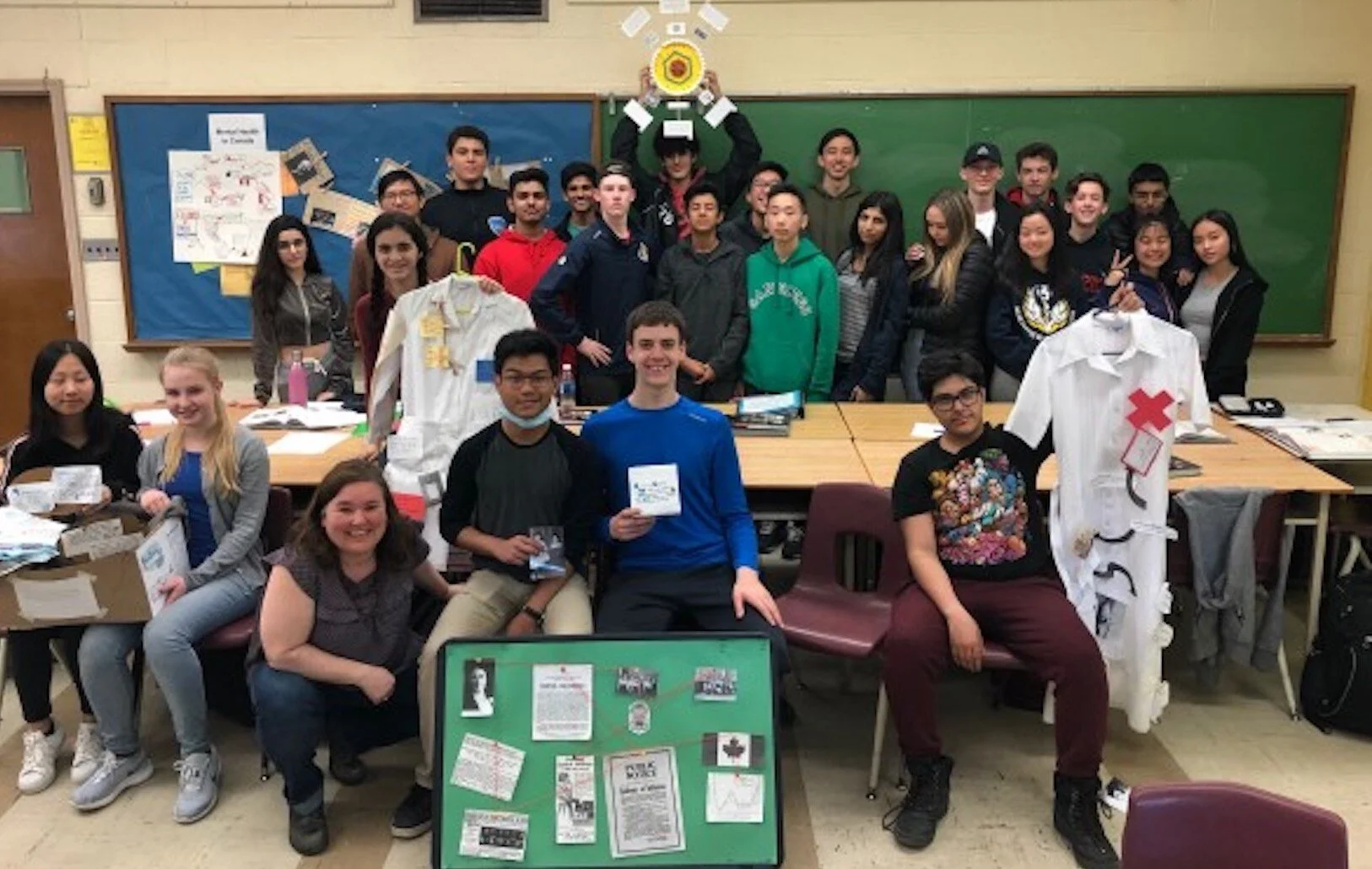
There are a group of Grade 10 history class students that did precisely that less than a year ago in North York, Ontario and received a prestigious award for their work. More significantly, they effectively recounted the effect of the 1919 Spanish Influenza on the city of Toronto in a digital collaboration that will last forever. As teacher Kathryn Whitfield put it:
I thought that this project — emphasizing multiple perspectives and storytelling about the Spanish influenza pandemic — would engage all of my students in doing inquiry work that was interesting, relevant, and connected to their interests. The national contest, organized by Defining Moments Canada, would encourage them to work collaboratively to share stories of the efforts of Torontonians in responding to the influenza.
Titled Coordination, Capacity-Building, and Communication, the final product laid down a track of how a metropolitan area – its citizens, organizations, government and businesses – ultimately came to terms with a significant threat and with eventual collaboration rose to the challenge.
They achieved their award-winning project primarily by telling stories – accounts of personal trial and courage – that reflected what average people and their leaders were going through in a time of great adversity. They used handwritten stories, drawings, symbols, and other practices to weave a larger story of a populace in adaptation mode. They also wrote “Bio-Poems” – reflections that described a personality of the time and how they coped. Whitfield points out that the project allowed for students of every kind of learning ability to provide their own contributions to the finished product.
One of my friends here in London – Chris Mackie – is the Chief Officer of Public Health and his efforts in the last few days have been at the epi-centre of community response. Whitfield’s students recounted the actions and thoughts of Dr. Charles Hastings, Toronto’s Chief Medical Officer of Health in the Toronto 1919 challenge, who had to perform in a fashion similar to Mackie. What was their source? Intriguingly, they got their information from the many files that had been in his briefcase at the time.
It’s all so intriguing, how they did it. They continued to tell the story of the response though various artifacts of key people at the time. And they concluded with the story of the famous pilot Amelia Earhart, who was a volunteer nurse at the Spadina Base Hospital during the flu crisis, and used her nurse’s uniform as the launching point for telling her story.
This is creativity at its best and its ultimate benefit will be the history of a major epidemic in the city that will be available as an object lesson for generations to come – just like what’s occurring at this minute with the corona pandemic. Whitfield’s eventual take on it can perhaps serve us well today:
In doing this research, my students came to understand the groundwork of modern-day health and healthcare policymaking, about how preparation and emergency response protocols served us — and continue to serve today — as exemplars for how to effectively coordinate, capacity build, and communicate. The students also learned about how these important decisions, made in 1918, set a precedent for the need to uphold the values of a liveable city today and in the future.
London is now facing its own challenges in a fashion new to us. How we get through it all, and what will be the lessons learned, will better prepare our community for similar future dangers. And perhaps somewhere in all of this, a group of students will take it on as the events are unfolding and not just a century later. More information is available now through the digital revolution and our story, like Homer covering the remarkable journey of Odysseus, can form the riveting narrative of a community in crisis, but which eventually rose to the challenge with great lessons for the future. We require storytellers for this moment and its clear from this story that students have that potential. Many of us would be glad to assist because it’s a story too good to forget.