
What Is Public Safety Exactly?
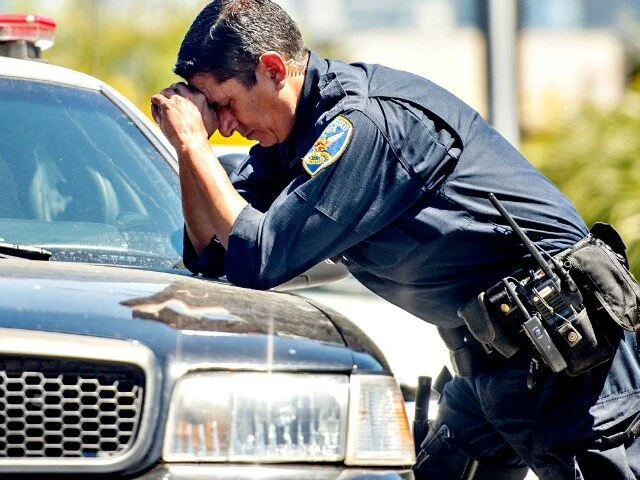
You know things are starting to get serious when various municipalities across the United States, along with some activists in this country, are talking about defunding police forces and looking for some better way to achieve a safer kind of collective being. But it all drives us to the key question: what is public safety?
At some point in the discussion it becomes inevitable that citizens equate community safety with policing – it’s tough to ensure security if there is little means to enforce it. And, so, police and security forces are expanded to meet the needs of an ever-growing society. Inevitably, we become used to it and link our safety with the size of police presence. If that’s all it becomes, however, we absolve ourselves of our own individual responsibilities towards the integrity of our communities and police and security officers end up appearing more like isolated soldiers than the integral partners in community that they truly are designed to be.
With increasingly greater risk, we watch the places where we live become fragile and perhaps dangerous. Police budgets expand to meet the needs of deteriorating conditions, frequently by acquiring greater training, technology and weaponry to do their job. It’s a vicious cycle than can eventually lead to a kind of never-ending dysfunction, including police excessiveness.
It is time that we all acknowledge what public safety really is: integrated measures designed to keep individuals and groups from living under such distress that they must breach community hegemony to relieve the pain.
This isn’t about deviance, purposeful crime or a complete disregard of public law. It’s about systems permitted to develop that increasingly edged out a growing number of citizens from the mainstream of public supports. And we shouldn’t be willingly blinded by time and habit to the reality that anything that damages one segment of the community as it favours others is ultimately a matter of public safety. For, if tolerated, it will eventually lead to civic unrest in order to gain redress or simply rail against the system.
Seen in this light, someone consistently unable to get timely medical intervention while others are streamlined into the operating theatre is inevitably a matter of public safety and community failure. To turn a blind eye to an ever-larger segment of a city falling into homelessness is its own form of violence by larger society over others. To permit a worker to be ground into a kind of minimum wage employment with little in the way of benefits or support is to merely admit that the bottom line matters more than a safety line.
We are all smart enough to know that this world has never generated such wealth – Canada included – and yet here we are in the 21st century permitting an elite group of individuals and corporations to scoop up our wealth and human resource potential, leaving devastated communities, businesses and an ailing planet in their wake. That is another kind of violence that threatens our public safety.
We are frustrated by all this and look for culprits. We don’t live on yachts or mansions, so have no way of expressing our ire. But those groups that are publicly funded are conveniently near at hand and inevitably a few can become targets. It was inevitable that in an age of protest, police forces would fall into our sights; governments, politicians, public administrators, health officials do as well.
Ironically, there is truth in this, but not perhaps the kind we need to focus on. It is a fact that public leaders have a responsibility to protect communities, not just from violence, but from economic depravity, dangers to health, and the lack of access of education and human capacity of society in general.
We see this now playing out in renewed demands for policing to be downsized or done away with altogether. We point to their budgets and cry, “Why are they getting so much when others needed services don’t?” We’d be right in asking that question, but the answer is somewhat more complicated. Police reform is essential as society changes, but far more vital is societal renewal.
Take those struggling in mental health as an illustration. We as citizens have permitted institutions and programs dedicated to those struggling in such complicated issues to be cut loose, leaving patients increasingly isolated, abandoned in a public city that then cries out for safety from those same individuals. Two decades ago, municipalities and provinces increasingly mandated police services to deal with those struggling with a mental illness instead of reinstating the kind of institutional and program support that they funded. Police budgets soared as civic budgets demanded they take on roles that society had walked away from. Mental health required supportive housing to be effective, not the back of a police cruiser.
The worst of it is that if we continue to permit poverty, mental illness, low pay, disrespect, the lack of proper access to education and health, and, yes racist practices to continue, our modern society will continue to degrade, forcing divisions and protests where none were necessary if public funding was adequate.
This is the broader context of public safety. It’s ultimately not about protection but access, and until we correct that imbalance we can only expect more of what we’ve seen in these last weeks. It is about us as citizens failing in our own responsibility to watch over our societies instead of passing it over to law enforcement.
An old Latin American prayer comes to mind: “God, to those who have hunger, give bread, and to us who have bread, give the hunger for justice.” This isn’t something we can contract out to others, including law enforcement, and it is the central essence of public safety.