
What Happens to the Food Supply Chain Post-Covid?
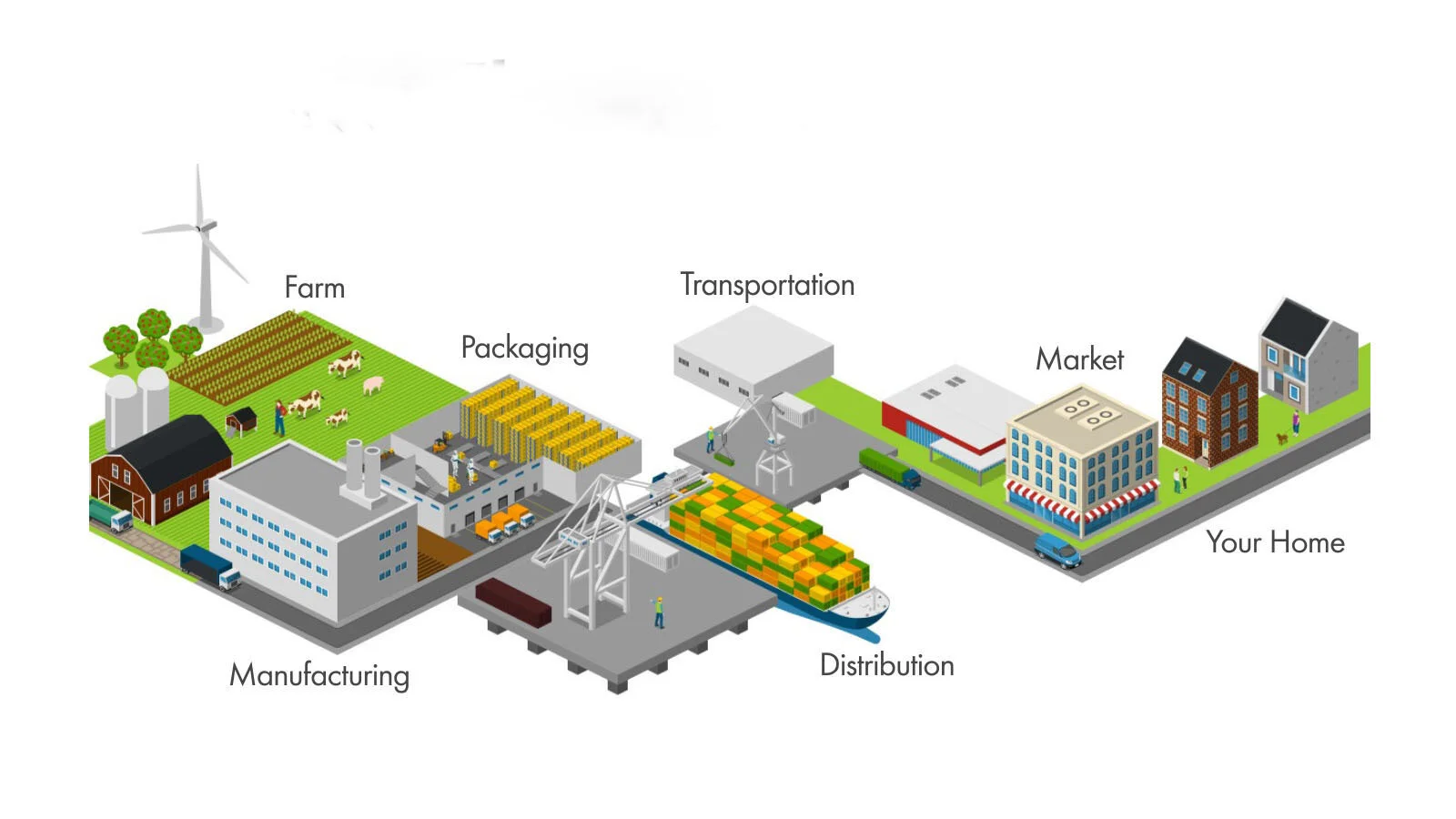
To the surprise of many, Canada’s food supply chain largely endured the pressures of a months-long pandemic. Other than the opening moments of COVID-19, when stores faced shortages due to a run on products, the global sourcing and delivery of food, precarious at the best of times, nevertheless held together.
But what now, as societies begin the process of opening up and perhaps facing further waves of the virus that a year ago few knew anything about?
The primary focus in these months has been on getting through months of self-isolation, but it was during this same period that the food supply chain showed signs of unravelling – and nothing has changed that deterioration. How could we expect anything else? A pandemic that kept us at home, closed stores nationwide, had us wearing masks and gloves, restricted travel and turned almost any surface into a potential virus threat, surely couldn’t just bypass the food system that was already in transition before the outbreak? In fact, it didn’t, and the signs of trouble are mounting.
Global trade is as good as place to start as any. How do we expect our food to move freely throughout the world when the movement of money, people, the restriction of borders, the loss of business enterprise and the lack of disposable cash are pandemically strained? And in areas of the developing world, where so much of our food finds its source, economic disruption and poor leadership have threatened to disrupt food growth and transport.
Speaking of leadership, the political response to COVID-19 has ranged from exceptional (New Zealand), somewhat efficient (Germany, Canada), to near disaster (Russia, America). When politics fails, everything else gets way harder. And into that vacuum of leadership rush a variety of individuals, groups and organizations that seek to enforce their own agendas, often with little experience on the complexity of things like global food systems.
And how does food find easy transport when airports are shut down, ports are restricted with fleets of ships anchored outside of their harbours, and food semi-trucks wait in endless lines to cross borders with all their new procedures.
A news report recently talked of acres and acres of food simply rotting in the soil because of a lack of workers to harvest it, trucks to move it, or markets to sell it. And what about food processing, as plants shut down due to COVID? In Canada, for instance, poultry farmers came together and agreed to reduce their output by 12.6% due to staff shortages and restrictions.
And though climate change has had a brief reprieve as a result of the COVID-19 shutdown, the deterioration of the planet is heating up again (literally and figuratively) as societies open up economies in order to generate markets. The changing landscape was already playing havoc with food growth and production long before the pandemic.
That’s the growth, processing, shipping and selling part of the food supply chain, but what of the consumers? Here’s where it gets rough and volatile. It isn’t necessarily easy to purchase essential items when people are staying at home, businesses are locked down or restricted, social distancing guidelines, though loosening, are remaining in place and key food products aren’t always in stock. Numerous bits of research are revealing that impediments to accessing food are growing, especially among the marginalized and vulnerable.
Access to food is much like access to services or money: a world where some are more equal than others. And as greater society endures the crippling changes due to the pandemic, it gets ever harder for people with little income to access the food required to feed their families. That is why many Canadian cities have launched special food access initiatives to help the homeless, indigenous and low-income populations.
Ultimately, all this will lead to the price of food increasing, somewhat gradually at first, and then more dramatically. Perhaps that more than anything else will finally capture our attention and cause to pursue better sustainability.
Historian Will Durant, following decades of in-depth writing about the meandering journey of humanity, observed that, “In the last analysis, civilization is based upon the food supply.” We are about to discover the truth of that statement as we seek a better future than what we are presently enduring.