
For the World's Refugees, the Road Gets Narrower
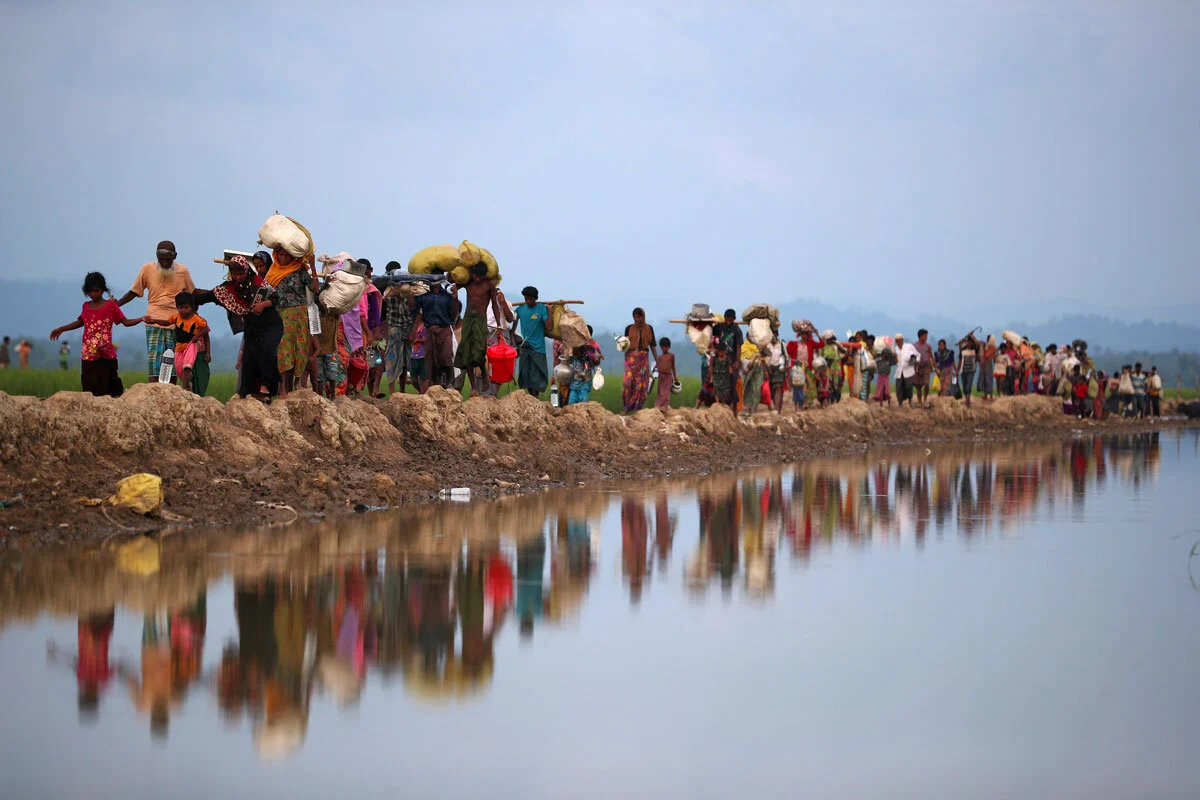
“Refugees didn’t just escape a place,” writes Nadia Hashimi. ‘They had to escape a thousand memories until they’d put enough time and distance between them and their misery to wake to a better day.”
For a time, a few years ago, it appeared as though a growing number of refugees would get that time and better circumstances. But then a more turbulent era in democracies around the world saw a sudden reversal as an angry wave of right-wing driven populism put an end to a larger dream. Iinstead of open portals, nations erected both emotional and physical walls.
Europe became the epi-centre of the anti-refugee sentiment and it wasn’t pretty. As the world reached levels of refugee migration not seen since the end of the Second World War, European nations were in the business of restraining their humanity for domestic purposes. Troubled economies in affluent nations eventually closed doors to the millions of those fleeing persecution, poverty and climate change disasters in the Middle East, Asia and Africa.
The sight of European parliaments voting down measures to open the doors of humanity were discouraging to watch, especially as refugees piled up at entrance/exit points to seek a better future. Tens of thousands died, especially by drowning, on that collective journey, while at the same time European nations believed they were being victimized by the refugee stream. Already a popular theme throughout the continent, this idea that Europeans were being “set upon” by the failures of humanity reached fever pitch in recent years.
Germany even faced elections over the historical practice of openness towards migrants, but it was in Britain that the new anti-refugee wave found its focus. Successive governments saw to it that only 3% of asylum seekers in Europe were welcomed in Britain. The Guardian, at the height of the refugee crisis in 2016, reported that the British government was purposely making life miserable for those who did make it into the country, in hopes that they wouldn’t remain and with the intention of discouraging others from seeking entry.
As this sentiment becomes more globalized, refugees are encountering a remarkably shrinking humanitarian world. The United Nations and other NGOs assigned with assisting refugees are simply overwhelmed with needs once countries pull out the welcome mat. Significant segments of their populations still strive for an open door-attitude, but their governments and certain components of civil society are moving in the opposite direction.
Just to be clear, the need to flee one’s nation in the case of economic privation, threat to life and being, and the growing devastation of climate change, is seen as a universal human right – endorsed by the very same affluent nations now in the process of restriction.
Making matters somewhat worse, a decision was made a few years ago to classify refugees as having “economic benefit” to host countries. That may have proved unfortunate, as affluent economies themselves are shuddering under job losses and business closures. It was called the Global Compact on Refugees and sought to define them in economic terms as opposed to humans in dire need. The emphasis became about their financial benefit to the host country as opposed to their pressing circumstances.
It is now understood that this classification has, in effect, backfired as a result of economic challenges in the rich world. Such shifts had democratic effect, as populist parties, promoting anti-immigrant policies, won increasing approval. Political leaders across the globe witnessed the effect in places like America, Britain and Germany and struggled to keep their own nations, and their political tenure, protected by more limited policies towards refugees. Canada is one of those nations that increasingly considers a person’s economic potential when assessing applications.
The result of all this has seen the acceptance of refugees remains at former levels instead of adapting to the increasing wave of those seeking asylum. This has meant that developing nations in challenging regions like Africa and Asia are witnessing huge numbers of refugees overwhelm their governing and humanitarian systems as the West has limited the options for those seeking assistance. It can only lead to unsettled conditions in countries like Kenya or Pakistan, and as East Asia continues in its historic ambivalence towards accepting refugees, bottlenecks of humanity are destined to create diplomatic, political and military challenges.
It is vital to remember that part of the condition that led to World War Two was the sheer number of refugees who weren’t being accepted in other nations. This destabilized regions and heightened the prospect of nationalism and an “anti-them” series of policies. Antisemitism and overt racism were caught up in the process and the global conflict only enflamed such passions.This is now the condition of the world’s refugees and it could soon lead to hotspots around the world that could destabilize regions, leading to conflict. Life doesn’t seem easy anywhere – not for the politician, citizens seeking work or humanitarian agencies overloaded with human need, and especially the refugee families themselves. The solution can’t simply be to accept refugees, but to create vitalized economies and opportunities for all in a nation. Failure to invest in our own citizens will only result in a closing of the doors to those seeking new lives of opportunity away from the most troubled regions of the world. It’s a two-fold solution – compassion at home and abroad – and our failure to create such conditions will leave millions moving across the globe in an endless search of a better humanity.