
Democracy Bites Back
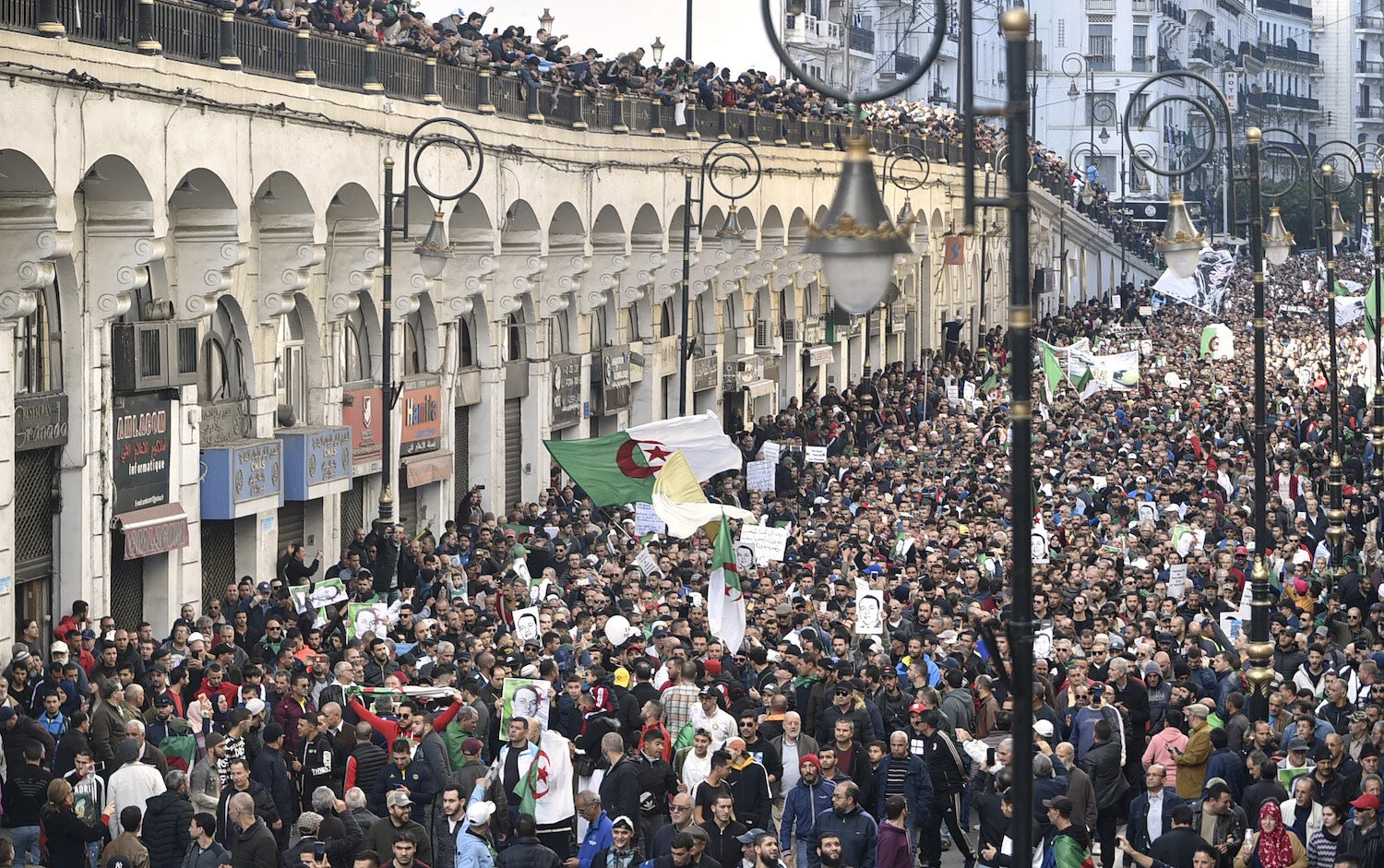
2019 was a tough year for democracy, on numerous fronts. According to Freedom House, it was the 14th year in a row where democratic freedom fell into decline. The rapid expansion of the democratic wave following the end of the Cold War paved the way for the growth of democratic institutions around the world and introduced new nations into the democratic order. Those days are gone, as for the last decade and more, forces antagonistic to democracy have grabbed the upper hand.
So, we can be forgiven for worrying about this decline of freedom and political order simply because it’s true.
But it’s not over – not by a long shot. The sight of protests around the world is a clear sign that something massive is afoot. Much of it has been negative, of course. A troubling example has been the Alt-Right protests against immigration and refugees. Yet their numbers are almost eclipsed by dozens, perhaps hundreds, of mass protests across the globe that remain determined to fight for democracy against the darker forces.
Here’s a small sample of what’s taking place: Algeria, Haiti, Peru, Ecuador, Egypt, Britain, America, Canada, France, Germany, Poland, Zimbabwe and Mexico. Protests are everywhere and they represent the democratic spirit biting back at the darker forces of history seeking to return to the world stage.
And the reasons for the protests are remarkably varied. Most often they are predicated by something the crowds are against – taxes, disliked leaders, anti-war, the 1%, authoritarian policies and inequality. Other such events concern causes the demonstrators are for – education, peace, the vote, women’s rights, a cleaner planet. Whatever the purpose, the sheer number of protests is unlike anything seen for decades, perhaps since the 1960s. The New York Timessurmised last week that the ultimate motivator has been the stagnating global economy.
Once thing is certain: the global population is now restive in its attempt to keep democratic rights from ebbing away. And sometimes they take public forms of civil disobedience that can be dangerous. The hundreds of thousands of Hong Kong protestors have gathered together in ways reminiscent or Tiananmen Square a full 30 years ago – action that resulted in thousands of deaths and injuries. In both cases, the harsh policies and practices of the Chinese government were highlighted in media around the world.
How effective are such protests? In some ways, that’s not the point. It is the very exercise of standing up for rights that is significant enough in itself, especially in a world currently infatuated with authoritarianism. They are signs that all is not well, but that democracy is not dead either.
But there are varying levels of effectiveness. In nations like Lebanon, Sudan and Algeria, leaders have been tossed from power by such actions and some thrown into prison. Others have seen the changes in policy the protestors fought for. Other such events appear to have been ineffective, especially in the longer term. But while the results are mixed, the sheer number of those who are showing up are in the tens of millions and, as such, can’t be ignored.
And neither can the political and economic causes that inspire them; their number, too, has spiralled upwards. Brexit is one of the better known and recent examples that had pro and con forces demonstrating at the same time, often on the same streets. America is full of similar pro-Trump and anti-Trump rallies. These might be signs that democracy is alive, but they are just as likely to reveal that it is also divided and in deep trouble. Analysis is now revealing that the source of the lion’s share of protests is largely found in the fallout from the 2007 financial fallout of poorly planned economic practices by the elites. It forced hundreds of millions to come to terms with the reality that the massive gap between the wealthy and the rest was real and an economic travesty. It also showed just how powerful the forces are that demonstrators are against – the 1%, banks, financial institutions, corporations, governments blinded by money.
It also reveals just how desperate average people are becoming. They feel they have little recourse but to take to the streets, since they have little else to show their displeasure. Yes, in many cases they possess the vote, but that often seems negligible when compared yachts, monolithic financial interests, politicians blinded by the need for funds, conglomerate media interests, and the inability to find good work. When all else fails, they find strength in one another and take to public protest as the only way they can fight back at what is happening to their world. Feeling powerless, they find strength in assembling, in one another, and in their reawakened ideals.
Will all these protests prove successful at bringing democracy back to relevancy? It is diffiicult to determine the answer in the midst of a turbulent time in world affairs and local frustrations. But it does show that an increasing number of people are fighting for a democracy they believe in and are doing what they can to make their mark. And they are living up to the challenge aired by Elie Wiesel years ago:
“There may be times when we are powerless to prevent injustice, but there must never be a time when we fail to protest.”