
No Getting There from Here
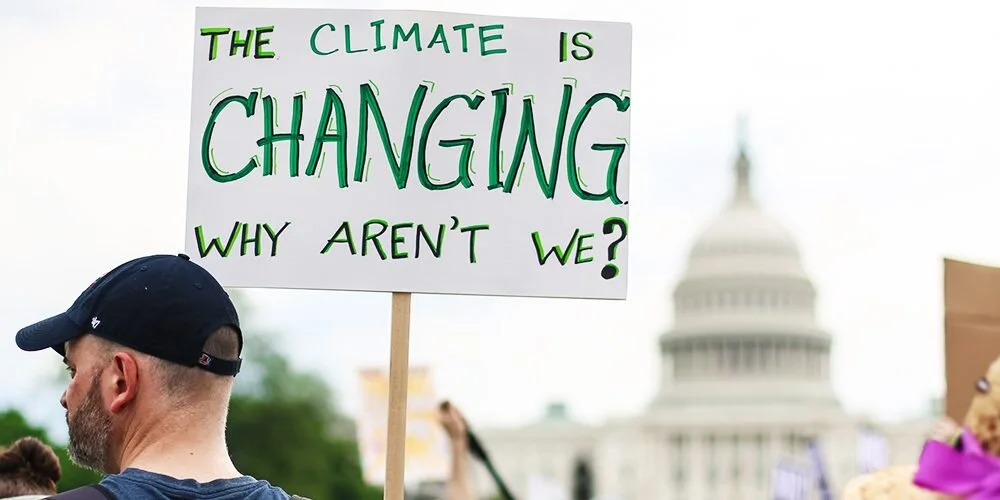
Call it the “Dead Zone” – that space between our sentiments and our sacrifices. The pattern always gets repeated. A hurricane. Flooding. Disappearing rainforests. UN climate change conferences. Greta Thunberg, a 16-year-old, speaking at the United Nations with her challenge to the world.
And then comes the response, usually in the form of donations, demonstrations and the ongoing calls for political action. Some of it can be saddening, as when the American president belittled Thunberg’s attempts or when a family can’t find their loved ones washed away in the Bahamas.
Then comes the inevitable, as such events recede into the past and the world waits for the next emergency to weigh in on. It’s a pattern, a habit of our collective life, that could change everything for the worse if we don’t break it.
Thunberg looked on in deep consternation when, after received huge applause from her passionate speech, she was not only belittled by America’s top political leader but had to endure the circus of watching the world’s three largest carbon emitters – America, China and India – refuse to sign on to the commitments required to stave off the coming climate change disaster. These three nations account for 50% of global emissions. As the Washington Post reported on that day: “Countries once again stopped short of committing to the sort of far-reaching new goals scientists say are needed to rein in emissions.”
My wife and I were in Washington that day as students staged demonstrations in key locations around the city to draw attention to the catastrophe we are facing. They were ultra-organized and, for a time at last, succeeded in their goal of shutting down the city. We were part of a group that attempted to provide support for some students who had chained themselves to a sailboat on a trailer that they had somehow placed in a key intersection just prior to the early-morning rush hour. Just behind us, two blocks away, was the White House. A photo of the boat and those dedicated students was on the front page of the New York Times the next day.
Here’s the reality. According to a major report released this week, the rate of reduction in the ratio of carbon dioxide emissions to GDP (Gross Domestic Product) was 1.6% in 2018. Far from what is required, that number is identical to the average rate of decarbonization that existed between 2000 and 2018. In other words, we’re getting nowhere. The rate required annually to actually have the needed effect is 11.3% over the coming years. As climate scientist Jonathon Grant was forced to admit this week: “There’s a huge gap between the rhetoric of the ‘climate emergency’ and the reality of an inadequate global response . . . How are we to square the lack of action to date with climate rhetoric at a fever pitch?”
As the headline from today's new Ipsos poll says: Canadians want to stop climate change — but half don’t want to pay an extra cent: Ipsos poll
There it is in action – the credibility gap. It persists – that dead zone – despite the reality that the few climate deniers that remain are virtually swept aside by all the media coverage and alarming rhetoric from the political world about the need for change. Despite that shift in emphasis, we remain mired in our apathy.
Consider this. Far from being paltry, the campaign for action on climate change has been one of the most successful public awareness efforts in history, as this past week’s demonstrations efforts in cities around the world reveal. But all of it – the dedication, the research, the advocacy, the individual efforts to reduce carbon through personal decisions – is coming to little because the thing that really matters if we are to get the change we seek – public policy – is presently nowhere up to the task.
There are numerous reasons for it, but one of the key sources of inaction has been that vacuum between our sentiments and our sacrifices. It has existed on other files – child poverty, homelessness, pay equity, better jobs, etc. – but nothing really compares in scope and scale to the environmental crisis era we are about to enter. If we seriously believe what we are saying about carbon emissions, then we would perform three key collective tasks that, up until now at least, we have proven unwilling to do.
The first would be to underwrite the public costs for carbon reduction through methods like a carbon tax. But political parties are wary of such an approach because elections have been waged and lost by political leaders who got anywhere near legislating the needed changes by both citizens and companies. What we get instead are incremental promises that can’t possibly “scale up” enough to make the difference required.
Second, we could spend our money differently. In the things we purchase, invest in and horde, we show little propensity in ourselves to undertake what we say we want governments to do. Our buying patterns, how we travel, where we live, how we live – all these will have to change significantly, and right now, if we are to have an effect. Sadly, there is little evidence that we as a collective citizenry of any intention of doing so and we will punish any party attempting to force such change upon us. That’s just the political reality of the moment.
Third, if we really meant what we say, it would show up in how we vote and how we demand better from our elected representatives. When a people say it wants action on climate change but then refutes any attempt by the political class to do what is demanded, that’s not just about weak-kneed politics but about mediocre citizenship. Neither of these will overcome the challenges heading our way.
This is our greatest hurdle – this deadening zone between our legitimate sentiment and our unwillingness to sacrifice. It is a recipe for ongoing apathy, despite our words. We have much to do right now, but we could begin by linking public policy action to our private words and criticisms. When that happens, then maybe we have a chance.