
Are We Giving Up on the Public Good?
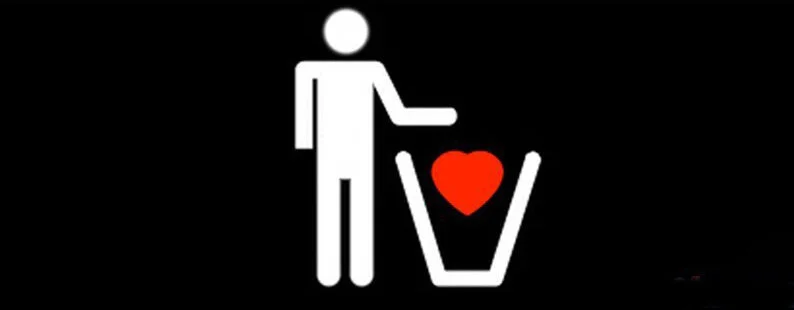
I spoke with a friend in England yesterday who was beside himself with worry. Boris Johnson had just won the Conservative leadership and would undoubtedly assume the role of Prime Minister. I watched Johnson’s speech live and actually thought it pretty good, but as the voice on the other end of the phone reminded me, things will likely start getting pretty wild … and soon.
It won’t be easy. Since Johnson was never very good at details, he will need to rely heavily on others for advice. Unlike Donald Trump, the new PM will inevitably appoint seasoned and experienced people to help guide him through the coming months. Presently he has a majority in Parliament of only three votes and he must proceed judiciously.
But what was revealing was my friend’s belief that the time had perhaps come to give up on politics, since nothing ever seemed to change, wash his hands of it all and just concentrate on private, not public, life.
It’s impossible to overestimate just how many people suffer the same malady. In Canada, while a recent poll showed that only 1 in 5 Canadians feel the economy is suffering, 3 in 5 confess to being ambivalent about the upcoming federal election in October. This is the new normal and it’s prevalent in most democracies around the world. In fact, it’s so prominent that it could be the key ingredient in the dehumanizing and deconstruction of democracy itself.
Democracy’s difficulties now seem so vast, so intense, so troubling, that we’re slowly giving up on the belief that such things can be fixed. Even a short list of what we’re up against fills many with despair – climate change, the rise of the haters, the loss of work, economic stagnation, the decline of public space. It’s difficult to think about how to solve just one of these problems, let alone all of them.
But guess what happens when we feel this way? While we grow lethargic, dispirited and dispossessed, the haters, detached elites, dystopian politicians, and the perpetually angry grow empowered, making our own despondency even worse. Yet this has always been the way of democracy: the push and pull of antithetical forces always result in the rise of one and the sinking of the other. We frequently deal with it by applying ourselves to smaller projects that require only a few like-minded individuals to get them off the ground and running. Or we volunteer someplace where we feel our personal efforts are making something of a difference.
Yet those issues that require large amounts of public investments in concentration, collaboration and resources nevertheless seem to attract the worst in opposition and humanity.
There are many of us still willing to sort through it all and who still believe in the public space, the common good, and all that is required to keep them functioning. But not as many, and those who are holding on are experiencing more trouble in doing so. My friend in England feels himself withdrawing into a more limited world that he can at least control. He’s also feeling drawn into despondency and spends more time watching the Marvel universe and more dystopian movies and series on places like Netflix and HBO. They are massively entertaining, of course, but they aren’t the real world and require nothing of him except the ability to manipulate the remote.
Somehow, that rough cohesion that held our world together has begun to dissolve, to implode. And how do we fix it? We wish to play a part, but how? Where? Which group that manages the public estate can we trust? Deep down we know that politics is a mug’s game but we’ve always been aware that it is also full of good people who care about the public estate, just like us, and who require our support to overcome these darker forces that have infested our public life of late. We also encounter good citizens who are staying in the game despite their confusion and disillusionment and who still intend to visit the ballot box in hopes of honesty and decent exchanges. We see them every day and admire them. Yet there are others who vote for the very authoritarians who are methodically cutting away the supports we all require to have a good and collective society.
I suppose the word for it is powerlessness. We feel incapable of changing this descent into a more dystopian age and it’s getting to us. But we mustn’t give up. My neighbours and friends depend on my continuing to show up, to stay in the action and throwing my weight against the descending darkness, just as I depend on them. Humanity has been through other difficult ages and it was the goodness of the average person and not just enlightened leadership that pulled them out.
Author Matt Taibbi called it correctly when he wrote: “In a society governed passively by free markets and free elections, organized greed always defeats disorganized democracy.” The secret is to take that disorganization and turn it into collective citizen activism that works at higher levels of public action and policy. We must endure. We must prove that we are still up for that kind of engagement, not only to save our communities but ourselves.