
The Forest Secret - Chapter 7
“You’re kidding?”
The look on Charley’s face brought the table to a state of hilarity. Stephanie placed her hand on Charley’s arm and said through her laughter, “O Charley, there’s no place quite like this city, especially for journalists.”
Their American guest had just been informed by her colleagues that she was likely being appraised by a number of people at the Paris office more for her figure and fashion than her reputation as a journalist. The thought of it had shocked their new friend.
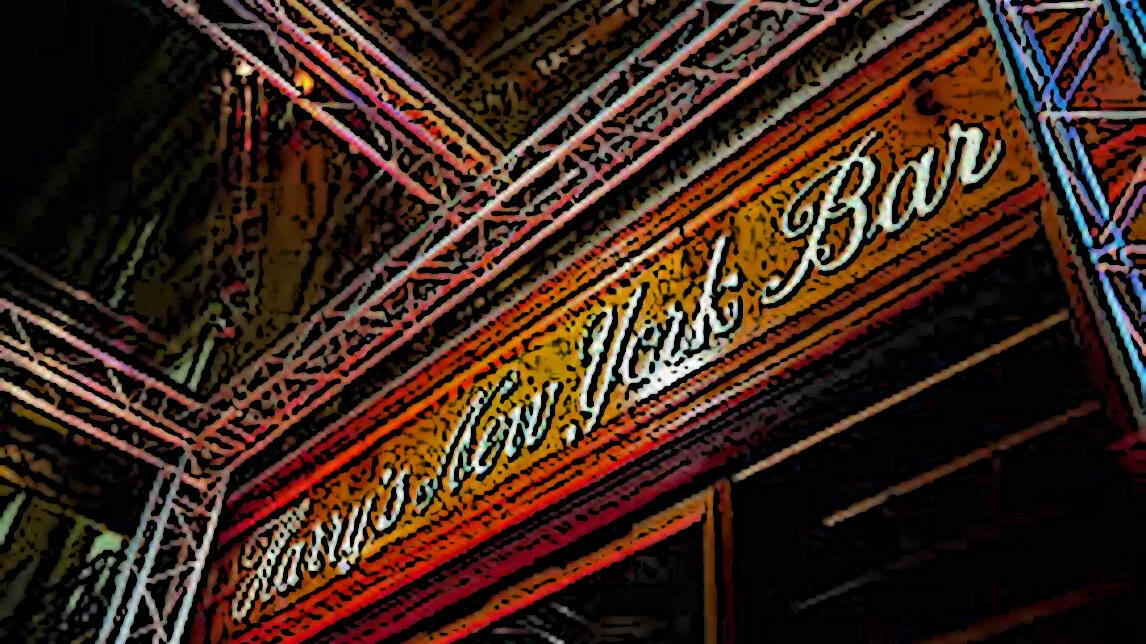
Peter Fortane had invited the two women for a drink to Harry’s New York Bar in deference to their visitor, saying that Elaine Bouchard would likely come along a bit later. He had greeted them at one of the red leather booths and ordered Dry Martinis to go around as they settled in.
“Nice touch,” Charley noted as the evening began. “But, really, I would have been fine in any Parisian bar.”
“Well, this isn’t just one of those places,” Peter began. “It goes back to the early 20th century. Hemingway and Jean Paul Sartre drank here. George Gershwin always maintained that he wrote An American in Parison the piano upstairs,” he continued, pointing to the ceiling.”
“I learned early on that there’s quite a history here. It’s all about the connection of the U.S. and France, especially as it pertains to writing and music.” Stephanie's description intrigued Charley even further.
They had already been there an hour and were feeling the alcohol when the comment was made about Charley’s figure. The conversation had been free-flowing, and it was clear that they had all taken a natural liking to one another.
They were in a fit of laughter when Elaine Bouchard entered through the door, making her way to their booth. “What’s so funny?” she asked, seating herself next to Peter.
“We were just explaining some of the oddities of working in Paris and I don’t think our friend here was quite prepared for it,” he said.
“It’s true,”Charley added. “I had no idea that personal enjoyment is put above professional duty so much here.”
“Ah, yes, it took some time for the New York supervisors to realize that they couldn’t filter that reality out of their French headquarters,” Elaine said. “This is France; we have our own ways of doing journalism.”
“What else? I want to know, so that I don’t trip up somewhere,” asked Charley.
“Well,” Elaine began, “the French often love their pets more than their children - something to remember if you ever doing interviews. And here nothing ever changes by increments. In Germany and Scandinavia, change happens after considerable debate and lengthy analysis. In France by contrast, it tends to be convulsive and born of conflict : one violent leap backward followed by two surreptitious steps forward.”
“Like these recent riots,” Charley observed.
“Exactly,” Peter chimed in. “It was quite something to see the riots quelled after the fire, but they will heat up again soon enough. Change isn’t popular here, but when it happens it can frequently be violent and quite public.”
“Maybe the key thing I learned here is that the French prefer ideas to reality. It’s just in their DNA. The classic joke here, especially in times of turbulence, is that if the facts and the theory don’t match, then just change the facts.” They all raised their martini glasses and clinked them together at Stephanie’s observation.
“That must be a unique challenge to journalism here, then? asked Charley.
“Finding the facts, you mean?” asked Elaine. Charley nodded.
“It’s true that it’s not easy sometimes,” Elaine continued, “but there is a sentiment in the French people that is remarkably sound, that is more interested in the human than merely the evidence. For instance, the French think it is more important to protect the weakest than to encourage the strongest. In that is their uniqueness.”
“And it’s why their successive governments are so remarkably social and complex,” added Peter.
Everyone was surprised and delighted when the small figure of Bernard Durand joined them at the booth. “This old man is thirsty,” he said with a grin. “And I didn’t want to miss out on welcoming our new friend to the team.” The group snuggled even closer together to make room for the new addition.
This had been unexpected, but with his arrival the senior editor brought more gravitas to the scene. It was understood that he was the first among equals in the European publishing industry and with that awareness came a sobering sense of why they were all together at this particular place and time.
“How did you make out at the cathedral?” he asked, while motioning to the waiter to bring his favourite scotch.
“It was like another world,” Stephanie began. “Up there, in the heights and all those wooden frameworks was like being a kid again and journeying up into history’s attic.”
Bernard smiled at the allusion. “How are the photos?” he inquired.
“Too soon to tell,” she responded. “We came straight from the scene here to Harry’s. I’ll download them into my laptop when I get home and process them. It is such a strange world up there - unique and uncommon - that I think they will be striking.”
Taking his drink from the waiter, Durand said, “It is the Forest, full of angles and truth, of history and stories.”
Silent until now, Charley quietly asked, “The Forest? What do you mean? It didn’t feel like a forest to me, but more like a vault of some kind.”
The older man swirled the ice in its low-profile glass while thinking of a response. He looked up at his American guest and the intensity emanating from his blue eyes fascinated her. They weren’t mean or haughty, but kind and incisive.
“Back in 1220, large churches used clay tiles for their roofs, but there was little in the way of clay deposits in this region. They decided to use lead since it was plenteous then, but that left them with a significant weight problem. The architects and framers opted to use the trunks from massive oak trees near here that were at the time already 400 years old. Each trunk was used in its entirety and carefully shaped in the profile of the roof, which, as with the custom of the times, was highly vaulted and at a steep pitch. The entire roof was 210 tons and required a wooden support structure equal to the task. Each beam is intricately connected to the skeleton structure and passageways had to be constructed to permit the workers access to the more remote areas of the roofline.”
He smiled, realizing that he hadn’t yet answered Charley’s question. “The roof beams have been called the 'Forest’ for centuries because they mostly cut down an entire region of oak trees to supply the workers.”
No one present knew all of these details except Durand and he had been specific in how he dispensed them. They all knew he possessed remarkable pockets of information in his head that had been acquired over 40 years of journalism in Paris.
“Now, I have a personal question for you, Charley,” he said. “What was it you felt when you found the spot where Aramis Caron died?”
The table fell silent and still. This was why she had come across the Atlantic - not to report a story but to unfold a tale of human pathos and yearning. Her role in the entire scenario was unique and the rest had been placed on assignment to help her unfold it. To a degree, their own reputation depended on the result.
“It’s not very complicated,” she said, her face a mask of emotion. “I was just so … so sad. From all Stephanie and I picked up from the security officer, Caron had something special about him, and to think that he died alone, in agony in a cramped space just seems too tragic, even for a journalist’s words.”
The festive mood had rapidly evaporated, in its place a subdued sense of the challenge before them. With hardly anything to go on, mounds of research would have to be done to flesh out who the man was - his background, disposition, family, friends, contacts. Was he a man of faith? Married? Kids? Was an illness like cancer part of the story of his willingness to pass he final moments in the cathedral? And how would they build their story in such a way as to elevate it above everything already being said on traditional and social media?
“It seems to me that you might have things somewhat backwards,” Durand said, almost whispering.
“How so?” she asked.
He rubbed his bald pate momentarily, summoning his thoughts. “Charley, it’s not about how he died in that obscure place, but why he chose to do it. He knew the cathedral and understood the dangers and yet he didn’t go to the altar or any of the routine places a soul goes to come to peace with its Maker. He went where no one would go, especially with a roof on fire. Something drove or drew him there. What was it and why was he willing to lose his life over it?”
Those insights plagued Charley’s mind for the remainder of the night after they all had departed. She arose at one point in her hotel room and shuffled to the window that overlooked the blackened icon across the river. Why Aramis? Why?