
Democracy's Most Important Ingredient
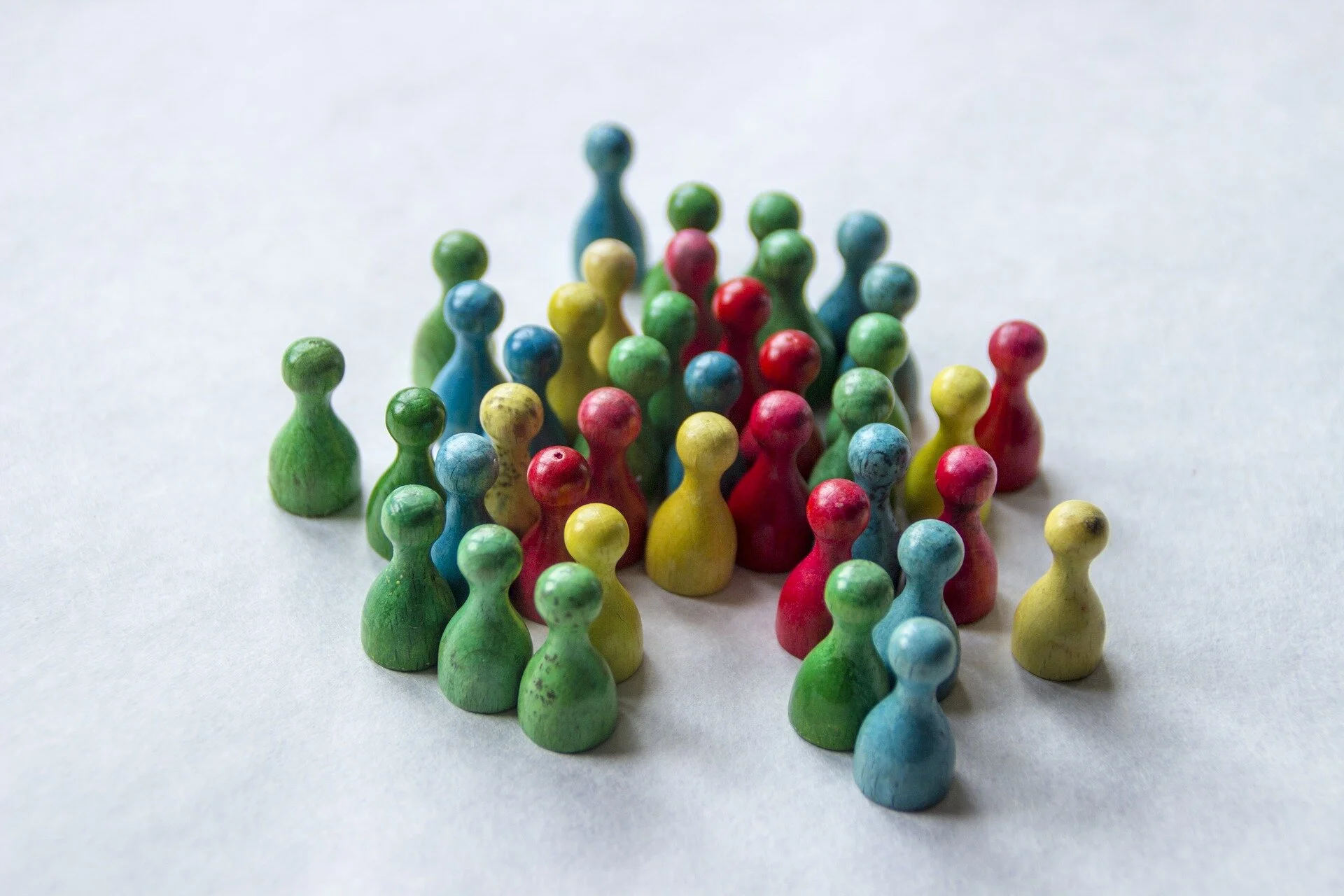
In an era where our democratic heritage is under relentless questioning as to its legitimacy there have been frequent references to its key components and how they must be either reformed or recaptured. The list is long – voting, debate, common ground, leadership, especially for women, global responsibility, importance of the press, money, equality, shared power, to just name a few.
Underneath it all, regardless of where one stands on all these important credentials for democracy, lies the very essence of humanity that is to be found even when there is no politics. It is how people treat one another just in the everyday circumstances of life. How do people with different race, gender, economic status and value systems embrace a sense of responsibility to one another that hasn’t been designed by some United Nations fiat, political party or social demand.
What do we find? We discover some deeply common motivations that have run concurrently throughout most cultures and persuasions. If someone is hurt on the street, in most cases others will be moved to respond. Should a child go missing, the community, regardless of religion, politics or ethnicity, forms search parties. Someone saying good morning to another whom they didn’t know, would induce a similar response. Murder is, outside of special circumstances, is universally seen as wrong.
There are thousands of such examples, each producing a response that says something about our shared humanity before others would seek to organize us into faith groups, partisan politics, tribal loyalties or enforced moral codes.
In his recent book, Ordinary Virtues,Michael Ignatieff speaks of some virtues that are hardly “ordinary” or “common.” Things like outstanding courage, great sacrifice, or risking one’s life for another are what he calls “extraordinary” virtues and appear only fleetingly through life. Yet for each such circumstance, millions will hold the door for another, help a senior when she drops her groceries, come together without urging for a community celebration or moment of grief, spouses forgive one another, children are protected and people overall seek to the tell the truth. These are virtues that are common because they play out everywhere without institutions demanding them.
Naturally, there are other common traits – white lies, hypocrisy, veiled or outright anger, suspicion, prejudice and the desire to be first. These aren’t virtues, but rather vices that detract from humanity instead of drawing it together.
In such shared “virtue” moments, little is made in the way of judging by skin colour, the desire to deceive or secretly wish evil on the other. In fact, the virtue moments happen most often among people who don’t know one another, who nevertheless make room on the bus, wish a good holiday season, drop a coin in the hand of someone never seen before, help someone in a car accident or a senior across a busy traffic street. As Ignatieff states, these are actually “moral” exercises, performed by all of us, likely dozens of times a day – all uncoerced and voluntary. It’s actually pretty amazing.
It’s not just that such things repeatedly happen but that we learn to expect them as part and parcel of our daily course of living. They form a kind of invisible bond, a transparent glue, working its way through a tribe, a community, a nation, our world. It all means that we possess a certain empathy that flexes its muscles and opens its humanity every day and makes possible the ability of living together. I have witnessed it on a daily basis in Gordhim (South Sudan), Pitlochry (Scotland), Barisal (Bangladesh), Brasilia (Brazil), Friedrichshafen (Germany) and every Canadian city visited. Somehow it got into humanity’s stream of consciousness, enough so that such actions become almost unconscious acts of openness. Every country accomplishes it differently, but the point is that it is a shared endeavour surging from the soul of humanity.
Then comes the downside, when politics infuses society with a kind of rocket fuel that raises the passions and dulls the brain to the point where evolution reverses itself and reminds us to distrust others. In the midst of all those common virtues a fox is released in the henhouse and distrust begins to grow, suspicion becomes epidemic and society grows fractured. Over time, political parties, just as with bad religion or divisive economics, learn to places wedges within society that benefit some over others. Us versus them replaces the virtues with factionalism, leaving cultural hegemony bloodied and torn.
Any noble political party, faith group or purveyors in capitalistic endeavour functions by gathering people together in ways the improve the lot of all citizens. Much of that has now become impossible through efforts sinisterly designed to pit us against one another. This lies at the root of the new populism – a wave propelled by anger and punitive design more than any desire to spread the franchise of democracy to all.
And then the phenomenon emerges, where those who simply practice the common virtues out of decency and respect check out of those systems that seek to arouse the worst angels of their nature. This is what we have today. Those leading such efforts know it, manufacture it, enflamed it, and hope to grain special privilege through it. It sickens the very head of what was supposed to be a workable society. And if the head is rotten … well, you know the rest.