
A Treasured Christmas Movie for the Pandemic Era
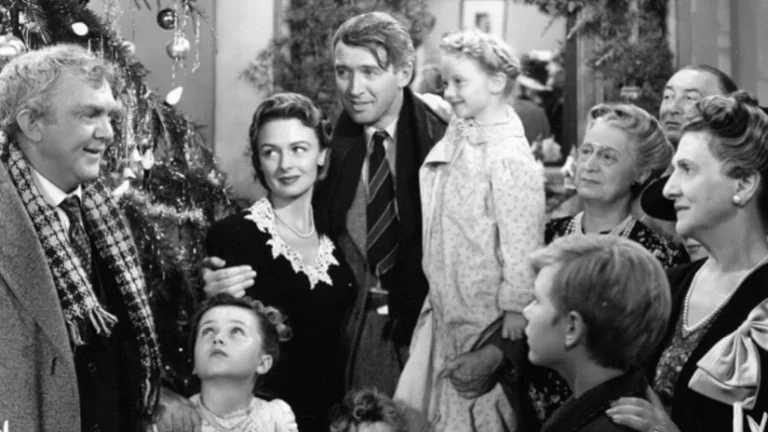
The movie is 75 years old - four years before I was born – but it has become a Christmas staple to view regardless of one’s age. It’s a Wonderful Life premiered in 1946 to lukewarm reviews and box office failure. It was Jimmy Stewart’s first movie following World War Two, but in a world looking for something sunnier, the tale of a dedicated man losing everything he lived for was many shades too dark for those seeking a better future.
My wife and I opted to watch it on Christmas Day this year, and I immediately grew to understand that it was the perfect holiday story for the pandemic era. When it concluded, the reflections emerged about how similar the themes were to these past two years of living with Covid-19.
George Bailey (Stewart) was a thoroughly faithful man – to his parents, his wife and kids, his business, and, ultimately, his community. But every time the opportunity arose for him to extend himself, to learn, to travel, to try new things, responsibility descended on him, and he had to forgo his desires for the sake of others. True, it was a different era when blatant individualism didn’t hold the allure it does today. Yet the chance to look in on a story of the difference one person can make in community life still transcends the solitary state.
Enduring my second pandemic Christmas, I found the narrative perfectly natural and appealing. Many of us can now comprehend the limitations placed on George Bailey much better than viewing it in an earlier year. His community of Bedford Falls was also enduring years of economic restraint and a lack of opportunity. The bank that Bailey owned and operated kept people’s dreams alive even as his crashed.
Watching someone come to terms with the realization that he never amounted to what he wanted is difficult to bear. We’ve all had such moments, but Bailey’s came after decades of living his life for the community. This was one person we believed deserved better, surely. To help others discover their dreams only never to do so yourself is something of a tragedy.
Then, in a moment of sudden decision, he acts on his realization of failure by asking that God would take away the reality that he ever existed. This constitutes the last one-third of the film, and it is the most fulfilling. An endearing old angel named Clarence comes to his rescue, only for George to discover what his town and everything he knew about it had become without his ever being in it. It was a shambles, given over to the more demeaning realities of human beings. People died because he wasn’t there to save them. Livelihoods were lost. His kids were never born, and his wife had never married.
This recognition that the individual matters far more than anyone realizes – especially a life dedicated to others – becomes the crowning goal of the movie. Yet, when he comes to terms with his own value, George is a financially ruined man, even after his former life is restored to him.
But what saves him, in the end, is the very community he had personally saved many times, especially against the crusty old financier Mr. Potter, who in George’s absence had reduced Bedford Falls to its basest elements. In the movie’s final moments, the town crowds into his home, laying their savings out before George and his family in a remarkable showing of how a community can save the individual. I wept watching it for the first time in a few years as I realized none of this works if individuals live only for themselves or communities overlook the desperate among them.
I wondered as the movie ended why it wasn’t a part of my early Christmas memories with my parents in the fashion of White Christmas, Holiday Inn or Christmas in Connecticut. So I Googled it, only to discover that following its failure in the box office, It’s A Wonderful Life was tucked away in the studio archives, where a twist of fate provided it with a second chance. Its copyright period had ended in 1974, with the studio forgetting to renew it. Suddenly, the old film found a new home in the television networks, cable companies, homes and the hearts and minds of all who saw it in a new generation.
What holiday movie could be more suitable for an age that’s in lockdown or individuals unable to move out of their confines? It’s A Wonderful Life is the perfect reflection on how collective and individual life come together in the modern age and how each requires the other if a more progressive future is to be discovered. A movie that time forgot has risen once more to remind us that better days will never arrive if each of us refuses to play our own part in its creation.
