
The Triple Whammy - COVID's Effect on Mental Health and Poverty
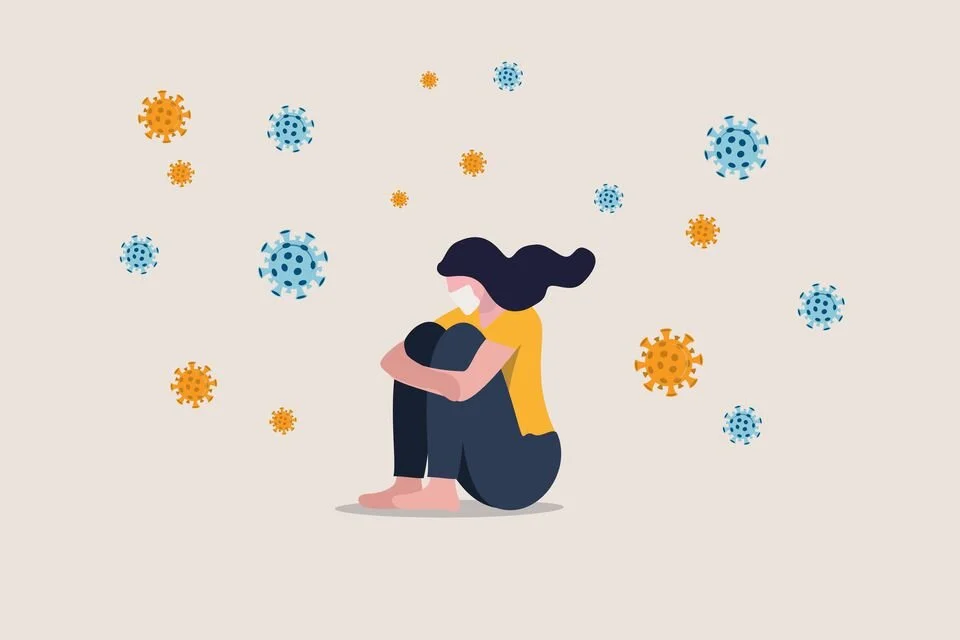
The most recent data from The Centre for Addiction and Mental Health (CAMH) shows that 51.8% of Canadians are now worried about the effects of COVID-19 on their financial situation – up from 46% a month earlier. Almost 50% are experiencing moderate to severe anxiety about personally catching the virus. And a full 33.7% have lost their job or aren’t able to work during the pandemic.
These statistics can go on and on, but we inherently understand the pressures and fears citizens endure as they face the greatest public health challenge in a century that is about to work its way into the fall. Handling it has been difficult, as about one-quarter of those responding the survey admit to drinking more heavily, feeling lonelier, and fear sinking into depression.
For those who were attempting to wend their way through the labyrinthian corridors of mental illness prior to COVID, the grinding toll has been something akin to a nightmare. Alarm bells were already ringing from numerous mental health agencies and associations for years prior to this pandemic, so it only stands to reason that the severe rounds of financial insecurity coupled with lengthy bouts of social isolation have gotten much more severe.
For decades, professionals tell us that mental illnesses have not only increased but have begun much earlier in life than previous. The more modern a society, the more frequent are the occurrences of mental illness and the more it seems like decision makers have become more adept at avoiding the problem while voicing the right words. You would think that all the conveniences offered in our present world would actually alleviate such stresses, but the opposite, in fact, is occurring.
Technology has made it much easier for people to live their lives out online, increasingly apart from the personal human contact evolution has wired us for. COVID-19 has now exacerbated that distance and the effects on mental health are slowly getting out of control, as their phones and computers end up making people feel more lonely and depressed, not less. Just at the time when human contact is more vital then ever to assist us in adapting to a world we no longer understand, we are actually getting more isolated and confused.
The comfort and adaptability found in social groups, culture, faith, traditions and institutional gatherings during previous generations is slipping away, leaving people to fend for themselves in an online world that is becoming increasingly threatening and remote.
The United Nations reminds us that half a billion people across the world are being pushed into poverty by this pandemic. After all the decades of promises to better people’s standards of living, the reality is quite the opposite. It’s what the Royal Academy of Psychiatrists call the “triple whammy” – COVID-19, mental health and poverty.
People already in poverty were disproportionately affected by the pressures of modern life and a half a billion people could now be added to their numbers. They are less able to secure themselves against the onslaught of the pandemic, experience more difficulty caring for their families, and the first to be most seriously affecting by the global economic fallout we are all facing. They are the most at risk for mental illness.
Our world has always been full of contradicting realities. With the global food chain becoming so easy to access in recent years, the result has been obesity for millions. The more it communicates digitally, the further apart it grows in human contact – hyper-connection has led to hyper-alienation. The more open our economies become, the more closed our opportunities for sustainability. The lonelier we feel, the more we travel, and the more we travel, the less secure and peaceable we feel at home.
It wasn’t all that long ago that we were celebrating becoming one world, when in fact we were in the process of building billions of small isolated worlds. The great evolutionary movement to design a more integrated global family has lost it way, resulting in dysfunctional relationships every-where.
Humanity was never “wired” for pandemics, but history and enlightenment taught us how to better adapt to such emergencies. What does COVID-19 possess that has made this time more serious? The answer is that the troubles existed long prior to the pandemic and the ultimate cure can never just come from a vaccine, but a reconnection with one another that is both meaningful and understanding. That is our best hope and awaits a new renaissance.