
With COVID, the Mental Health of Farmers Has Been Devastating
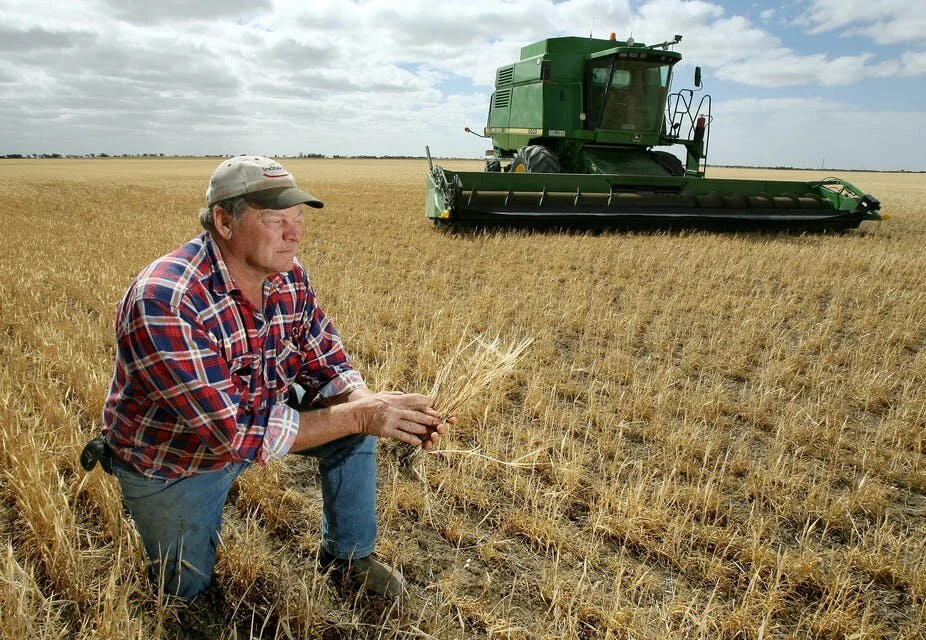
With over 80% of Canadians living in cities, the understanding of life as a farmer grows more distant by the decade. We benefit from their toil and inherent knowledge each time we shop in markets or grocery stores, but how it all got there, or what was required prior to us putting food on the table, is little known to us. Even Canadians who worked on farms in the early lives would hardly recognize the dynamic transformation of what it means to live off the land.
As we reflect on this time of COVID-19, we most often focus our thoughts on our neighbourhoods, city councils, hospitals, opening of businesses or schools and the health of our local economy. These are the things around us and not around the acres of rural landscape that lie just beyond our municipalities. So it hits us as something of a surprise to learn that Canada’s farmers face their own pandemic challenges that are unique to them but just as costly and demoralizing as our own.
A month ago, I was asked to do some voice-overs for some Ontario Federation of Agriculture ads about male and female farmers coping in the modern era. They were beautifully shot videos in black and white and can be viewed here.
Then a few days ago, I was requested to take on something similar for the OFA, only this time dealing with the mental health challenges of farming. It came out yesterday and can be viewed here.
It caused me to look deeper into the subject, knowing that, like most city dwellers, I had a lot to learn.
The 2006 census revealed that this province houses 57,2111 farms but that their numbers are decreasing. Production is up while the number of operations declines. In the decade between 1996-2006, 10,309 farms went out of operation. Ontario’s farming community account for almost one-quarter of all Canadian farms.
The numbers reveal, just as with cities, that times of change are upon and that the stress of that emerging transformation is taking its toll.
Part of what makes the COVID era so difficult is the weight of expectations. Ontario’s farmers are often second or third generation growers attempting to keep their businesses open and honouring family traditions and ownership. But if we suffer from isolation in this pandemic, living only a few feet from our neighbours, imagine the challenges of enduring loneliness and struggle when your neighbours are kilometers away. Farmers are in a unique situation and their COVID challenges are unique as well.
Many growers confess just how hard it is to speak about their internal struggles. Often encouraged by the peers to “be tough” and just keep growing, they carry on, each day getting harder than the last. That’s what farmers have been doing for decades and the lack of attention to their mental health has suffered in the process.
But there is a new openness to talking about it, driven in large part by the rise in the number of women farmers. The headline from a 2018 Globe and Mail made the point – “The future of farming in Canada is increasingly female.” Many are under 40 years of age and are willing to open up about rural challenges. How many women farmers are we talking about? The latest Statistics Canada survey discovered 77,830 female farm operators – that’s a lot, and their numbers are growing each year. They are more willing to speak of their challenges, more open to reaching out to their peers for help with the loneliness and hard work of farming, and more open to speaking with the media concerning the pressures of modern farm living.
The investments in farming are huge, as can be the yields. But it doesn’t always work out like that and the possibility of significant losses in a bad growing season or vacillations in the market can be defeating. The University of Guelph commissioned a study in 2016 that polled 1,100 farmers across the country and discovered that 45% of them “had high levels of stress and 35% met the criteria for depression. It shouldn’t surprise us that these numbers are at a rate far higher than the general population.
We have some real challenges ahead as a nation. We know that. But what we often remain ignorant of are the challenges faced by those who feed us, employ us, and undergird our need for food security. “The farmer is an optimist or else he wouldn’t be a farmer,” Will Rogers used to tout. These days that adage is getting harder to realize, as our world and markets become more complex and our farming community grows increasingly less understood by urbanites and politicians.
Over a half-century ago, American president Dwight Eisenhower challenged his nation to remember the importance of their farmers to the future state of the country: ““Farming looks mighty easy when your plow is a pencil, and you’re a thousand miles from the corn field.” We require that challenge again today. The problem is that most of our decision-makers come from places like Vancouver, Calgary, Winnipeg, Toronto, London, Montreal or Halifax.
COVID has taken its toll on all of us, but a better understanding of farming life would prepare us better for our uncertain future.