
Canada's Food Supply - the Virtual Canary
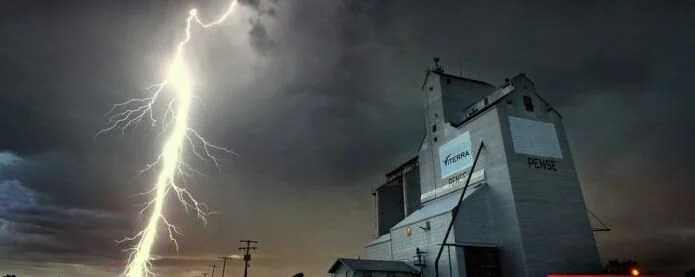
I grew up with a vague understanding of Canadian grain being shipped in huge quantities to the developing world to fight malnutrition and slowly developed the understanding that food, besides being a necessity in this country, was also central to its global reputation.
It stands to figure that such a huge land mass inhabited by only 38 million people (the population of Osaka, Japan) would incorporate agriculture into its identity. It has given rise to the essence of our original people, some of our greatest artistic impressions, our intriguing form of federalism, and the expanded imagination of our collective life. Agriculture and vast territory go hand in hand.
Canadians have only rarely worried about the supply of the food they consume every day, with good reason. Some 70% of what we consume domestically is produced in Canada. And yet over half of what we produce is exported, making us the 5th largest food exporter in the world. It all seems kind of impressive at first thought. We seem to be taking care of ourselves through our abundance.
But then we learn that we are also the 6th largest importer of food. In fact, we have a current trade deficit built into our food system. Only three years ago, the House of Commons Standing Committee on Agriculture and Agrifood discovered that the rate of growth in food imports exceeds the rate of growth in exports. Ontario, for instance, is a net food importer. The province annually imports $10 billion more food than it exports.
Some regard this as a healthy condition. Yet if the global food supply chain falls into dysfunction, we are far more vulnerable than we realize. And if COVID-19 succeeds in breaking the link of the chain anywhere along its vast length, we suddenly become food insecure and in trouble (see previous post).
While 50 countries (307 million people) have been listed as “experiencing food crises” as a result of the pandemic, Canada isn’t one of them. This nation has shipped millions of dollars to these needy areas in response. Yet Covid-19 has hit farmers in those countries hard, leaving women and children the hardest hit. Climate change had already been playing havoc with their agricultural patterns and the disruption in the food trade has greatly hindered their livelihoods.
But we should be spending some time thinking about the security of our own domestic supply systems. At the commencement of the pandemic, an open letter was written to the Canadian government by 163 food and environmental organizations, academics and farmers urging the need for “transformative” change to our own food system. The letter stated:
Besides environmental impacts, the industrial food, agricultural, and fisheries systems have resulted in negative social, economic, and health impacts, including collapsed rural economies, massive farm debt, decreased food security, and physical and mental health issues in both rural and urban populations.
What the letter made clear was that our industrial food model is unsustainable and more highly at risk to attacks like COVID than people imagine. This isn’t merely about the capacity of Canada’s food system, but its very model of operation. Long before the pandemic, our food system was growing increasingly fragile. And the more precarious it becomes, the more damaging events like COVID-19 can become.
Canada has constructed an industrial food model that has proved lucrative but deeply flawed. It has grown weaker over the same period as it’s grown larger and, if continued, will eventually make us even more dependent on outside sources that are in themselves deteriorating and unsustainable.
The reality is that our food system, domestic and global, is beyond our ability to sustain should we continue in our present growth and consumption patterns. COVID is giving us the opportunity to reconsider our fallacies and pivot, reset, to an era of greater food security. But we’re hardly talking about it, or even considering it. We continue on as though the pandemic will end and we’ll get back to food business as usual. That will prove impossible, in the same manner COVID-19 will ensure that other sectors – trade, transportation, business, entertainment – will experience.
The next post will consider what a truly secure and sustainable food supply system will look like in Canada in the coming years, but for now it is vital to acknowledge that this pandemic has exposed the weaknesses in our way of life that existed prior to the virus. COVID isn’t just a virus, but a virtual canary in a coalmine for modern life.