
Habits of Democracy
Sometimes citizens, in their more honest moments, confess to wondering if politics is an effective channel for democracy. It seems as if, in a world where everything is political, it is impossible for just average people of diverse backgrounds to come together in deliberation without blowing things up in rancour.
It’s always best to understand democracy itself as something that isn’t natural to us – proof of which is that it only appeared on the stage of history relatively late. We are wired for self-interest because it was so necessary for survival over the millennia. Even when people coalesced into groups or tribes, it was for the purpose of protection and endurance. Yes, there were advantages like companionship, community, and a sense of belonging, but few believed such things were the ultimate purpose of living in groups. To survive and prevail remained the most visceral reason for collectivity.
When democracy first appeared in official circles in France, Britain and early-America, it was, if anything, a precarious gamble. By granting common people the vote and the ability to choose their leaders, most of the elites believed the masses weren’t up for it – they were ignorant and would simply implode over time. For the last four centuries, that assumption turned out to be wrong and the fates of those nations experimenting with the new democratic model thrived.
Why was that? Why didn’t democratic populations, fighting off various elitist insurgencies, simply self-destruct?
Perhaps because the democratic ideal itself induced in us new means for coming together that depended more on collective deliberation than self-interest. The word “public” became more of a verb than the prevailing noun of the centuries. Citizens came together for the sake of the broader interest. And they learned to do that by developing what we might call the “habits” of democracy.
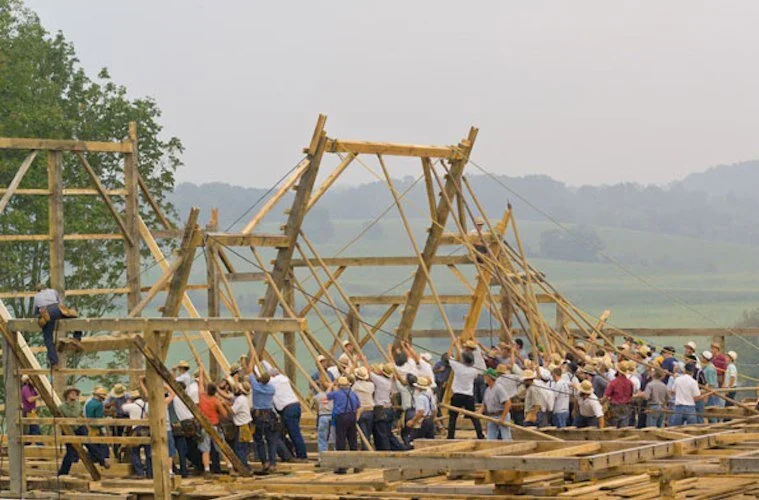
Instead of flying off in every direction, citizen leaders, women and men, developed institutions of association that provided them inner strength and outward solidarity. Over decades they developed public schools, lodges and clubs, labour unions, ongoing organizations for neighbours and neighbourhoods, service clubs, libraries (public as opposed to private) where people could learn about the broader issues of life and be empowered by the experience. They formed community houses of faith, YMCAs and YWCAs, book clubs, women’s associations, sporting and celebrations efforts, public parks that they maintained collectively, even debating clubs and organizations directed at learning skills and hobbies. That is quite a list.
And in the process of all this, citizens made increasingly successful efforts in governing themselves when many believed it was ludicrous, since self-interest was the best method for protecting oneself. Communities were mostly rural back then, but despite distances and differences, people came to together to address issues as wide-ranging as drought and forest fires, the need for school teachers and, yes, schools. The list was extensive, but the point was that each participant made things happen by combining their meagre resources, adequate gifts and talents, and above all their faith in one another.
And it worked – remarkably so. As the modern world constantly evolved, communities developed insurance programs and co-operatives, credit unions and charitable efforts to survive crop failures, local forms of government that required ballots and votes for participation, and, above all, the belief that collective investment could provide services and programs that citizens couldn’t achieve independently.
It all meant that they were breaking the cycle of history by developing democratic habits destined to lift them into a more prosperous future. By attending to all these collective efforts, they were ensuring for posterity that all those habits of coming together, deliberating and deciding, practiced regularly with compromise and associating with one another, ensured that the always vital self-interest could be satisfied better by collective action than individual pursuit.
It is these habits, and our collective investment in them, that have withered in recent years, returning us to the place where elites now believe they can take control back – not for the benefit of the planet but for their own interests.
For the next while, these posts will focus on how, by neglecting to come together with people of other beliefs and interests, we have played directly into the hands of larger, well-resourced, and more sinister agendas that inherently understand they can prevail if they can just keep us from coming together. And we are giving in to those designs by showing an unwillingness, driven more by anger and lack of humility, that increasingly drives us apart instead of in the same direction.
Without fully realizing it, we have permitted ourselves to return to a state of tribalism because we are decreasingly coming together for broader interests and demonstrating the most alienating aspects of human character that flourish more on anger and enmity than sacrifice and common purpose. We don’t have to love one another to triumph, but surely hatred will destroy everything.
Perhaps we may be proving that democracy itself is unsustainable in the long run because self-interest will ultimately triumph over our shared values. We require coming together and developing genial natures, and we are discovering that our present politics, far from bringing us together, has become the key driver of alienating us from one another. And the more politics we have, the faster we drive ourselves apart. Re-engaging with the habits of democracy is now all that can save us.