
Remember our Future
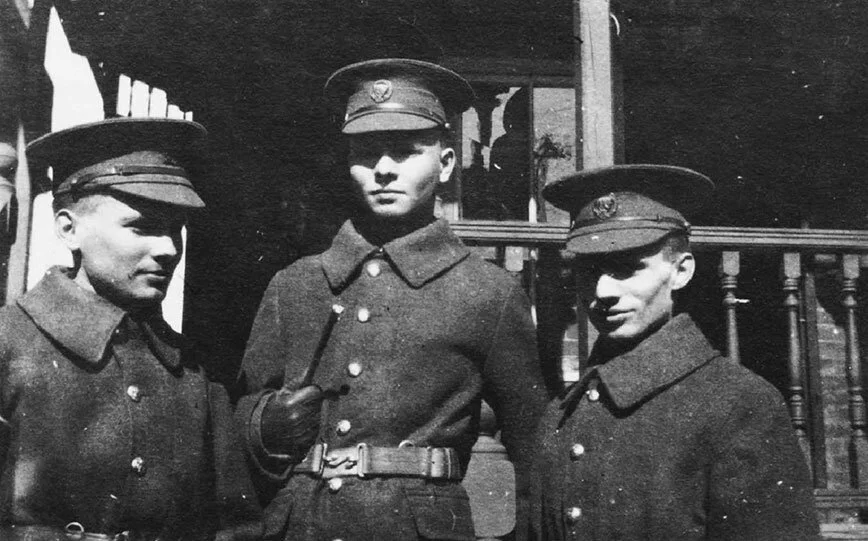
Remembrance Day in Canada has always been something of a Rite of Passage. Seeping into our collective DNA over the decades, it is observed by millions of Canadians, from children to the oldest veterans.
Over time, it has become a national observance most associated with older age. Largely, that is because the wars with the greatest losses occurred either a century or 70 or so years ago. The fatalities were enormous, the cost horrific, and the effects on the Canadian psyche enduring.
The reality is, however, was that participation in these world conflicts was actually about youth. Some 700,000 Canadians under the age of 21 served in uniform in World War Two, with even more in World War One. Stories are replete concerning 13-year-olds, lying about their age, attempting to enlist, with a few actually succeeding because of their size. Hundreds of others, understanding they couldn’t make it to the front, nevertheless joined the Merchant Navy and made their own mark on the conflict.
There are thousands of letters stored in memory boxes, file folders, and archives across the country that celebrated the birthdays of those turning 17, 18 and 19 while in serving in Europe.
In a Canadian war cemetery in France lies a monument to the youngest Canadian soldier to die at Normandy. He was only 16 when he was killed.
It is hard to imagine people so young serving in such drastic and frequently tragic circumstances. They were provided airplanes, ships, tanks, guns, bayonets, bombs and bullets to carry the war against the Axis forces. They likely volunteered for conflict for what they perceived was the glory of battle, only to discover its macabre realities. The average age of these Canadian combatants was 19, once the numbers of officers are taken out of the mix.
In other words, teenagers are largely what Remembrance Day is about. We are dedicated to never forgetting them, yet barely understand the horrors that must have plagued their young minds in global conflict.
And we mustn’t forget those who came home wounded in mind and body – 172,000 in the First World War and 55,000 in the Second. Even the young who remained at home felt the effects of the battles across the ocean. They filled in on the farms and factories, and the minimum age for driving was reduced to 14 so that they could take part in the domestic efforts to support the wars.
One of the great hidden secrets of these conflicts has only begun to emerge in recent years, as we discover that thousands took their own lives after returning home. What we now know as PTSD plagued their post-war days and nights and it all eventually became too much.
It was to the young that Canada entrusted its future in time of conflict and it is becoming time to do so again – not so much for armed combat, but to fight for a better environment, the struggle against racism, prejudice, gender discrimination, violence and a new kind of politics. The peace most recently secured following the closure of the Second World War is in danger of tearing at the seams and it will be the young generations to whom a better future will now be entrusted – not the politicians, economic barons, or the status quo. If we once believed they were necessary for war, then it stands to reason that we must turn to them again to secure a more equitable peace. Their young forebears fought and died for that right and their modern counterparts must now take up that torch.
One young 19 year-old Canadian soldier laying dying on a battlefield in France in 1944, with a friend from his Saskatchewan regiment watching over him, provided his final thoughts, and they are pure:
"It looks like I won't make it this time, Will. Tell my mother and father than I love them - my sister Elizabeth too. Tell them I'm sorry I won't be home to help with the harvest. This isn't how we thought this war would be, is it Will? Maybe people won't even know that I am gone. I hope they do, Will. I hope they do."
We will remember him and the millions of others who perished in pursuit of a better humanity. Their sacrifice secured our future.