
When the Image is All That's Left
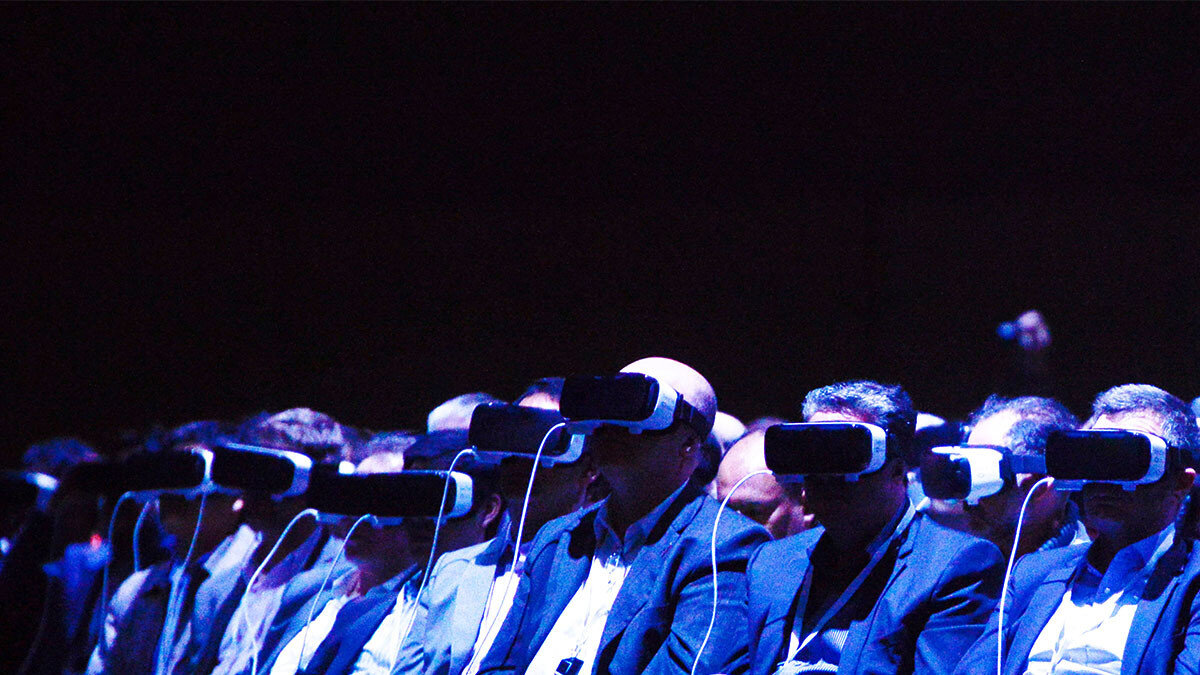
“In reality, the rise of mass media as the dominant venue for democratic dialogue has helped to complete the alienation of citizens from political realities and from one another. At first thought, this statement would appear to be untrue. Are today's citizens not more aware of public affairs than their forefathers? While the answer must certainly be "yes," it fails to cover the entire story.
“The essential fact is not necessarily one of education or knowledge but of apathy and de-sensitivity. Citizens today are literally inundated with messages - a massive influx of facts and fiction that leaves them wondering what is true and what's not, what is real and what is fanciful. The result? People have been reduced to the role of sullen spectators, perplexed and lost in a vast array of images. Yeats was perhaps more correct than he realized when he penned: 'The visible world is no longer a reality and the unseen world is no longer a dream".
I came across these words I had written in a book about citizenship back in 1998 – with the Internet in its infancy and Facebook, Twitter, Netflix weren’t even yet a dream. I worried back then how citizens, unmoored from their institutions and slowly migrating to isolated lives in their homes and on television, could lose their capacity to maintain the remarkable cultural hegemony that been built following World War Two and with the development of the middle-class.
It is true that television and other technologies communicate with people through vivid images. Initially, this was an invigorating prospect for its early developers. Even Marshall McLuhan, with his instinctive comprehension of the limitations of media, concluded that watching television would require active participation on the part of the viewer. We have now come to understand that the name of the game is passivity - people's minds tuning out at the same time they are tuning in.
In The Third Wave, Alvin Toffler spoke of how average "citizens in the past acquired certain images primarily through the institutions of their day – the family, church, political establishment, etc. He then adroitly described the massive change that the modem media has brought upon society:
The child no longer received imagery from nature or people alone but from newspapers, mass magazines, radio, and, later on, from television. For the most part, church, state, home, and school continued to speak in unison, reinforcing one another. But now the mass media themselves became a giant loudspeaker. And their power was used across regional, ethnic, tribal, and linguistic lines to standardize the images flowing in society' s mindstream.
Toffler classifies this as part of the "second wave" of societal development. He goes on explain that it is being rapidly replaced by the technological innovations of the "third wave," in which the pressures on the modern mind become staggering because of the media's sheer monopoly of the communication venue. His conclusion? "We find it impossible to cope." He correctly assumes that this modern array of images will not only accelerate the information flow flooding into our brains but will consequently "transform the deep structure of information on which our daily actions depend." This is all the more significant when one realizes he penned these words in 1980.
Nietzche profoundly observed that "understanding stops action." He was only partly correct because there are a good number of intelligent people who have been spurned to action by their new-found knowledge. But the sight of millions of citizens hooked into the modern media and yet rarely involved with political realities would seem to lend a certain credence to Nietzche's claim.
Knowledge is meant to provide individuals and groups with a greater respect for the complexities of life, and the rapid development of modern civilization is living testimony to that fact. But the dominance of modern life by today's media in increasingly creating a citizenry accustomed to much the same images and forms of communication. In past ages, individuals and groups out of necessity had to do much of the creating; the family, church, school, etc., providing the arena where people put their own thoughts and visions on display. Today it is all accomplished for us in living colour and stereo sound, leaving us with little else to do but watch and listen.
We are thus being provided with a multitude of images which are most often empty of substance and therefore become stereotypical. Even accounting for a variance of tastes, we all basically watch the same television programs, attend the same movies and listen to the same songs. We are a society fast on its way to becoming bland, and the more media outlets there are, the faster we seem to be getting there.
A nation that watches the same television programs but from the privacy of their own homes is in reality a fragmented nation. Such a form of communication is a weak, and sometimes pathetic, substitute for genuine dialogue, where the media simply facilitates the communication link rather than supplementing it with its own agenda. The debate about media and its influence must come from the people themselves, ordinary citizens who are able to envision a more robust democracy than what presently exists. If the people don't bring about that debate, the likelihood is that it won't be brought about at all.