
Something Other Than Human
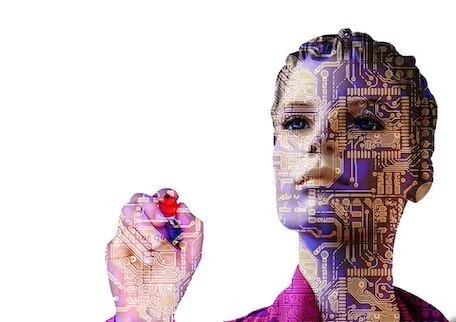
In 2016, well-known commentator Andrew Sullivan penned a 7,000-word essay in New Yorkmagazine that carried an alarming title: “I Used to Be a Human Being.” His 100,000 people a day readership immediately dug in and learned some pretty intriguing things about online addiction.
Sullivan was one of America’s premiere bloggers, who had eventually crafted a team around him that would curate all the news they could to sift for him and then he proceeded to blog every 20 minutes or so on their more intriguing findings. His life was quickly becoming other people’s opinions and he turned it all into an influential business.
But he was growing more alone and physically sick. His doctor examined him and then cautioned: “Did you really survive HIV to die of the web?” It shook Sullivan to his core. He had believed he could immerse himself in the digital world and be a functioning part of the human environment as well. He was now discovering that the former was eating away at the latter. All that information. All those opinions. All the criticisms. All the arguments. All these had turned him into a kind of curated person himself, made up of things he read but losing his ability to humanly connect as a result.
That visit to his doctor caused him to quit the web for a time and eventually check himself into a centre for meditation. He quickly discovered that living offline felt impossible for him. In his words:
By the last few months, I realized I had been engaging — like most addicts — in a form of denial. I’d long treated my online life as a supplement to my real life, an add-on, as it were. Yes, I spent many hours communicating with others as a disembodied voice, but my real life and body were still here. But then I began to realize, as my health and happiness deteriorated, that this was not a both-and kind of situation. It was either-or. Every hour I spent online was not spent in the physical world. Every minute I was engrossed in a virtual interaction I was not involved in a human encounter. Every second absorbed in some trivia was a second less for any form of reflection, or calm, or spirituality. “Multitasking” was a mirage. This was a zero-sum question. I either lived as a voice online or I lived as a human being in the world that humans had lived in since the beginning of time. And so I decided after 15 years to live in reality.
Sullivan’s transparency created quite a reaction. The criticisms he received were as frequent as his often were in his own posts. A few admitted, however, that Sullivan’s honesty had revealed their own weaknesses. The Internet had taken over everything, it seemed. Worse, their identities were directly tied to how many people read them. If their numbers went up, they had a good day; if they declined, even for just for a few hours, they fell into a kind of despondency.
We shouldn’t be surprised to learn that an increasing amount of people that we know have taken to attempting to spend more time offline if an effort to decrease anger, depression, insecurity, even fear. Recent research has assisted us all in realizing that our brain can be tricked just as easily as it can be enlightened. The digital world can be all about our proclivities instead of true learning. We discover that we surf in order to verify our opinions, to denounce those we don’t like, to appear engaged, to build a base of followers (most of who don’t know us), and ultimately to feel like we matter in a world of inanity. Without realizing it, however, we become more irritable, less connected in human terms, more friendless and, more frequently than we like, defined by a fabricated online image of ourselves rather than the real thing.
This is a problem that we all struggle against. As our information becomes more digitally integrated and filtered, we become more disconnected and isolated. Most won’t admit it, naturally, yet an increasing number of people are confessing to feeling damaged by the experience.
It all becomes about the loss of essence. We become what other people say rather than what makes us meaningful creatures. We become more negative instead of affirming, more individual than collective, more closed than open, and less ourselves than we imagine. Or as Sullivan put it himself in his closing paragraph: “This new epidemic of distraction is our civilization’s specific weakness. And its threat is not so much to our minds, even as they shape-shift under the pressure. The threat is to our souls. At this rate, if the noise does not relent, we might even forget we have any.”