
The Flop That Became the Classic
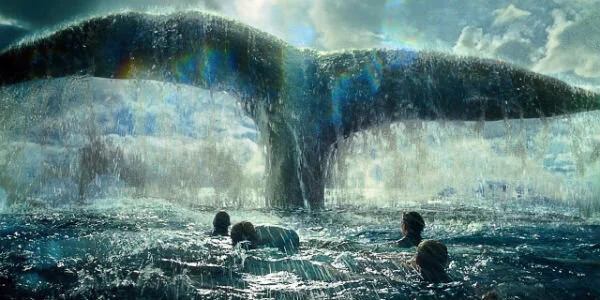
I hadn’t realized that yesterday was the 200thanniversary of Herman Melville’s birth until it appeared at the tail end of the news. He was most famous for the literary classic Moby Dick,which was first published in 1851. Many of us who have been around for a time will recall reading at least parts of the story of the great white whale as part of a school exercise. That was perhaps part of the problem. It was a lot to slog through as a delivered assignment for young minds.
To be truthful, I just couldn’t get into it. Talking to some folks yesterday, taught me that most of them were the same. It was long and, to me at least, painfully boring. But that’s because being young isn’t about being patient and there’s little of life experience to add personal understanding about a book in which its subject doesn’t show up until the final pages and wreaks havoc. The end was fascinating and terrifying but it was getting to that point that was so difficult.
One character, Captain Ahab, was indeed larger than life. He had lost a leg to the great white creature years earlier and had been on a vendetta ever since. The trouble was that he dragged his crew along on the ultimately fatal trek of revenge. Getting to that point was a laborious read and once arrived at, it was so hellish and brief that it plagued the mind for some time afterwards.
Melville knew what he was talking or writing about though. He had worked on a whaleship during long and protracted days on the Pacific Ocean. He understood the boredom and relentless physical travails of “whaling” and put it all down accurately on paper. During one of his voyages he came across the story of the Essex – a whaleship rammed by a giant sperm whale and sunk. It’s what gave him the idea of a fictional account of a great white sperm whale with a memory to match that of the obsessed captain seeking it.
Melville wrote the story years later while living a somewhat idyllic life in New England. He sent the copy off to the well-known Nathaniel Hawthorne, who encouraged him to find a publisher. Eventually he did. When it emerged it turned out to be a flop. Some reviewers savaged it. Selling only 2,300 copies in its first 18 months, it ultimately sold 5,500 volumes in the next 50 years, going out of print even before Melville’s death.
And yet somehow it survived its own lack of success. Years later it came into its own, with many well-known reviewers and literary historians lifting it to the level of “classic,” along with epics like the Odysseyand Don Quixote. People began viewing it as a treasure trove of subjects – gender, courage, failure, sexuality, friendship, hatred, environmentalism, politics, religion and death. It became clear that Melville had adopted the sweeping tones of the Bible and Shakespeare.
On the centenary of his death (August 1, 1819), Moby Dick was named as the “Great American Novel.” Famed William Faulkner wished he had written it and D. H. Lawrence wrote: “Moby Dick is one of the strangest and most wonderful books in the world – the greatest book of the sea ever written.”
I picked it up to read it again after the release of In the Heart of the Sea– the Ron Howard film with Chris Hemsworth, structured on Melville’s classic – almost 50 years since I had read it last in high school. It was still a slog, but the depths of humanity running through its pages were rich and deep. It was easier to comprehend because I was older and life more complex.
And maybe that’s just the thing. Years lived and experiences gained more frequently speak to the success of a book than just the author’s words. It takes comprehending readers to sometimes make a book understandable. Though at times a difficult read, Moby Dickwas nevertheless much more satisfying the second time around because, well, I had grown into it. And as a classic, Melville’s novel will create that same experience for many others for years to come. One wishes that he could have known that in his final years, so that he might have enjoyed its success, scope and reach.