
Humanity Rises as the Planet Falls - Our Greatest Paradox
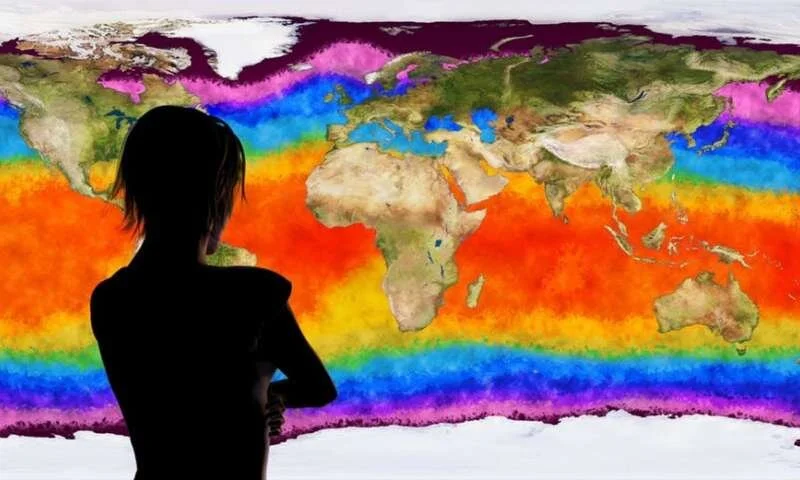
If Christopher Columbus were to arrive in America today with his three ships, he would find 30% less biodiversity today than when he landed in 1492. That’s a claim made in a new collaborative book called End Times,and it’s got a lot more to add. How about this: The global population of vertebrates has declined by 52% between 1970 and 2010? That is staggering.
One of the great difficulties in talking about climate change is that we all now know the severity of it all. Each month it seems, a new study emerges, revealing the climate danger we are now in. Some psychologists believe this constant ringing of the alarms on environmental doom-saying actually makes people less inclined to act because they believe it all to be hopeless. And yet act we must.
A great irony of this severe climate change era is how many aspects of the human race are improving. At the same time as environmental danger competes for our attention, we discover that one billion people have been lifted out of desperate poverty in just two decades. People are living longer. Wealth has grown exponentially, even if it hasn’t been shared equitably. Travel is cheaper and easier. Medicines have flourished. The rights of women are improving. People are better educated. The good news stories are many and of consequence.
And yet as all this is going on, our natural home is being destroyed – largely by this improved humanity. Somebody even developed a term for it, claims End Times – “the environmentalist’s paradox.” It is a great irony when you think about it. Throughout most of civilization, poverty, death and lack of opportunity were the common traits. But during those years the planet flourished, abounding in its natural state and well capable of supplying all kinds of living creatures, including humans. But in the last 200 hears, the human fate has improved exponentially, in staggering ways. Yet it has been in that same time period that the planet has been largely accosted and reduced in its capacity.
This is just another way of saying that all that human progress was largely occurring at the expense of our natural home. Our getting better meant that it got worse. The more resources we acquired, the less the planet had. The more we consumed pure water, the more we polluted the oceans. As we learned to live decades longer than those of 1,000 years ago, we discover that the current species extinction rate is 100 to 1,000 times higher than it was back then.
In other words, we are kind of living a lie, right? We’re definitely living beyond our means. But if our health is directly related to the planet’s illness, how will we deal with that exactly?
The sad thing about it all is that we know; in many ways, we’ve always known it. But we wanted those material goods in abundance. We wanted our freedoms. We pressed for lower taxes decade after decade, and our politicians, more like followers than leaders, gave them to us is a fashion that left their own cupboard bare when it came to investing billions, even trillions, of dollars into infrastructure to save the planet and live more sustainably.
We understand all that now, but what is amazing is that we still won’t sacrifice what we need to replenish, save, reinvest in our planetary home. We still want the larger vehicles. We still vote for governments that expect so little of us. We have held on to our riches as our planet fell into poverty.
These are never easy things to talk about. The psychology of the human race has somehow prompted us to continue in the very practices that collectively put us at greatest risk. It’s not what most of us intend or even want. We require clear-headedness and leadership at all levels of our society that convinces us to make some sacrifice for our very survival. We are capable of it – more than capable – but time is limited. As Susan George put it: “Intellectually we know all we need to know, technologically we could remedy our plight starting today, but inertia and vested interests rule.” We are living in the best of times and the worst of times in the same moment. And that paradoxical moment is calling on us to act.