
Citizenship's Many Faces
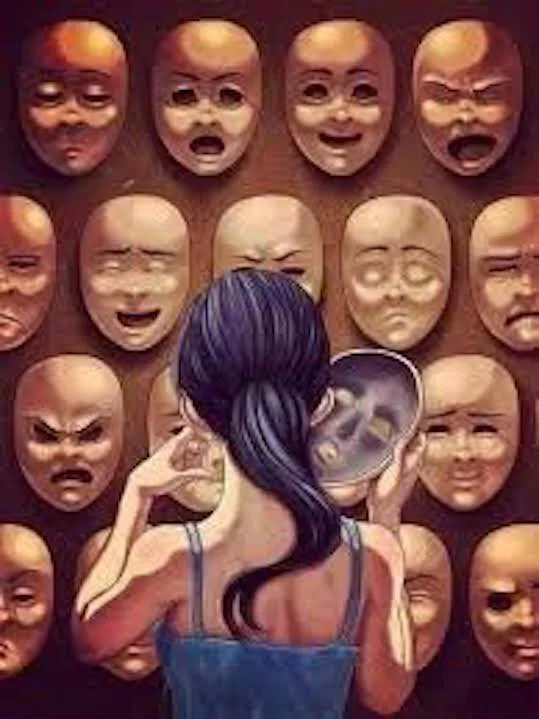
In his Politics,Aristotle wrote: “The nature of citizenship is a question which is often disputed; there is no general agreement on a single definition.” Imagine what the ancient Greek philosopher would think now of the numerous versions and dynamics of citizenship present in the world today.
Citizens are voters. Citizens are constituents. Citizens are consumers. To be sure, citizens are all of these things, but at the same time they are much more, and capable of much more, than the modern political system appreciates.
Governments themselves are facing their own pressures for which solutions are difficult to implement. Elections swing more radically from one spectrum to the other, making it easier for just one issue to bring down a government.
In our efforts to cope with these challenges, citizens are quickly falling into various postures.
There is the pessimist. Racism, elitism, economic inequality, government failure, the loss of trust – such things, manageable in the past, are now overwhelming us. The pursuit of the individual good has overwhelmed the care of the public good.
The second type of citizen is the optimist, and naturally enough he or she has cause for hope. New technologies are making us all more understanding of one another. Authoritarian regimes are slowly crumbling in the wake of democratic reforms. We have always been able to overcome previous difficulties as citizens and we shall surely come out of our present malaise stronger for the experience.
Then there is the pragmatist. The pragmatist calls for changes to take us into the next century. This classification of citizen has found its ultimate present expression in economic matters, calling on societies to change their current structures to prepare for the future.
Occasionally we see the principledcitizen. Often such a role is left to moral and ethical leaders, who encourage us to work on traits of character in order to better serve our communities – to forgive, insist on transparency, show tolerance for other opinions, to develop a more cooperative nature for the greater good. She or he focuses on our inner capacities as a means for bringing about external change.
Increasingly, however, our democratic dysfunction results from the effects of the type of citizen which perhaps forms the greatest part numerically of citizens worldwide- the self-absorbed. Such individuals give little thought to the larger picture unless it interferes with their own personal lifestyle. Much effort is expended by political parties, civil society groups and activists to rouse such individuals to take more personal responsibility for their communities, but often to little avail.
It remains far easier to affix the blame for our current problems on governments or institutions than to admit that we ourselves are not doing enough and might actually be the causes of our own effects.
Yet to cope in present circumstances, citizens must learn new abilities and effective means of dealing with the pressure. The reality is that citizens can possess all these traits at once, but all too frequently, especially over time, they grow disenchanted or worse, disinterested.
The presence of large numbers of citizens in today's society who have failed to rise to this opportunity is perhaps the largest single reason as to why citizenship is in the doldrums. What's more, the sheer size of such a group only provides proof to citizenship's enemies that the concept of democracy itself doesn't work.
Whether we like it or not, we are formed by the opportunities and barriers, the temptations and threats the larger world presents to us. And if we would be the kinds of citizens we really desire to be, we cannot ignore that larger world - we do so at our own peril. Our problem is how to educate ourselves as citizens so that we really can begin to take part in our own futures in ways which make for better societies.
There is no reason a modem citizenry cannot participate in this larger world much more knowledgeably and actively than is presently the case. The political failures of the moment must be balanced by an increased level of citizen activity if our democracy is to survive. The responsibilities of citizenship have grown and our only hope of personal fulfillment and maturity is to grow along with them.