
The Secret Nook - Chapter 14 (Somewhere In the Future)"
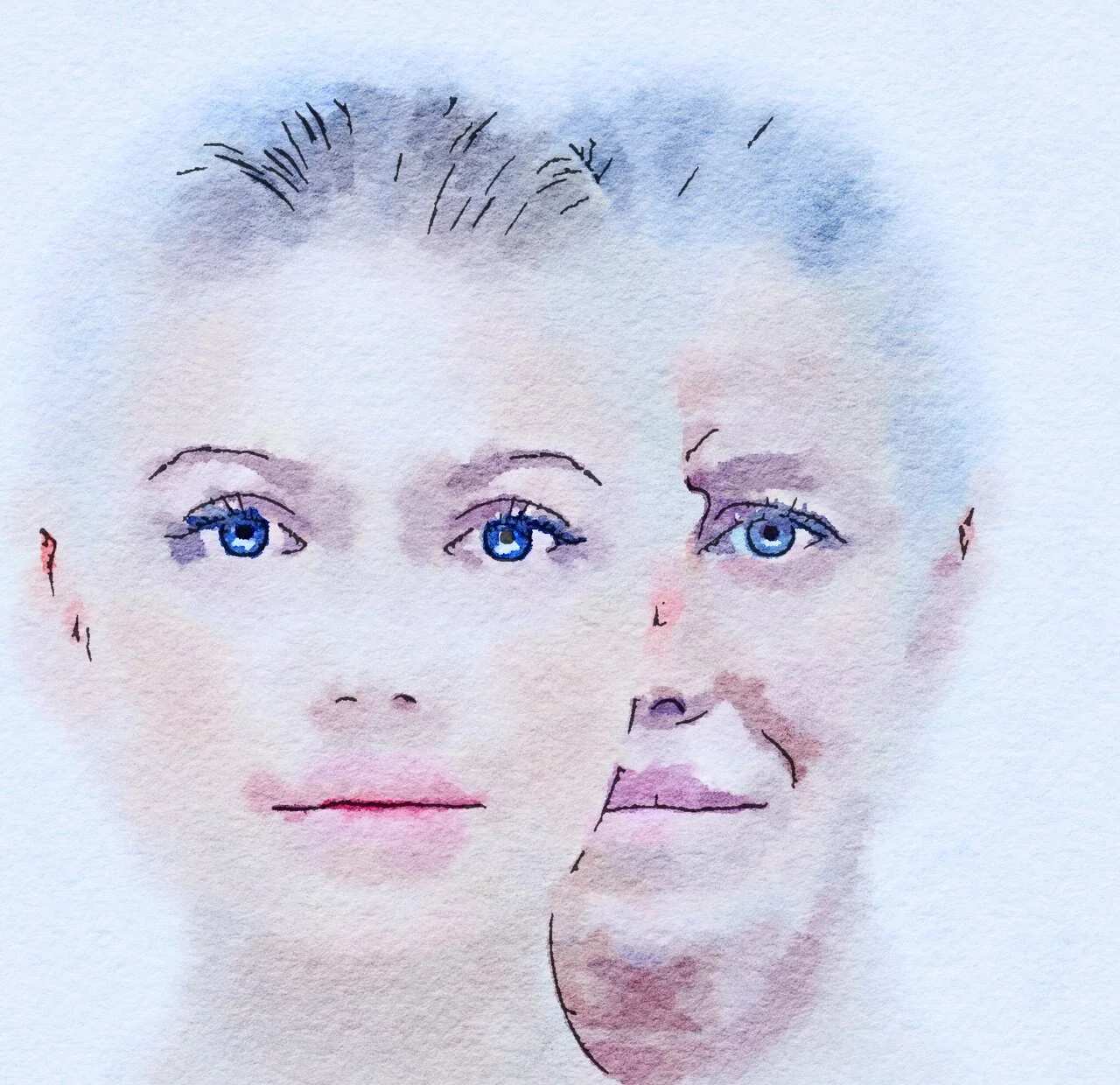
The conversation had been wide, yet introspective – and long. Meadow told him of the crash itself and the immediate aftermath – details he had never known. She spoke fondly of Nana, but also of the terrible price they both paid at watching a mother and daughter waste away from a brain injury that eventually took her. She left out the romantic parts of her life, in part because she felt they weren’t important and also because she didn’t take well to revealing that she just might not be a suitable partner. And he never asked.When she felt exhaustion creeping in, Koay mentioned that he had placed a frozen lasagna in the oven soon after she arrived and that they should move to the kitchen. She was thankful that he seemed to understand she needed the break. Placing the plates and cutlery on the small old pine table, she asked, “You knew I would come, didn’t you?”The old teacher closed the oven door and with difficulty placed the tea towel over his shoulder. His eyes traced the counter in front of him and then looked up into her own.“Yes … at least I’d hoped so. I knew you had the choice to go back to Charlottesville, but the emotion flowed strong in you and I thought it would not let you leave.”Things were quiet for a time as they continued their meal preparation. Meadow offered to help him take the tray from the oven, but he begged that she allow an old man his moments of pride. In a practiced fashion that he must have developed over the years, he placed oven mitts on his forearms and somehow manoeuvred the hot lasagna onto the mitts, and then, gently, onto the table.“That was impressive,” she offered in good humour.“It wasn’t always that way,” he countered. “In fact, I still have some burns on my skin from so many failed attempts.”He had produced some red wine and garlic bread to go along with the meal and she cut the meat and flat noodles into sections, placing them gingerly on each plate. The only sound for a time was that of their knives and forks scraping the plates.“Duyi, I don’t fully know why I came here. Do you?”Her plaintive tone caused him to put his fork down. “You came because this is where you are. I know that is difficult to comprehend, but I hope you might understand that the Meadow Hartley that you will be has been prompting you to move on with your life, and since this was where you chose to leave it, then you would have to pick it up from here.”“Yes … it’s … difficult to comprehend,” she said.He motioned to her for more wine before saying, “We all have our future personalities in our lives. And we all have desires to be better than we are, to pursue those things that matter in life, to recover lost love or forgotten talent. That person is in every aspect of our lives. In moments of love and anger, waking and sleeping, safety and danger, and rest, marriage, children, fear, loneliness, friendship, knowledge and art, health, sickness and death – she is there in all of these.”He seemed a little frustrated in attempting to capture the words, yet continued on.“Think of our relationship to nature, ideas, to pleasure; think of our sense of identity and self-respect; think of where we live and with what things we surround ourselves; think of all of our impulses to help others, our serving larger causes; think of all our psychological and biological needs; think of where we go, how we travel, with whom we associate. Or just think of what you were doing yesterday, what you will be doing tomorrow, or in an hour. She is there in all of it, waiting for you to grow into her and attempting to draw you to her.”“That’s interesting,” Meadow said. “I sometimes have felt that tug, but I just assumed it was to the past, to the memories of my mother and father, and to a happy life.”“And sometimes it is,” he added. “But I have lived long enough to know that it is always more than that. I say this from experience. I am closer to that person I seek now than I ever have been, thanks to my many years.”This all seemed, perhaps, too metaphysical for her. Yet it was registering somewhere within her soul, making it impossible to escape. Perhaps it was the Eastern mystic in him, speaking out from a past age, glad for an opportunity to reveal its wisdom to a new generation. “Each moment unleashes a hundred messages from God,” she remembered her Dad saying once, as he tucked her in at night. It was odd coming from him since his religion was more of a quiet and reserved thing, but he explained to her the next day that he sometimes felt a divine pull when he came upon a majestic mountain or beautiful heritage building. They were transcendent moments, he had told her. Is this one of them?she asked herself. More importantly: were there others?“Let’s just leave the dishes; I’ll get them later. Let’s go sit on the softer chairs in the studio.” From somewhere he produced some Chinese tea in a large pot. They sat facing one another, each cradling a tiny ceramic cup.“You do much better with daily tasks than I recall when in your class?” she noted.Koay looked down at his cup before saying, “That’s therapy for you … and practice. Over the years I have developed some basic motor skills which have helped with the daily chores. I couldn’t have held this cup five years ago. I will never be free to paint as I once did but neither am I chained to my paralysis.”There were those words again – free, chained. She remembered such phraseology had been part of her instructor’s way of communication since she had known him, but in this particular moment his selection of words was instructive.She looked up to see him smiling at her. “The proverbial penny for your thoughts,” he said quietly.Meadow sighed. “I was just thinking that we are just flirting around the edges of this situation, but the time has arrived for you to tell me what you think I should do. I am lost; I admit it.”“Not if you are here,” Koay said. “You have arrived here in this place, not because it’s the place where you recover your past, but where you begin your future. That is hardly what I would call lost.”“That’s encouraging, but I need to find the woman you say I am in the future. Unfortunately, I’m not even sure I understand the concept.”He paused, as if reflecting, which he surely was. “That is always the problem with Western thought,” he began. “People envision their world in concepts, economies or new ideas. The East developed in collective fashion; people lived their lives out in relationships since they were part of an ecosystem of responsibilities to others. Observers sometimes say that the East and West see the world differently, but the truth is that we see two completely different worlds. We not only see our dead ancestors as still part of the living, we see ourselves as part of the future and therefore have a consciousness of our future selves. It is much like how religious people find a place for themselves in the afterlife. Even with no proof that such a place exists, they have felt themselves there for their entire lives, and that is all the proof they need.”Meadow smiled before offering, “You sound so much like my Mom and Dad right there. They were people of faith, not outwardly so, but they always believed that we would all be together again someday.” Her eyes suddenly moistened and she drew quiet.Koay waited a respectful moment. “In China, we believe our parents are still with us, guiding us, chastising us, encouraging us.”“Funny, but I believe that too.” She used her sleeve to wipe away a final tear.“But why would you? They are gone, not here.”“I see what you’re doing,” she said with a smile. “I believe they are here because I still feel their pull towards me sometimes, and what you are saying is that the woman I will be in the future creates that same tug in me now.”Koay laughed slightly. “You always were my brightest student.”“But how … how does it work, Duyi? How do I get better at finding myself?”“Somewhere in every human being there exists an intimation of what we are yet to be, what we can be, and it is calling us – often wordless and obscure, but calling to us still. It is a longing, a call, that throws into question every other aim and purpose of our lives. We do not hear that entreaty very often, or distinctly, but when we do hear it, we see that it comes from a part of ourselves that is disturbingly unrelated to the rest of us.“The life of every man or woman contains glimpses of another quality of being, another state of consciousness that our busy lives have no respect for and thus seek to cancel or crowd out with other things that are supposedly more important, more real, more here. But we begin to see what life is like outside of the walls of our prison whenever that urge, or that call, comes to us. The Eastern mystics viewed these as moments of grace, granted to us to keep us believing in things greater than ourselves.”“Well, I must admit that it all sounds appealing, and it makes sense given what I’ve been experiencing and thinking lately. But how do I get there from where I’m at right now?”Meadow’s question prompted an unexpected reply.“The important thing is not where we journey to, but what are the tools that assist us to arrive there. In such moments, when we sense the call, we literally divide into two. A second self appears which at first confuses us, even terrifies us, but as it continues to emerge we come to realize that is the better angel of our nature, our future self, urging us to open the door, leave our prison, and move forward, not back. It is an unveiling of ourselves, and those moments become utterly lucid and begin to free us from our burdens, including the present and the past.”“Oooookay … but the tools; what do you mean by that, because obviously I can’t get there without them?” She had pulled herself forward onto the edge of plush chair – a subtle movement her host noted immediately.“Sadly, while we occasionally see that second part of ourselves, we are never in consistent contact with it. The secret is to develop that relationship, which can only be done through the gifts given to us. We must ask ourselves if we are forever cursed: will such moments occur only accidentally or sporadically, or is there a way of living that brings us more into contact with one another? More important still, can the two be harmonized to complete us?”“And the tools?” she asked again in flustered fashion, feeling he had forgotten her question. “What do I use to reach out to myself?” If Meadow would have heard herself utter such sentences even a week ago, she would surely have thought she had lost her mind. But at this specific moment they were like a prayer – a desperate call for help.“To answer that, we must begin an exercise,” he said, moving his way to the kitchen for more hot water, leaving his guest in a heightened stated of exasperation.