
The “Stupid” Factor
The release of the star-studded Netflix movie Don’t Look Up has launched a global debate on whether the human race is really as stupid as the plot conveys. A comet is hurtling to earth, threatening destruction. Still, instead of being galvanized around the survival instinct, an entire denial industry erupts, questioning the science, the government, and ultimately whether the comet itself. Ultimately, the end comes, the only earthly survivor being the U.S. President’s chief of staff emerging from the rubble and attempting to send out a text on his phone.
Sure, it was meant to be a parody of this planet’s inability to band together to overcome extinction-level events, but it proved effective at projecting so many entrenched human agendas incapable of saving the very people and organizations that designed them. Some are just born to disagree, even in moments of catastrophe.
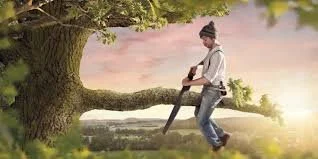
We are supposed to be at the top of the evolutionary ladder, capable of actually changing the world for the better. Now we are beginning to see that we’re just as likely to destroy what we touch, tarnish all that we dream, put at risk all that we love.
A few years ago, Scientific American magazine reminded us that our bodies contain 37 trillion cells. Our brains hold 86 billion neurons. And our hearts are sophisticated organs made up of some two billion cells. Our DNA has been capable of refinement and adaptation century after century. Unlike any other species, we have been equipped with tools that seemed to guarantee our perpetual existence.
And yet we are repeatedly approaching a cliff that could toss us over and spell the end of us. For all of our advantages, we are proving incapable of taking this moment seriously enough to come together and fight for another day. We are on our way to becoming the great supernova of a Shakespearean tragedy. We needed institutions to guide us, but we chucked them to the side. We required science to live our lives on such a sophisticated level effectively, but too many of us tossed that away as well. We had the capacity and opportunity for actually voting in representatives who could walk us back from the ledge but instead voted in too many politicians more tuned to political survival than the kind that really mattered.
Perhaps Stephen Hawking had a point when he said to Larry King back in 2016 that, “Humankind is still greedy, stupid and the greatest threat to earth.” He saw climate change as our greatest threat, but we can’t find any agreement about the ways ahead even in that. Our leaders in Glasgow just a few months ago couldn’t work it out either.
We all likely know that we’re doing a lousy job but have no way of knowing what to do. Even Omicron can pull us together. Losing the likes of the Desmond Tutus, Nelson Mandelas and Vaclav Havels, and the other ethical voices of insightful men and women of the world has left us in an echo chamber where we only hear our own words bounced back to us through endless filters and endless opinions.
It all leaves us with a question: were we really as intelligent, intuitive and innovative as we thought? How smart were we really when we couldn’t heal our planet, our political and economic systems, or ourselves? If not intelligent enough to save ourselves, just how capable were we? The BBC is asking if humans have now reached their peak? Psychology Today presumes that “stupid” is just an essential part of human nature. We aren’t quite what we thought we were.
It’s crunch time – has been for decades. It will probably be up to the community level to discover and develop a new way of living together. It would require everyone to give up their rigidity to find a malleable way forward. Yet we have all known people that simply can’t function in such a fluid fashion. If enough of them exist today, then future hegemony will never be built. It’s all up to us, but we seem to have lost faith in our collective selves.
