
Clear-headed Error
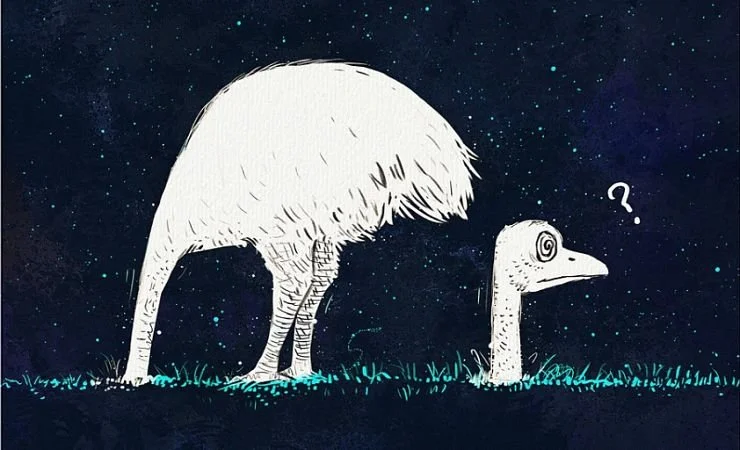
It’s called the Single Perspective Instinct, and it’s been with us since humanity’s earliest stages. That’s true for a couple of reasons. It’s nice to feel sure about things, and it makes simplicity highly attractive. Unfortunately, it has led t moments of great human sorrow and loss.
A portion of the problem is that those heading down that path feel they have achieved or been surprised by what they believe to be a moment of great intellectual insight. It feels empowering and something others have missed. Suddenly, other problems are minimized, and another world gains instant focus.
We’ve all had revelations like this. In those moments, we become like the Gnostics of a previous time, who got their name from the Greek word gnosis, meaning “knowledge of mysteries.” But they existed in an ancient time, long before science or evidentiary proof when opinions were the equivalent of facts.
In ways, modern psychologists have trouble getting to the bottom of, those experiencing these revelations perform the remarkable act of seeing all other problems through this secret knowledge. Everything comes into play, like economic loss, war, politics, personal issues, health breakdowns or even natural phenomena.
Much of this can be akin to ideology. Those on the Left or Right of the political spectrum, for example, perceive the world through a free market or a progressive lens. Everything is explained or prophesied through some basic assumptions that somehow make the world understandable. If a problem confronts their mind, it quickly runs down specific channels, often determined by bias, that derives the answer through a simplistic worldview.
All this saves a lot of time which often comes at the expense of wider thinking or broader understanding. Another downside is that the person spends too little time examining the problem: no need to spend hours researching when you already know the answer.
This narrowness of vision is all too frequently where the costs of filtered media come in. Social media learns through your clicking patterns what your interests are, and if they are unidimensional, that’s what ends up on your viewing stream. That makes the tech firm money, but it also saves you more expansive thinking. What is lucrative for the former also becomes hugely limiting for the latter – a one-sided bargain.
Understanding or comprehending the world we live in takes a lifetime of research, thought, reflection … and humility. We are frequently wrong at various points in our journey, but if we don’t hold to a broader view, how would we know it? And if we aren’t aware of our ignorance, how would we see or acknowledge our blindness? If we only entertain friends who hold similar views, how will we come to terms with the broader world around us? Yes, it’s just easier to see everyone else as wrong, but it leaves us more limited by the encounter than enlightened.
The great thinkers, philosophers, even scientists understand that truth is a multi-faceted gem that shows up differently in various lights. Reality can sometimes oppose itself and yet still carry the nugget of wisdom that permits us to adapt to the contrariness of life. As our world gets smaller, sadly, so do our minds, and it becomes easier to just rely on our sentiments, our bias, our lack of context.
As Socrates once put it: “The only wisdom is knowing that you know nothing.” Can we accept that? If we can, then wisdom is within our reach, and if not, then ignorance and impatience become our way of life.
