
COVID-19 and the World's Food Supply
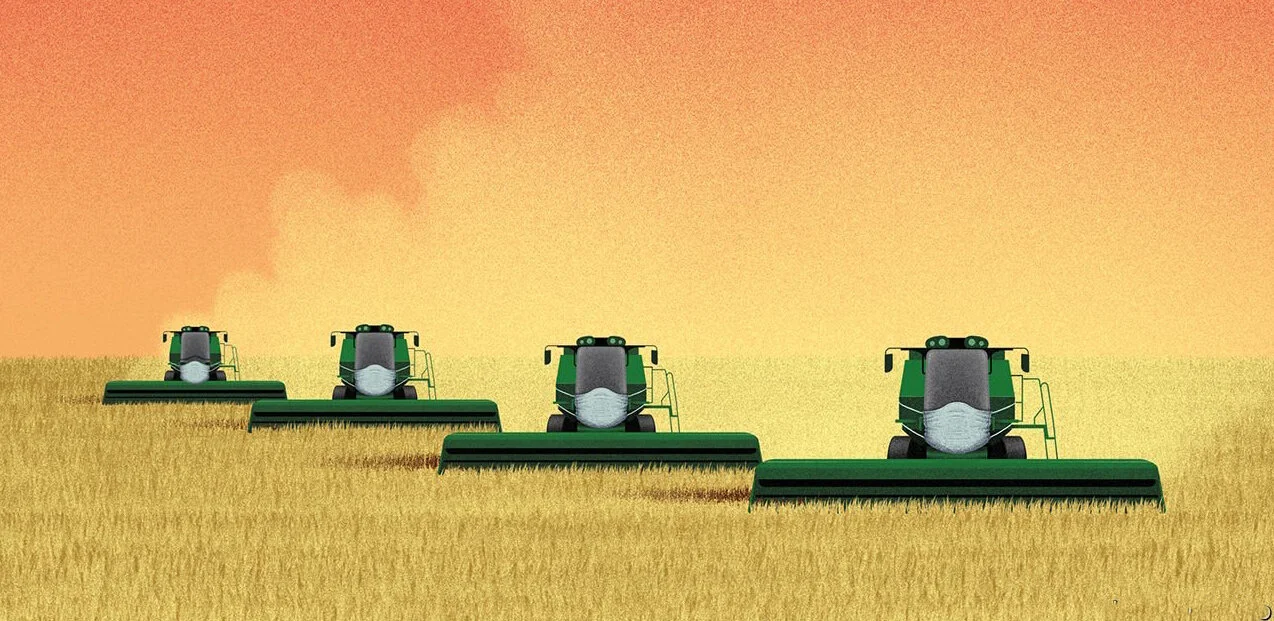
Of course, Covid-19 is putting things at risk – our economy, our travel, our communities – ourselves. These are things we see and know and they affect us because we’re right in the middle of them. The larger realities of the pandemic are often on the periphery of our consciousness, however, as we seek to get through the current crisis. Increasing death in the world’s poorest nations, the overall effects on climate change, pressures on global trade, the more limited options confronting global refugees – these and much more frequently point to the fragile fate of the world’s humanity.
Other than the first intense days of the pandemic, worries about where our food would come from were rare. The hoarding of supplies in those earliest days eventually gave way to a more regulated shipping and acquisition of food. Little did we realize that behind our pressing daily struggles was a global food system under intense duress. Shipments were missed, as ships, trains, trucks and airplanes were cued up, unable to depart in all the confusion and congestion. Food rotted on docks or in warehouses. Prices dipped and soared. Grocery stores were closed then re-opened. Social agencies couldn’t locate food supplies for feeding the hungry.
So, here’s a question: If one billion people in the world were going hungry only two months ago, what’s to become of them now? And here’s another more perplexing question: since the majority of the world’s poor actually work in the agricultural sector and in food chains, what will become of their employment should the food system suddenly tank? Since women are the most vulnerable people in that sector, does that mean, as it always seems to, that women and girls will bear the brunt of global supply failure? Of course, they will, since they were already disproportionately afflicted prior to COVID-19.
When we think of the global food chain and its security, we think of food planting, harvesting and selling on the open market. Yet we forget that the essence of the supply chain is actually the workers keeping it functioning, and most of them struggle in poverty. Lose the people and you’ve lost the chain.
Most places, like Canadian communities, are hardly food secure but depend a great deal on global supplies. It’s true, almost everywhere. Four-fifths of the global population exist on imported food. And it’s mushrooming. According to the Economist, the $1.5 trillion spent on feeding the world last year is three times more than it was in the year 2000 – a mere 20 years ago.
It is this focused demand on an internationally enmeshed food shipment design that, for a time at least, seemed destined to feed the world indefinitely. But that’s just the problem: a system of such complexity, filled with rich and poor, vegetables and meat, culture and demand, and ultimately oil as the enabler of transport, can easily fall apart, or become bottle-necked should any kind of interior our exterior catastrophe confront it.
And that is just what Covid-19 is close to becoming. Any global health crisis will be more about a wholesome food supply than about hospitals, masks, ventilators or even vaccines. If people can’t eat, all the medical intervention in the world can do little.
At present, the lack of timely food delivery in this pandemic is more of a frustration than a matter of life or death in the rich world. But remember, almost all of our food is coming from elsewhere. Should it fail to show up on our domestic shelves for one reason or another, things will irrevocably shift from inconvenience to crisis, from rationing to despair. This will have drastic implications for food banks, just as it will for industry and a stable economy. It will leave the human body in a weakened state, less able to fight off any virus.
Many interested parties in the global food chain have confessed to a certain surprise at how it has continued to function in the midst of the greatest economic challenge of nearly a century. But it is that very element of surprise that should worry us. Perhaps they understand better than most that a global system of food supply based on commerce over health or human rights concerns depends on too great a network of self-interested individuals and corporations whose ultimate interests isn’t access but profits earned from an increasingly fragile food delivery mechanism.
We need to understand the vulnerability of the global food chain … and fast. As COVID-19 is teaching us, ignorance is no longer an option we can afford. Or, as famed food author Michael Pollan has insightfully noted:
“Much of our food system depends on our not knowing much about it, beyond the price disclosed by the checkout scanner; cheapness and ignorance are mutually reinforcing. And it's a short way from not knowing who's at the other end of your food chain to not caring–to the carelessness of both producers and consumers that characterizes our economy today. Of course, the global economy couldn't very well function without this wall of ignorance and the indifference it breeds.”