
Where is the Knowledge We Have Lost?
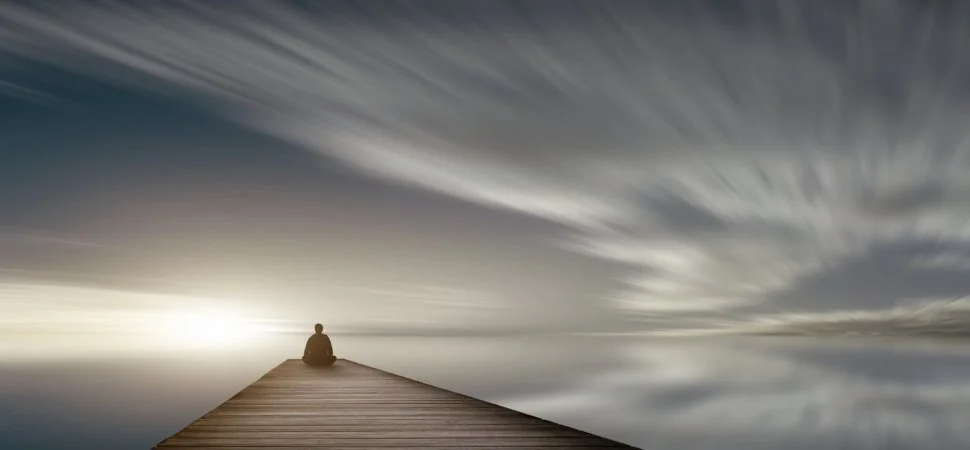
With the arrival of warmer weather, more people are out walking and waiving to one another across the street. People are sitting out on their porches, while others are cleaning up the built-up clutter of winter in their gardens. And it’s not just that we need to get out; we also feel the loss or social contact and conversation. This coronavirus has taught us just how much we need one another, even if it’s just for the sense that we are not alone.
But this gives being alone a bad name, unfairly so. Yes, loneliness and depression are on the rise, but we too often identify isolation as the source of such troubles. We forget, if we ever knew, that the presence of solitude was natural part of life prior to modernization attempting to fill up every hole in our life with endless activity, technology and the requirements of work.
At moments like now, when a pandemic is threatening to sweep away much that we have known and depended upon, we suddenly find ourselves asking far more serious questions than we normally do because of a lack of time. We wonder about the fragility of life itself and worry about our loved ones and friends more than we usually do. We ask ourselves if things will ever be the same.
Yet we are learning to discover ourselves a bit better as well. Things like rediscovering the love of reading, of watching an old favourite movie, of picking up a hobby that had remained dormant for too long. And we are in the process of having to live in our own skin and with our own thoughts, undistracted from the normal hectic nature of events. Where only a month ago there never seemed to be enough time, now we have it in abundance and must learn again how to handle ourselves in quiet moments of solitude.
Slowly, our lives are being recalibrated, aligned more in tune with a slower rhythm of life. Many who are older are now reminded of what life was like before the endless suburbs, non-stop entertainment and materialism, steady streams of traffic – of times when people would personally meet in order to convey important sentiments and conduct business, instead of merely texting or emailing. It was a time when humanity required people and not just technology.
We have returned to such routines, even if only briefly, and we are rediscovering who we are in the process. When T. S. Eliot asked his famous query, “Where is the knowledge we have lost?” he was reminding us that things are learned about ourselves and the true value of our world in moments of quietness and solitude that quickly dissipate the minute we are back in the stream of the rat race. Where was our personal North Star among all the busyness of the heavens in our modern lives? We frequently lose sight of it in the shining of everything else and lose touch with our inner quiet selves in the process.
There is a cost to losing ourselves in endless activity and responsibilities. To compensate, we turn to Facebook, Twitter, Instagram, texting, or whatever it is we depend upon in our attempts to remain social. And though we have been reticent to admit it, we find ourselves substituting digital connection for physical contact. And we have paid the price for it.
UCLA researcher, Dr. Gary Small, has studied this pattern over years and come to a simple conclusion about the state we now find ourselves in: “Once people get used to this state, they tend to thrive on the perpetual connectivity. It feeds their egos and sense of self-worth, and becomes irresistible.” This is especially true of people who self-isolate themselves emotionally. Like the Mark Zuckerberg character in the last scene of The Social Network, we endlessly click on our keyboards and watch our screens in the hopes that someone out there will notice us. It becomes an addiction, this need to be noticed, but it also means that we don’t handle alone time very well and solitude gets wasted on us.
The great Canadian observer, Marshall McLuhan, wrote in Understand Media, that any new media is never just an addition to what preceded it, but that it never leaves the old one in peace. Inevitably, it eclipses everything that came before it. Author Michael Harris intriguingly notes: “We are the digital immigrants, and like all immigrants, we don’t always find the new world welcoming.”
And here is the simple truth: we can hardly claim that this digital loneliness, this ever craving for etherworld attention, is because of any lack of digital connection. We have copious amounts of it, a continuous supply of communication that, for all its wonderful value, has left us lonelier than ever – something revealed in a 2015 study that discovered that of the 1.5 billion Facebook users, usage inevitably spikes among those with social anxiety, in particular those who have a high need of social assurance and recognition.
All this social isolation of recent weeks, for all its challenges and frustrations, is actually serving to realign us with our humanity, our need for one another in real terms. Just like our natural environment is going through a season of healing through this abatement of material squalor, we are being given the opportunity to rediscover ourselves. Should we use that chance, we will never be the same as we emerge out the other side of this pandemic. We will truly be more connected, with ourselves and others.