
On Vulnerability's Edge
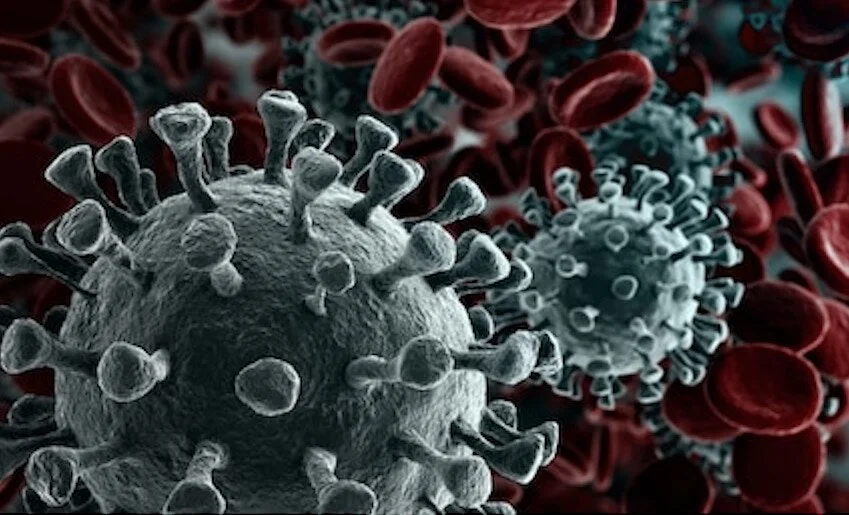
My friend, and chief officer of public health in our area, Dr. Chris Mackie, provided just the right balance of caution and confidence in a series of tweets yesterday, reminding us that health officials learned from events like SARS and have been working towards an effective response for something just like the Coronavirus.
This is helpful, but then we watch the news and the concerns come flooding back. It’s disconcerting to hear that almost 3,000 have perished from the virus already – three times more than SARS and still in its early stages. The SARS epidemic affected 26 countries back in 2003, but something about this present scare is far more urgent and seemingly catastrophic, in part because the early symptoms don’t seem threatening. People have always hopped on airplanes or other modes of transport while suffering from colds or flus, but such familiarity and practice is part of the reason for the rapid spread of Coronavirus.
In Atonement, author Ian McEwan notes: “A person is, among all else, a material thing, easily torn and not easily mended.” We suddenly feel this to be true and worry for our loved ones, friends, ourselves. It’s too big for each of us and threatening to all of us. As Dr. James Hamblin wrote in the Atlantic: “This disease must be seen as everyone’s problem.” He goes on to warn that the virus will ultimately spread to all the regions of the world.
Following years of criticizing governments, we are now counting on them to protect us from a virus no one had heard of only a short while ago. And governments will.
Take China, source of the virus, for example. Well experienced in social controls, the Chinese government uses apps to track people’s movements and whereabouts and can restrict someone’s access to buildings or public transit anytime. China has put forward other less draconian measures and policies for one great purpose – containment. And despite the American president’s nonchalance, most governments around the world are putting in place their own restrictions and readying their various departments and agencies for the onslaught.
All this being organized as a kind of holding pattern, waiting until a curing vaccine is developed and distributed. But that’s not likely anytime soon. I watched a World Health Organization (WHO) top official say that while experts are working around the clock to develop a vaccine, it will likely take a year until it can be mass produced and distributed globally. Yet Israel says it can develop a vaccine “within weeks”. If it’s the latter, great, but it’s more likely to bear out as the WHO official predicted.
That’s 12 months, if he’s correct, so what do we do in the meantime? Maintain and enhance containment efforts and protocols. Things will become more urgent until the cure is manufactured. And the effects will be far more costly than just in human health alone if things continue on interminably. The tourism industry will take years to recover, perhaps decades. Some transport businesses, especially those entering and exiting the Asian regions, will likely collapse. Travel will become more restricted. Cultural exchanges will end for a time. Global educational opportunities will be curtailed. Health systems will have to be seriously resourced or face faltering under the load. At a community level, schools could close, public gatherings limited and more people encouraged to work from home.
And it is in our communities where the rest of us can do our part. We are reminded that washing our hands frequently is the best thing we can do, but there’s more, much more. Citizens everywhere need to take another look at their health systems and realize how constant cost-cutting severely limits society’s ability to not just stop the spread but prevent it altogether. We continue to support governments that cut our systems to the bone, claiming that we pay too much in taxes already. People are welcome to their opinions, but when an epidemic like the Coronavirus attacks humanity, we quickly grow aware of just how short-sighted, and dangerous, such thinking is. And the penchant to continually cut public healthcare in favour of private coverage will eventually leave the wealthy with protections and the rest of us – well, we get the picture.
Our response must be multi-faceted, as citizens. At the most basic level we can play a huge role. Wash our hands, yes, but research shows that we touch our face with our hands 15-23 times an hour. We need to limit that unconscious practice. We can also protect our healthcare workers at all levels, including first responders, because if they are under-resourced and overworked, society will fail in its defence against the virus.
The Center for Disease Control deputy director, Dr. Anne Schuchat, reminds anyone who will listen that systems have taken significant steps to prepare for this over the last 15 years, just as Dr. Mackie has said. A diligent, common sense approach is the best way through this. As she prompted in conclusion:
"It's the perfect time for businesses, health care systems, universities and schools to look at their pandemic preparedness plans, dust them off and make sure that they're ready."
And it’s the long game we should be thinking about when we invest, when we build communities and when we vote. Hoping that our healthcare systems will work only leads to negligence. We – citizens, associations, businesses, corporations, universities, neighbourhood associations, foundations, researchers – mustn’t live on false hope but due diligence. Our healthcare professionals, and the broad support networks they oversee, have been warning us for years that occasions like this could be catastrophic if we keep undercutting our health systems. This is the time for investment, not panic.