
Retooling Food Waste
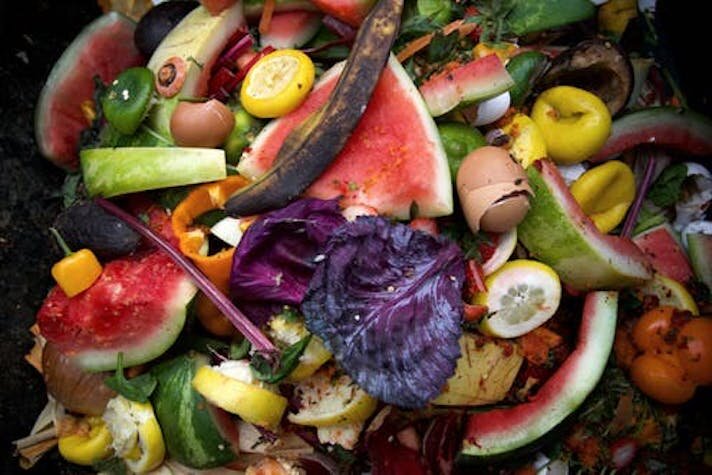
Each year our food bank in London assists in diverting millions of dollars worth of fresh edible food from our local landfill through its partnerships with the City, grocery stores and farmers. And now for the Christmas season, a gift of 150 skids of meat is in its final stage of negotiation to be generously donated to the food bank. The important point is that the meat was destined for the landfill, but is still fresh and able to be distributed to other feeding agencies and hungry families. It is a remarkable gift.
And we are learning that in other nations – Britain, France and now Italy – legislation is being passed, prompting food suppliers and grocery stores to divert their surplus supplies to marginalized families as a way of keeping it out of the respective landfills. It’s something of a renaissance and a movement of significant force in the food industry.
Even more excitement has been generated through the work of two unknown University of Pennsylvania students who have opted to take on food waste with a fascinating new tool.
Katerhine Sizov and Malika Shukurova are two young women with an intriguing future. And their new invention is lucrative enough that they have started their own company called Strella Biotechnology. It makes biosensors that can warn when stored produce is ripening and soon to lose its marketability.
It’s a development destined to save billions of dollars of food waste each year and it’s already capturing global interest. It’s a bit technical, but the sensors monitor for ethylene, a gas only produced when fruit – apples, onion, tomatoes, bananas, pears, and more - is ripe.
It couldn’t come soon enough. Their own research informed the two students that 40% of fresh produce in Philadelphia is tossed into the landfill by food sellers. That’s a food waste problem on a massive scale. And since Sizov saw no real solution for such a massive challenge on the horizon, she decided to create one.
The sensor she and Shukurova developed is the size of a small book. It can functionally be situated in low-temperature storage areas where the produce is stored. Intriguingly, the sensor tests the chemical composition of the air around the food and when it detects ethylene gas being emitted, the company notifies the food producer that it supplies are about to turn. This allows the seller to move the product more quickly or donate it into various charity or non-profit streams in order to avoid what would have been its ultimate fate in a landfill. One company, a Washington State producer, was alerted by the sensors that its apples were ripening sooner than expected. The company shipped the apples earlier than planned and saved some $400,000 on a viable product that would otherwise have been garbage.
While tossing out what once had been good food is a moral problem, companies also take a direct hit on their bottom line. These new sensors make good business sense. But their environmental impact is even greater, since food waste in landfills produce almost 25% of the world’s methane emissions and, in America, almost 5% of the nation’s total greenhouse gases. It also adds 3.3. billion tons of carbon dioxide into the environment each year.
The greatest effects of such technology are global in scope and significance. Eliminating food waste could save as much as 7% of the total fresh water consumption by humans around the world each year.
The UN’s Food and Agriculture Organization says that some 3 trillion pounds of food is wasted around the world each year – roughly one-third of the food in the world. This is unconscionable but also represents great possibilities for advancement for economies, health and the environment.
For Shukurova and Sizov, the next big challenge is to develop a sensor than can be placed on the pallets of fresh produce that arrive at grocery stores. At the retail level, this could have massive consequences for the betterment for communities, relieving local landfills from the overburdening they are now experiencing from the trashing of good food. These two student entrepreneurs are on the cusp of a food revolution that makes good business sense, but also permits our modern consumptive age to begin relieving the damage it has been doing with food waste over decades and making ethical strides towards global advancement through a better environment.