
Shooting the Message
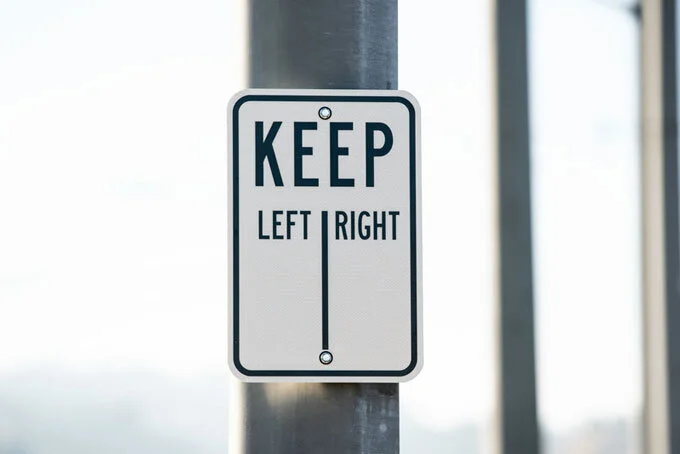
My city of London, Ontario has now joined hundreds of others in officially declaring a climate change emergency. Acknowledging and formalizing the crisis is an important beginning but it’s hardly the most effective component of truly tackling our environmental challenge. You see this type of thing all the time coming out of city halls, provincial capitals and national parliaments – all full of well-meaning intentions but devoid of political reality.
The reason for it is simple: declarations are one thing; effective policy implementation is quite another. Once political ideologies and special interests get involved, the slicing and dicing of any meaningful initiative usually rips the heart out of what was initially designed. This political phenomenon has likely affected the issue of the climate more than any other in recent years.
To put it plainly: politics has drowned out the issue, proving far more powerful than vital attempts to tackle our environmental emergency. Declaring a climate crisis can virtually be the first step in undermining it, since political interests can undermine such efforts long after public attention fades.
One would think that the preferred option for climate action would circle around scientific evidence, but we learned years ago that even when 95% of scientists and researchers concur on the seriousness of the issue, it never proves sufficient enough to drive any serious change. That’s because politics itself has made the issue of climate change a partisan issue that is virtually impossible to counter.
We know what this looks like. The Left views the Right as Neanderthal in their approach, labelling them as science deniers. The Right counters by noting that the Left are merely attempting to force a progressive ideology that’s more determined to undermine their opponents that to truly fix the planet. Additionally, they perceive progressives as “pro-government” social engineers who feel that taxes are the only way out of any problem. The distrust at this level is deep and dysfunctional. It’s more about psychology than principle or fiction over facts.
As a result, “climate change” has become a politically loaded term that identifies the Left, just as “deniers” brackets the Right. We would like to believe that verified research isn’t political, but at a separate level, like law, that everything must be weighed against. But in a world where everything is political, even something that provides ample proof of itself every day – massive hurricanes, vast flooding, raging forest fires, etc. – falls suspect to being something of political design, as if people are simply making it up in order to force their own agenda. The only way to fight it and enforce the opposite is to deny it because it’s not about the environment at all but a political agenda that threatens to wipe out everything in its wake.
In such a world, everything becomes a caricature, like something from Shakespeare’s pen. There are plots, fascinating characters, tragedy and flawed humanity, but in the end its ultimate purpose is drama – the kind people can observe and then walk away from.
The problem is, naturally enough, that no one escapes a ravaged planet. It is about reality and the end becomes increasingly clear with each passing cataclysm. Somehow, we have come to think of climate change, or its denial, as a character in dramas written by those across the political spectrum. It’s trotted out each time someone wants to keep the carbon-based way of life or who wishes to propose a progressive agenda under the guise of environmental apocalypse.
It has now become an easy thing to see climate change as merely a political narrative, a tool, a ploy, to deploy to prove the Left or Right’s agenda. Much of what is said might be true, but that is not its purpose. It is a powerful and persuasive pawn in a vast political game that is more about money and ideology that something that is presently ruining our world. One can no longer talk of climate change without thinking of these greater designs.
The reality is, of course, that we are the players, moving around the stage and playing our manufactured parts, when climate change itself is the true reality – real life. We continue to spout our rehearsed lines even as the theatre burns down around us. Climate change is too big a container, too vast a science, to house our puny efforts at politics or public policy. It is the greatest issue of our age and we have chosen to handle it like some kind of political platform.
Just this week, we learned the scientists admitted they were wrong about climate change. It’s actually far more serious than they once believed. New satellite-based predictions now reveal that three times as many people will be devastated by sea level rise in just 30 years than was initially believed – 300 million altogether. And it’s not just in some far away developing country that the effect will be felt. In Britain alone, 3.5 million people are about to be put at risk by serious flooding. But that is now the land of Brexit, of make believe, of political drama. The environmental dangers will be recruited in a political folly to act as fodder for agendas from the Left or Right.
We have foolishly chosen to shoot the message instead of heeding it and instead becomes fascinated by climate change’s many messengers, for good or ill. Only when we confess that it transcends our politics and our lifestyles will we find a way ahead through an increasingly dangerous landscape.