
Remembrance Day Redux
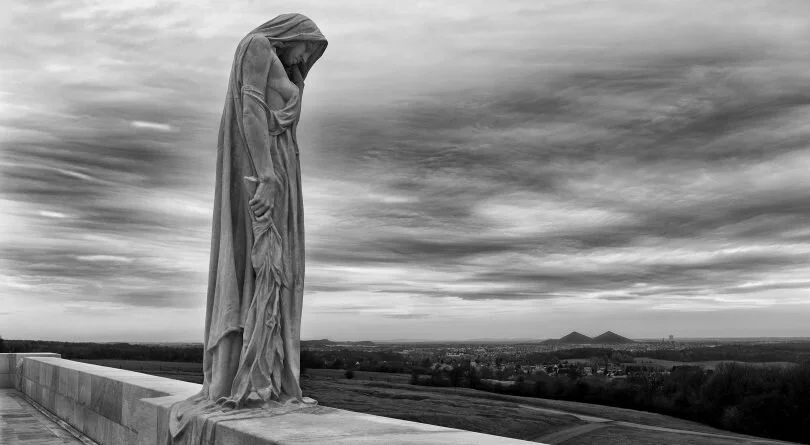
I had to speak for a Remembrance Day service this past weekend and it prompted memories of how my father, wounded during the Second World War and enduring a lengthy convalescence, said virtually nothing about his experiences to his family. What I learned of his activities came from when he was with his war buddies following the conflict. For them it was permissible to talk through the horrors and the good times, but for the rest of us – nothing. I have heard that same story repeated countless times from other families concerning their returning loved ones.
It’s a bit easier to understand that behaviour now that I’ve gotten older. Part of that comes from reading the poems he wrote for the Calgary Herald during the war. They are indeed painful to read and beautiful in their poignancy. The pathos in his thoughts is as real as anything I have read. His ideals were dashed. He stopped mentioning God partway through the conflict. He wrote of how the romantic moon and warlike Mars were ever at odds with one another. Wondering if the conflict he was enduring was really creating the effect he had hoped for was a common theme he returned to again and again. He wanted to go home.
And yet he remained, just like millions of others. And it is that remaining that was the source of his silence, I believe, after he returned home. By staying in a never-ending macabre kind of humanity, he learned that it could only be endured by suppressing it, hiding it deep in a soul that was already battle hardened and barren. Over time, his poems, still infused with a sense of fighting for the right, nevertheless reveal a man who had lost his place in it all and who questioned if he was, in fact, making the difference he had hoped he might. A war that was lasting six years felt like an eternity and, like anyone digging in for a long hard passage, he lowered his expectations and soldiered on.
But the cost for that consistency was enormous.
He went to war as a young man with a remarkable sense of humour and returned as a man saddened by all he saw. Human morality was really something soldiers, sailors and airmen couldn’t afford to think about because their lives were being turned upside-down. Ideas of right and wrong, enemies and allies, evil and good, righteous and sound – these were for those back home to be consoled with. Stripped of ideals, war had become something more akin to animal survival than human triumph.
And yet those serving did have one thing that transcended everything else – each other. It is vital to remember that the average age of a Canadian soldier in the Second World War was 18 or 19, once the officer ranks were taken out of the total. They needed one another more than anything else and to each other they vowed their fealty.
What we gave these youthful recruits were guns and bullets, planes and ships, bombs and grenades – resources hardly conducive to the high schools they had just left. Surely their recruiters must have known that teenagers were never going to come out of the conflict the same way they entered it. Those lucky enough to survive came home as seasoned warriors, but their youth was gone and in the place of humanity was a kind of haunting.
We now know that what each of them carried was PTSD. They had trouble connecting to peace following their return because the war was destined to leave them forever troubled. They arrived back in Canada, serenaded and lauded, but for the veterans themselves the sentiments of Siegfried Sasoon, in his Suicide in the Trenches, became their bitter gruel:
You smug-faced crowds with kindling eye
Who cheer when soldier lads march by,
Sneak home and pray you’ll never know
The hell where youth and laughter go.
Haunted teenagers are really what Remembrance Day is about. Some 700,000 Canadian soldiers under the age of 21 served in World War Two. Too many died. Too many were maimed. And we are learning that too many took their own lives after they returned. No wonder it was easier for the returnees to rebuild their lives in a kind of respectful silence. They earned it and we must seek to understand it.