
Next Stop: Bankruptcy
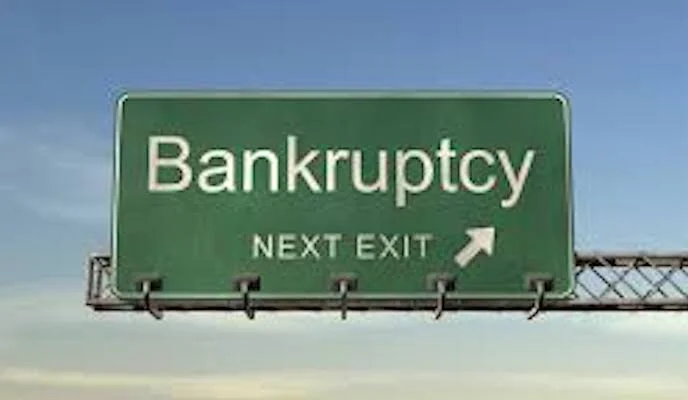
Mark Carney is no stranger to these pages. As head of the Bank of Canada and then its counterpart in Bank of England, he has proved to be forthright when it comes to the role of businesses and corporations. Outspoken on issues like corporate greed and the need for sustainability, he has consistently pushed the business sectors in both countries to think beyond the bottom line.
He was in the news again this week, not bothering to mince his words. As the Guardian headline put it: “Firms ignoring climate crisis will go bankrupt, says Mark Carney.” Nothing vague about that. This was a global economic leader in the process of warning that financial collapse would be the inevitable result of businesses and their governments failing to seriously change their operations in the face of a severe climate emergency.
The last time he spoke this bluntly to economic and political leaders was at a grand gathering in England about a year ago. He didn’t pull his punches then either. It proved to be a powerful presentation on the need for the corporate sector to adapt to modern realities or face ruin and the response was one of stunned and muted applause. People had been forced into a condition of discomfort, as they should have been.
He did it again this week in his Guardian interview, only, if possible, more pointedly. Put directly, he stated that those industries and companies not taking serious action on carbon emissions will eventually be pushed into ruin and bankruptcy by a world of investors that is slowly coming to its senses when it comes to the threat of climate change. Worse still, he felt there was a credible threat of global financial collapse if the warnings weren’t taken seriously.
This came on the heels of a Guardian article the week previous, revealing that just 20 fossil fuel companies have produced products linked directly to more than one-third of all emissions in the modern era. Carney had read that piece and it provided new energy for him to speak out. He conclusions were both dire and hopeful. The refusal to act would result in $20 trillion (US) in assets being lost through lack of action. On the other hand, fortunes will be made by those businesses working seriously to cut their emissions. He was blunt.
“There will be industries, sectors and firms that do very well during this process because they will be part of the solution,” he said. “But there will also be ones that lag behind and they will be punished.”
Despite Donald Trump pushing for the ramping of the coal industry in America, Carney revealed that coal companies have already lost a full 90% of their worth already, as investors pulled out of the sector. And the lending institutions that had funded that industry were themselves severely punished for their lack of insight.
Carney is fully convinced that rapid adjustment toward carbon neutral practices will lead to rapid economic expansions because all that new investment will lead to new productivity and financial yields. Then he talked about the consequences if businesses refuse to take the opportunity. Quoting the CEO of Morgan Stanley, Carney repeated: “If we don’t have a planet, we’re not going to have a very good financial system.”
Carney firmly believes that the United Kingdom could lead that revolution, but it will likely take some coercion for businesses to take that lead. He had already just told large corporations that they had just two years to begin the process of reporting the climate risks of their practices before financial regulators would make it all compulsory anyway.
It’s refreshing to witness the courage and insight of a key economic figure. Carney believes that things are now dire enough that it will soon be inevitable that the investment community will begin punishing the corporate sector players who refuse to make the adjustment and that much of that is happening already.
German Chancellor, Angela Merkel, has already suggested a more rigorous scheme for punishing those companies and countries that don’t adapt: “We must now agree on a binding review mechanism under international law, so that this century can credibly be called ‘a century of decarbonization.’ ” That’s tough to do without not only political but corporate leadership. And Carney has made a clear case of the two extremes: profit or bankruptcy. Those have always been the two possibilities in the world of business, only this time the planet is at stake. One only hopes enough time remains for that revolution to take its full effect.