
A Longer Summer
It’s one of the great ironies of the modern era that people who pride themselves on being individually strong nevertheless require followers and retweets in order to feel that way. In other words, the perception of our value is largely dependent on others. That’s somewhat counter-intuitive to the idea of being individually resilient. We feel out-of-sorts if our posts aren’t shared or if our “followers” list declines, even marginally.
The rush and rage of our “connected” society has left us feeling isolated if we’re not somehow connected to it, minute by minute, post by post. We don’t have to know the people as long as they are following along. Worse, research is showing the people are increasingly having trouble being alone without being lonely and this leads to all sort of other difficulties – depression, addictions to drugs and endless screen time, insecurity and a warped view of the outside world.
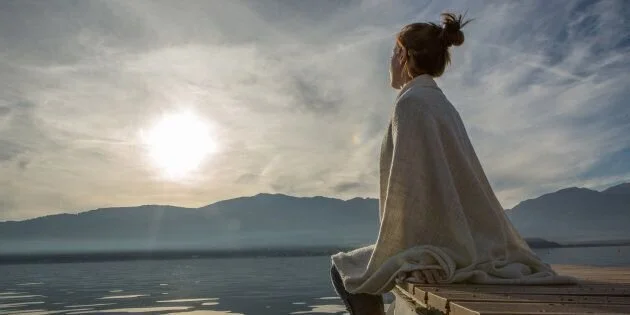
Summer is supposed to be that time of year when nature itself and a slowing down of society’s hectic pace calls us to a quieter place. The rhythm of the waves, the refreshing drops of a warm drizzle, the tingle of the sun’s rays, the extended hours outdoors – all these inevitably help us to reset our inner clocks. Some struggle with the longer days but for most the ability to be alone and be refreshed is magnified.
Research reveals that the development of solitude is firmly established during infancy, yet even this feels counterintuitive. Partly for safety reasons, we fret to leave infants alone, but as psychologist Ester Buchholz had revealed, babies arrive into the world more inner-directed than outer. Often, our desire to socialize children cuts against their earliest proclivities for being satisfyingly alone.
The animal kingdom has worked like this from the beginning. Parents often leave their young ones alone with intention so that they might grow more internally and externally aware.
Once again, our modern world has great trouble accepting this, in part for marketing reasons. We are constantly assaulted in our senses by images and sounds pushing us buy this or listening to that. The more entranced and digitally addicted we become, the better for the advertisers.
In other words, society in general works consistently to keep us from being alone. Ultimately, this all leads to a life of diminishing returns. Despite our best efforts, and claims, we are more tuned in to what people think of us that we are of actually being insightful solitary personalities. Eventually we end up with large spaces of emptiness in our lives that we seek to fill by seeking more followers. It’s a vicious circle and ultimately a psychological trap.
Almost everything we turn to seems designed for outgoing people, individuals with never-ending opinions, personalities seeking a large piece of the public space and thereby our attention. Everyone seems to be waving at us, cramming for our notice, seeking to pull us away from whatever else we were concentrating on. It’s a 24/7 pitch, leaving us feeling left out unless we compete in that overcrowded space. It gets exhausting.
Which brings us back to summer – that welcome season where we can unplug, uncram and unwind. But even getting away has become an increasing challenge. More of our summer travels plans are centred around Wi-Fi connection. Anyone travelling with kids knows exactly what this is like, as we seek to acclimatize them to a more holistic world. But then we find ourselves, as adults, reaching for the phone, or Netflix, or …. whatever. We slowly become aware that we are, to a greater or lesser degree, addicted. It’s difficult to admit, especially to others, but it’s what we get reduced to in a reductionist world. Humanity becomes less human. Family becomes less familial. Neighbourhoods become less neighbourly. And we become … what? Less human? Decreasingly original? Declining in creativity and the cultivation of our inner spirits?
We know it’s largely true. Yet summer provides numerous resources to help us get over the hump at last. Warmer weather, slower times, sleeping in, vacations, increased family time, and, always, the call of nature.
Unless we cultivate this kind of solitary life, capable of disconnecting as required in the summer, the odds increasingly work against us as the winter months approach. Charlotte Brontë’sJane Eyre came to understand this truth:
“I care for myself. The more solitary, the more friendless, the more unsustained I am, the more I will respect myself.”
"Respect myself.” There it is, the ultimate goal of solitude and of personal growth – unachievable if I can’t be comfortably alone. And it will be all that more difficult if I can’t turn the summer months into a season of solitude that can extend further into the busy life of the autumn months. We need to bring out cultivated inner realities to our social lives, but in failing to do so, we inevitably become defined by how others view us.