
Can the Divided Democrats Take a United Stand?
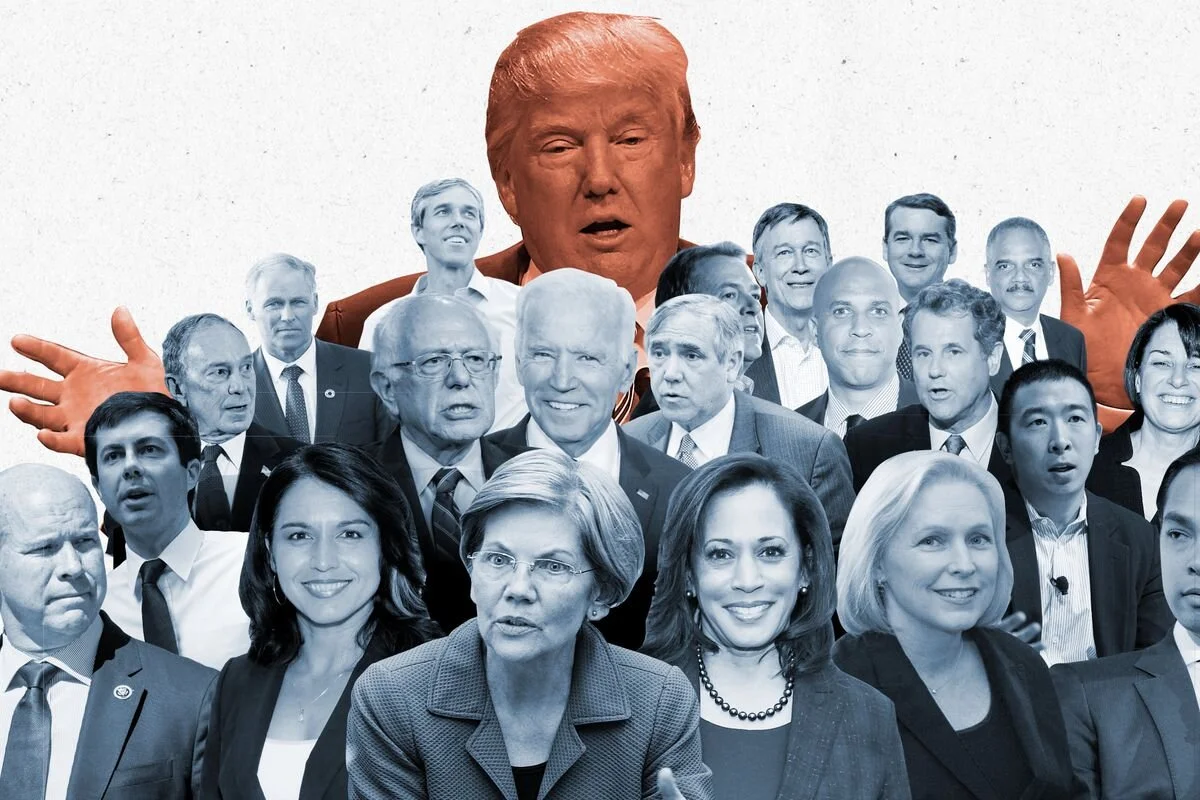
Watching the Democratic Party in America in these last few months has repeatedly brought Abraham Lincoln’s observation to mind: “A house divided against itself cannot stand.” It was uttered just as the country was about to embark on its most fearsome event– the Civil War – and was easy enough to comprehend.
Many observe that the United States is perhaps facing its most divisive moments since that war and it’s tough to argue. The country, as a burgeoning, competitive, restless, promising, prejudicial and idealistic energy has been forever at odds with itself. It’s part of its greatness but ultimately forms it Achilles heel. At present, the executive, judiciary and legislative branches seem not only forever at odds but mutually destructive.
This all started long before Donald Trump’s presidency, but he has turned it into carpet bombed terrain that seems to destroy the past and the future while seeking to totally dominate the present. The long-term damage no one can fully say. Even long-serving American conservatives fear the ramifications, though they play along by remaining mute.
Coming back to the Democrats: are their divisions so vast and fervent that they can never come together to best the authoritarians of the Right? Following these last two nights of debates on CNN, it seems likely. It’s a great thing to field a team of candidates so remarkably diverse, but that only works if they can transcend those divisions, win office, and govern effectively with diversity in mind.
I mean, the tensions and contrasts are clearly there: white vs. black, male vs. female, progressive vs. moderate, pro-immigration vs. not so much, moderate vs. socialist, global vs. domestic economic initiatives and so much more. It’s kind of impressive. But it could be very difficult to put together to form an effective opposition to authoritarians.
Seriously, consider what they’re up against. It’s actually a darkly imposing and resourced cast of characters. There are racists, supremacists, alt-Righters, pro-fascists, religious radicals, and a retinue of ne’er do wells. But that list isn’t complete. On the economic side there are corporate elitists, kleptocrats and unaccountable billionaires. Or as the Economistonce noted:
Billionaires typically stay quiet about their politics. But don’t mistake their silence for moderation — the uber-rich tend to be extremely politically active and extremely conservative.
These rather illiberal forces are constantly cooperating in order to get corporate and wealth taxes lowered, despite the effect on the federal treasury and the average American. There is an extremely serious combined effort underway to limit the future power of any government to impact wealth and its owners in any way. One of the ways of doing so is to bring serious disruption to American society, to take on audacious practices and doctrines that turn people off the public good and think only of themselves and their own welfare. And, for now at least, it’s working. No one has seen anything like it before in America and its sustainability is far from certain. But it is being attempted by some of the most powerful forces of wealth on the planet.
While this rather dystopian phenomenon is easily recognized, the fight against it should be obvious and compelling. This is where the Democratic debates of the last two nights can be troubling. Perhaps the most entrenched aspect of modern politics is that it’s been far more effective at dividing people than uniting them under a shared banner. There are differences among the candidates to be sure, but their commonalities should be more than enough to overcome their dystopian age. That’s not happening yet; perhaps it won’t. The socialist/moderate divisions within the Democrats don’t bode well for any united effort. It’s an uneasy alliance that foments generational, ideological and political values. The Democrats have historically cast a wide night, embracing all manner of citizens – new and old, traditional and progressive, rich and poor, diverse and ethnic – and it was usually enough to hold the centre in a two-party political system. But somewhere along the way it capitulated to the forces of materialism and elitism. Politicians in America are restricted from accepting direct bribes from influencers, but they are permitted to accept outlandish campaign contributions and the promise of employment once their political careers are over. It has blemished the system and corrupted it and the Democrats, from all the sectors mentioned above, played that game and lost their relevance.
Whether under Republican or Democratic governments, jobs were lost, climate change was merely something to tinker with, racism grew, healthcare grew out of reach, the courts became defiled, and, above all, the influence of wealth and those wielding it infested both parties. Only a robust platform can reverse these trends and it’s clear that most of the factions within the Democratic party agree with the need for serious reform. But the energies around those things they disagree on are more than enough to overpower what needs to be accomplished: a coming together and sharing power for the sake of the future.
The debates of the last two days were about positioning and besting the others. Fair enough. But what was missing was a common agenda to defeat a common foe. Unless they can get to that, the present nightmare that is American politics will become the way of the future.