
The Normalization of Hypocrisy
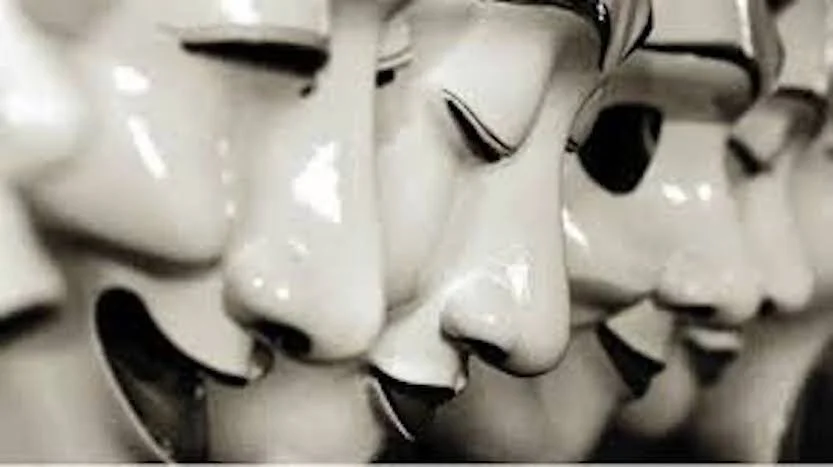
In his Blithe Spirit, Noel Coward noted, “It’s discouraging to think how many people are shocked by honesty and how few by deceit.” Reading it the other day, I wondered if there is a more accurate phrase to that describes how people feel about politics these days. I mean, seriously, it doesn’t matter what level of politics you’re talking about, the penchant to believe that all politicians are hypocrites is pretty well a universal declaration these days.
There was a time when elected representatives had to be careful about their many layers of performance, lest it hurt their election chances. Today, it seems to makes no difference at all. In fact, in this dystopian age of populism, not even obvious fabrications matter.
We’ve always known there’s a distinction, a clear difference, between what someone says in running for office compared to what will actually be done once elected. That’s because politics itself is tough – so many expectations from so many people and the inability to satisfy everyone. We get it, just as our parents and grandparents did.
But we’re not talking about that. The new politics isn’t about nuancing the message as much as fabricating it on an ongoing basis. There have been so many instances of outright lying in the politics of America, Britain, Canada and elsewhere and that’s because the sources of these untruths understand that the secret to gaining government, or keeping it, isn’t enlightenment but enragement. There are so many examples of this that there’s no point in itemizing them because we all know it.
There are many authentic politicians out there – I know many of them – but the need to gain the advantage, not by better policies but by blinding partisanship, and the dominance of the party machine has left these politicians having to straddle the gap between satisfying the party, satisfying the constituents and, ultimately, satisfying their conscience. In truth, and in this age, it is rarely done – not because winning is everything but because the methods for victory are based more on military-like strategizing than democracy, decency and respect.
The Left says the Right are blatant liars; the Right says the Left are merely fanciful hypocrites. The centre? Well, what is that anymore? What we do know about those that occupy it is that they are increasingly abandoning politics as a field so blatantly soiled and bloody that there is no room for them in the new world of partisan madness. The problem is that there are millions of them and they aren’t political partisans as much as they cultural assimilators – “My parents were Conservative so I am too,” or “I’m in a union and support the NDP, but I’m not active in the party.” These people are everywhere suffusing all aspects of our economic and social life – but not our politics. And when they see hypocrisy at an industrial political level they walk away from any kind of engagement.
Effective politics requires consistency more than anything else. We’re not talking about this or that party in power for years and years, but that the parties themselves build on what has preceded them and hope for legacies that will endure. That doesn’t exist today. As our politics become more excessive, the new party coming in wants not only to trounce the opposition but to pour salt on anything that had started in a previous administration. It’s war, not working together, and a distressed electorate is showing the strains of having politics with no principle.
And now comes the hard part. As citizens, we expect things in our politicians that we don’t practice ourselves. We look for collaboration, less enmity, humility, even vision at the same time as Canadians ae preoccupied with deadening opinions, toxic language, or just isolating themselves from the real world of public policy.
Ultimately, we seek “authenticity” in our elected representatives when we experience great difficulty producing it ourselves. To a degree, we can blame the Internet and social media for this. Those who utilize online platforms to establish the tribe or their brand don’t actually get “known.” They can put a version of themselves online without really getting known personally. It permits a universal kind of skeptical self-awareness, where we become critical all the time because we now have the tools for publicizing that criticism without having to enter the messy world of politics, where people would actually get to see us and our foibles. It all becomes a spectator sport, where we confuse anger with activism, dedication with division.
As we have watched politics become a blood sport, so politicians have watched the electorate become the same, without any real idea how to better the situation.
It’s all a kind of mutually assured destruction – politicians are angry and the citizenry is the same. There’s little oxygen in the room. Everyone fights for their own brand, and the means for establishing those identities is frequently the ability to denounce.
All this has brought us to the point where hypocrisy is easy, everywhere and normalized. We can become divided as easily as pushing the “send” button. In politics, there are chambers where our politicians can say they love this country and democracy itself but, because of the way the system works, have little chance of building it. The electorate has online platforms, on which they voice longing for better politics when they can’t produce it themselves because of their isolation.
This is unsustainable and becoming increasingly hypocritical. All of politics has become a stage and we aren’t so much players as critics. We can only save our country by saving ourselves, by pulling back from the edges of collective insanity, finding one another in the destruction and begin once more to seek a humanity that builds on the common not the contentious, on the ideal, not the ideological.