
The Secret Nook - Chapter 7 (Duyi Koay)
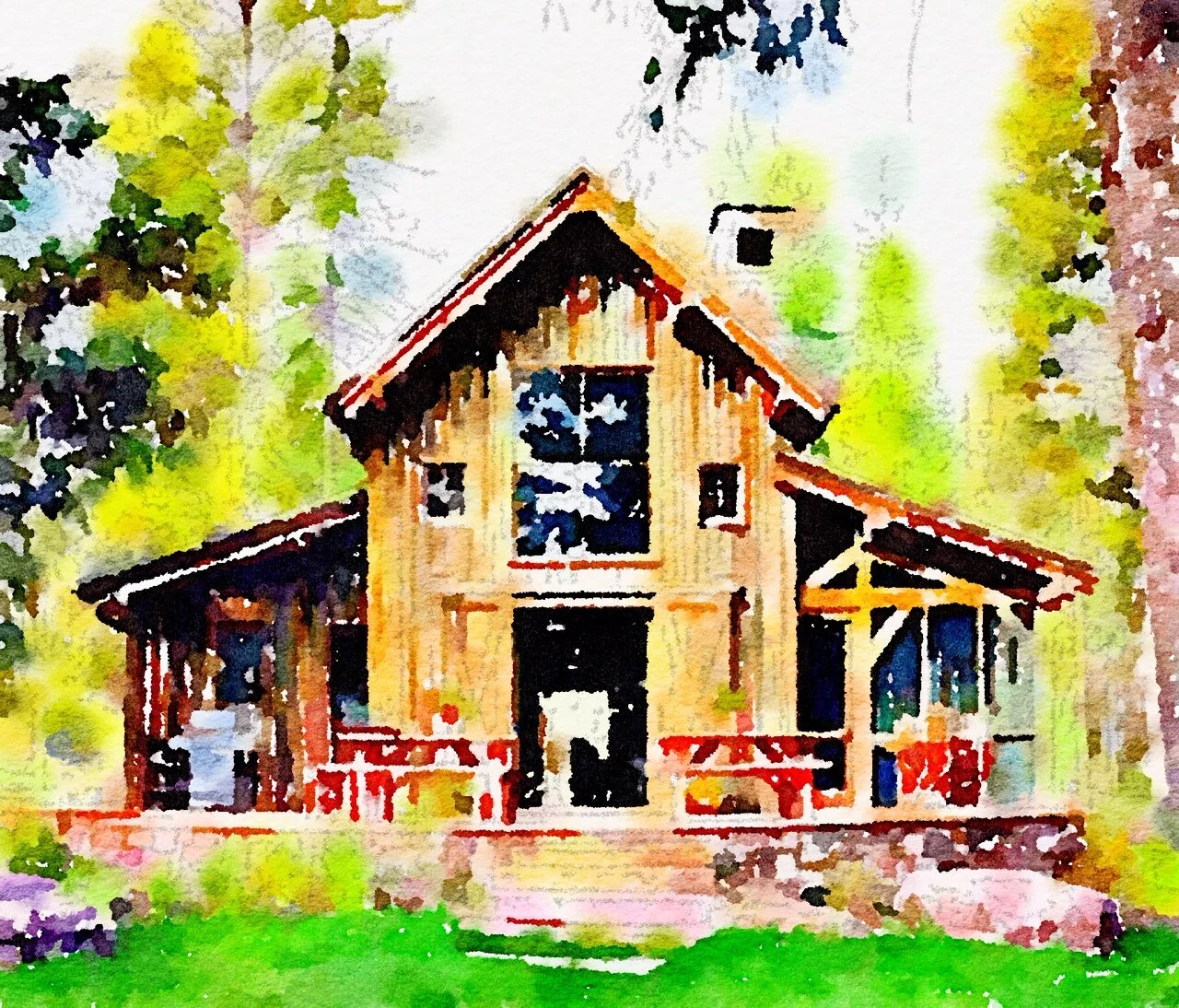
She was downing her scrambled eggs and toast in the Inn’s restaurant the next morning when a voice at the counter asked, “Meadow? Meadow Hartley? My God, is it … you?”She looked up to see an old woman, wearing a spinster sweater with tiny pearl buttons and intricate weaving. The woman looked impeccable, but the creases on her forehead and under her eyes spread out in directions across her face that she could never control. Her hair was blue-rinsed but perfectly coiffed. For a moment, Meadow thought she recognized her but it was only fleeting.She rose hesitantly before saying, “Yes, I’m Meadow Hartley.”“I know … I know. I can tell by your eyes, - Mediterranean blue,” the woman said, approaching slowly with the help of a shiny wooden cane.“I’m Sarah – Sarah O’Connor. I taught with your Mom at Jackson River School. Well, to be more precise, I was the librarian. I still remember you asking me to get more art books for the shelves – which I did, even though none of the other students were interested. You were so talented and your Mom …”Everything descended into silence, neither woman knowing quite what to say.“Well, thank you for being so understanding with me, Miss O’Connor. I remember you now,” Meadow said through a tight smile.“O dear, I’m so sorry about your Mom and Dad. I mean, this whole town was devastated. I couldn’t believe it.”Silence again; it was getting awkward. Eventually, Meadow asked if she would like to share a coffee at her table. Rather than responding, her guest laid the cane over the next table and took a chair. “I’ll take tea,” she said, once settled.They spent the better part of an hour together, reminiscing and helping each other to catch up. The older lady had retired once her arthritis flared to a degree that she could no longer grip any of her books. She was never married, except to her audio books, which she listened to most of the day, every day.“And what about you, Honey? I mean you must be some famous artist by now. God, you were so good.”Meadow gently broke the news. “Actually, I never picked up a brush again after the crash. I just couldn’t do it. Brought back too many memories.”The woman reached out and took her hand. “But the memories can’t be all bad, surely? I mean, your parents were some of the best people I had met in all my years of teaching.”“No … no, they weren’t all bad,” Meadow responded. “But they all ended at the same place – in a crushed car.”It was said so starkly that they both sat stunned at its crudeness. Miss O’Connor, unsure what to do or say, picked up her cup and began drinking while looking down at the table.Meadow chided herself for her insensitivity. “I’m sorry – honestly. Being back here occasionally results in the revisiting of old wounds and I was just caught in one of those moments. Honestly, it was stupid of me.”The tension was broken and they drifted back into conversation about the past. At one point, Meadow said she was sorry to have learned of Mr. Koay’s passing.“What?”“He was my art teacher at Alleghany.”“I know that, but who told you he was dead.”Thinking back, Meadow couldn’t recall and said so.“He’s very much alive, I assure you, Meadow. In fact, he’s probably no more than two miles from here, either working in his garden or reading some book.”“Wha … what?” Meadow’s heart had jumped from its usual place inside her chest.“Seriously,” her old librarian exuded. “He retired a few years ago and now lives in an old log cabin with a studio he added on after he moved in. Saw him a couple of months back when he was in getting some groceries. Looked great to me.”They had offered friendly goodbyes, but Meadow was grateful that this chance encounter had opened a friendly door to her past. She had asked for directions to Koay’s house, and following a quick shower and change of clothes hopped into the truck and made her way east, out of town.Meadow had hardly thought of her old instructor in recent years, especially once she learned of his passing. And how did she get that wrong message anyway? She couldn’t place it, but she was happy to learn that it hadn’t been so. Outside of her parents, Mr. Koay’s influence on her was the next best thing in her life during those earlier, happier days. Something about him had proved exotic – not just to her but to all who knew him. He had been gently quiet, reflective and kind of spiritual in some way – like many would regard the older Chinese mystics of another time. He had drawn her out of her child-like enthusiasm for drawing and colouring and disciplined her to be more ascetic and contemplative about her work. His student didn’t rebel against it but, instead, flourished under the instruction.That discipline had brought deeper elements of her personality, a deeper refinement, to her brushes and to the canvas. The effects were immediate. Soon enough her parents had negotiated with Koay for some extra lessons outside of the school hours. He assented, but said in a more personal moment: “I cannot accept payment for this extra work. Your child has a gift from God and, like the great natural beauty of our world, it can never be bought, only appreciated.”Strangely, the extra lessons tended to focus more on philosophy than art, and the discussions Meadow and her instructor enjoyed tended to be as fulfilling as putting paint to canvas. She first attempted to imitate his style after he showed her some of the work he had done prior to his paralysis. Unlike anything she had seen before, Meadow immediately sat down to recreate the drawings out of a desire to please her teacher.Walking into the classroom shortly after school had ended, he was surprised to spot a vivid painting of water lilies under an arched bridge on one of the easels. Meadow waited nervously to get his assessment.“Ah, you have almost captured it perfectly,” he said. “The lilies look as fragile as they are in real life.But to her 14-year old sensibilities, one word of his reply stuck out and troubled her.“I worked hard to make it as identical to yours as I could,” she began. “But you don’t think I quite captured it?”Koay turned to look at her, pulling out a stool with his foot and faced her. “It only lacks one thing, Meadow – something that the young can rarely capture.”“Tell me. Show me. I want to learn it,” she responded nervously.“It is soul – something which can never be drawn or painted but is more essential to art than any stroke or detail. And soul comes with the years. It will come to you, in time.”The insight irked her, enough to mildly lash out. “Well, you could teach it to me if you wanted to.”Looking back at the respectful work she had put on canvas, he sighed. “That must come in time,” he said. “Just like a writer cannot put pen to paper until he has a thought, so the artist has to have a vision before she raises a brush.”“But I did have a vision,” she blurted. “There. Look at your work and mine. They are similar, yes?”“No, they are not.”To his surprise, Meadow walked straightaway out of the class and made her way back home. Koay smiled to himself, reminded of what he was like as a boy. She will return tomorrow,he thought, and as he foresaw, her slightly slouched form made its way quietly into the room and sat beside him.“I’m sorry, honestly. I talked to my parents last night because they could see I was upset. They helped me to see that I couldn’t possibly understand what you understand, or have been through the experiences you have endured. So how could I possibly paint like you, since I have not been through the life you have lived.”The moment served as the opening of a new door or the vision of a new path for her. She stopped attempting to imitate his work and sought to understand it. It was a major shift in direction for her.“Your work is different from how you teach us,” she noted a few days later. “You teach us colours and types of strokes, but your paintings are …”“Lines,” he said.“Yes, exactly – lines. I’m trying to understand.”He poured some water for himself, offering her some, which she declined. Meadow could sense he was about to say something important.“Chinese painters were always aware of different art forms around the world, but for 2,000 years they have built on their own unique style. One of the key advancements in our art was the use of lines. We learned to use writing brushes to create shapes and forms using such lines. Europe took a different path and their artists adopted light and shade to create images, using special techniques to create their images. It was wonderful and these are the ways I use to instruct my students here in America because this is what Western art instruction requires.Meadow’s head was spinning, but looking at her painting next to his, she now saw that she hadn’t quite captured what he had put on canvas. She had started with space whereas he had expressed himself conceptually through lines.“The use of lines is the most important accomplishment in Chinese art,” he continued, as if reading her mind.“I understand that now,” she noted, “but your paintings don’t use as much light. Is that normal for Chinese art?”He smiled, not to encourage her, but at the inward recognition that such questions were coming from a first-year high school student – queries that were often missed completely by the less curious adult painters.“Meadow, painters in this part of the world like to emphasize the rendering of light in a consistent way within every piece. In China, that’s not so important. Light is obviously present in Chinese paintings, but there is little desire to use it in a consistent manner. And because light and its sourcing has been important to Westerners, colour is of primary interest. To the Chinese, that is not the case.”“Your paintings don’t have many people in them,” she said, by way of observation. “Is that normal?”“It has been vital in the West, especially to Impressionists, but not so much in Asia. Look at Western landscapes and you will see people almost in oversized form on the canvas; in Chinese art it is the other way around. Chinese painters are more interested in abstraction, whereas Western painters practiced representation.”Meadow was confused by this and set off with another series of questions that took up the entire length of what would have been art lessons. She realized now, as the Ford neared his cabin, that he had never begrudged the foregoing of actual lessons in order to explore the meaning of art itself and its importance to the human condition.She recognized the place long before she saw the address. It was a greying log structure, with angled notches in the corners. At the rear, a larger more modern wing, structured with skylights and large floor-to-ceiling windows, must have been his studio. Interesting, she thought, that he would have such a fitting studio when he could no longer paint.She chose to walk to the studio door at the side instead of knocking at the front door. There was no sign of life – no lights, shadows moving, or even any noise. Rapping on the plank wooden door confirmed it, when no one answered.Meadow worked her way around to the front and lifted her hand to the door when she spotted a notice beside the wrought iron mailbox. In perfect penmanship, which she realized had be the result of a computer printer, a few words said: “Home by Friday. Leave a note in the mailbox.”She considered this for a moment and decided to just leave it. But then she realized her old professor would be in for a shock should she suddenly materialize. In the truck she found a pen and a scrap piece of paper and wrote carefully for effect. Hello Sufi Koay:I have returned, as if from the dead – which in many ways is how I felt since I left Clifton Forge. Not sure how long I will be in the area, but it is important that we see one another again – if you are willing. I will return on Saturday afternoon and hope to find you here.Meadow Hartley She smiled, enjoying her idea to use the salutary term for a Chinese master, traditionally known as a wise instructor of the young.A moment later she started up the truck and took one last look at Koay’s house before putting it in reverse and heading back to the Inn. She had to acknowledge to herself that she was feeling a mixture of yearning and dread – emotions that stayed with her for the remainder of the drive.