
Angering Our Democracy to Death
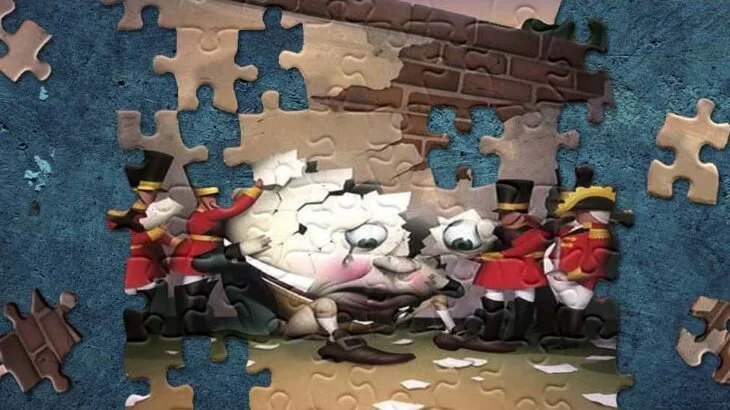
Every couple of years I make the journey out West to spend some time with my old high school friends. We’ve all worked hard at maintaining that contact despite the fact that the twists and turns in our lives have occasionally left us on opposite sides of the fence when it comes to certain issues. Most of our days are spent in talking, occasionally, debating, and in acknowledgment that the liberal-conservative distinctions in our temperaments could, in other conditions, create deep divisions among us.But they don’t because we carry some history together and thus have learned mutual respect. One of them noted yesterday that it remains a wonderful thing that, despite the deep divisions in politics these days, we have nevertheless worked on those differences and maintained our connections to one another.This is far more common than we give credit for, but in most cases a certain kind amity is formed because, along with our opinions as Canadians, there is also the desire for such distinctions to be worked out in the context of relationship. Where that connection is present, political, social and cultural compromise is possible.Yet it truly is hard to maintain when there are others who would exacerbate our divisions in order to acquire power over us.Out and about with these old friends, we would reminisce about the expectations we entertained as youth. Each succeeding generation would be better off that the one before it. More money would be available. We would each own a house when our parents never did. We would get to university, after which good jobs would be available. And our children’s world would enjoy even greater progress than our own. This was the cultural atmosphere that we lived in when young and which prevailed in Western societies for generations.But it didn’t work out that way so much. The cultural expectations today are that labour wages will remain stagnant. Climate change seems unstoppable. Some might never be able to afford at house. Our politics are becoming dysfunctional. Those with great wealth will protect it, lobby to remove regulations that would normally keep them from expanding it, and they would strip the public sector of all but its most basic functions. Progress will be limited. Hope will be deferred or denied or just abandoned altogether.This is the context which now houses and drives our modern political systems. Historically, political parties would seek to expand their base to reach new supporters in order to hopefully gain or maintain power. But a tragic new development has occurred in our politics that actually seeks to do the opposite – instead of expanding the base through better policies, parties now seek to enrage it. And this is done by reminding people of those very things that have kept people from attaining and enjoying the “good life.”Suddenly citizen life and its politics of choice become “us vs. them” or “me vs. we,” and it’s only a matter of time before we realize too late what Abraham Lincoln knew: “A house divided against itself cannot stand.” So instead of reaching new voters we belittle them instead, target them for online abuse, and talk about how they have ruined everything in this country. Why do such a thing? Because it enrages the base we already possess, stoking the fire of animosity, and turning citizen against citizen in ways we have never entertained or tolerated in this country.Then things begin to happen in ways we can’t spot. A state of ignorance suddenly becomes a political strength (the less we know of opponents the easier it is to fan the hatred and rouse the base). Intolerance become patriotism, as the way in which we get our country back is take it out on those we blame for ruining the past. Angering voters is the way of promoting and defending democracy.And there we have it at last. Our politics soon enough begins to twist our culture in ways that ensure that Humpty Dumpty will never be able to put the pieces back together again. Politics has become angry war. Democracy has merely become a struggle over resources rather than national character. And Canada, if we’re not careful, can resemble a lot of other countries that somehow lost their respectful DNA in the war over power. Their politics are driving the bus.We will enter the state once defined by Voltaire if we’re not careful: “Those who can make you believe absurdities can make you commit atrocities.” Our politics requires renewal, to be sure. But if our way of achieving that reformation is through political war and the dividing of the nation, then citizens will never acquire the genius to reenergize our collective and public life for the good because we’ll all be too busy either fighting one another or opting out of the system altogether.My friends and I are working hard to discover a better way despite the distance, differing temperaments, and political distinctions. The sooner Canadians commit to striking the same agreements, the sooner we can walk ourselves back from destruction.