
Shakespeare's Still Cool
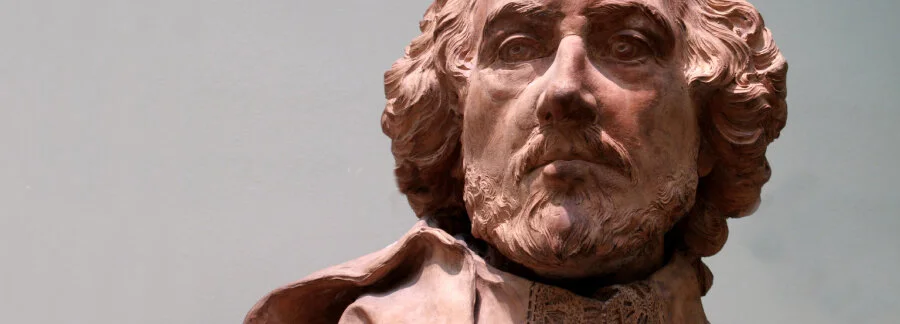
We don’t know the exact date of his birth, but England’s most famous writer was born in the month of April in 1564 – 554 years and half a millennium ago. Asked about William Shakespeare, author Virginia Woolf noted, “The very stone one kicks with one’s boot will outlast Shakespeare.” Maybe yes, maybe no. In a world full of easily accessed information and endless publications, it would be easy to assume that the great English bard has been transcended by our modern penchant for data.Virginia might have jumped the gun. If we were to take the time to research our own words, we would discover that William Shakespeare adds punch to our own sayings. British journalist Bernard Levin took on just such an exercise, eventually stunned by how much Shakespeare shaped much of what he wrote and said. Here are some of his findings – each one from Shakespeare himself.
- It’s Greek to me
- Salad days
- Act more in sorrow than in anger
- Vanished into thin air
- Refused to budge an inch
- Green-eyed jealousy
- Play fast and loose
- Tongue-tied
- Knitted your brows
- Make a virtue of necessity
- Insist on fair play
- Didn’t sleep a wink
- Stood on ceremony
- Cold comfort
- Too much of a good thing
- A foregone conclusion
- As luck would have it
- It’s high time
- The long and short of it
- The game is up
- The truth will out
- Flesh and blood
- Suspect foul play
- Teeth set on edge
- Without rhyme or reason
- Give the devil his due
- If the truth were known
- Good riddance
- Send him packing
- Dead as a doornail
- An eyesore
- A laughing stock
- The devil incarnate
- Blinking idiot
- By Jove
- For goodness’ sake
- What the dickens
Here we are, over 500 years later, still using terms like these in our modern idiom – an amazing feat. These are but a small portion of terms we still use in our everyday language, likely without ever knowing we are channeling William Shakespeare. It all reminds me of an old Mexican proverb: “They tried to bury us. They didn’t know we were seeds.”Words still matter, and more important than how many we know is how we use them. Words can heal or hurt, build or belittle, draw us together or push us apart. We need to use them to infuse our society with hope now more than ever. 