
Closing the Distance
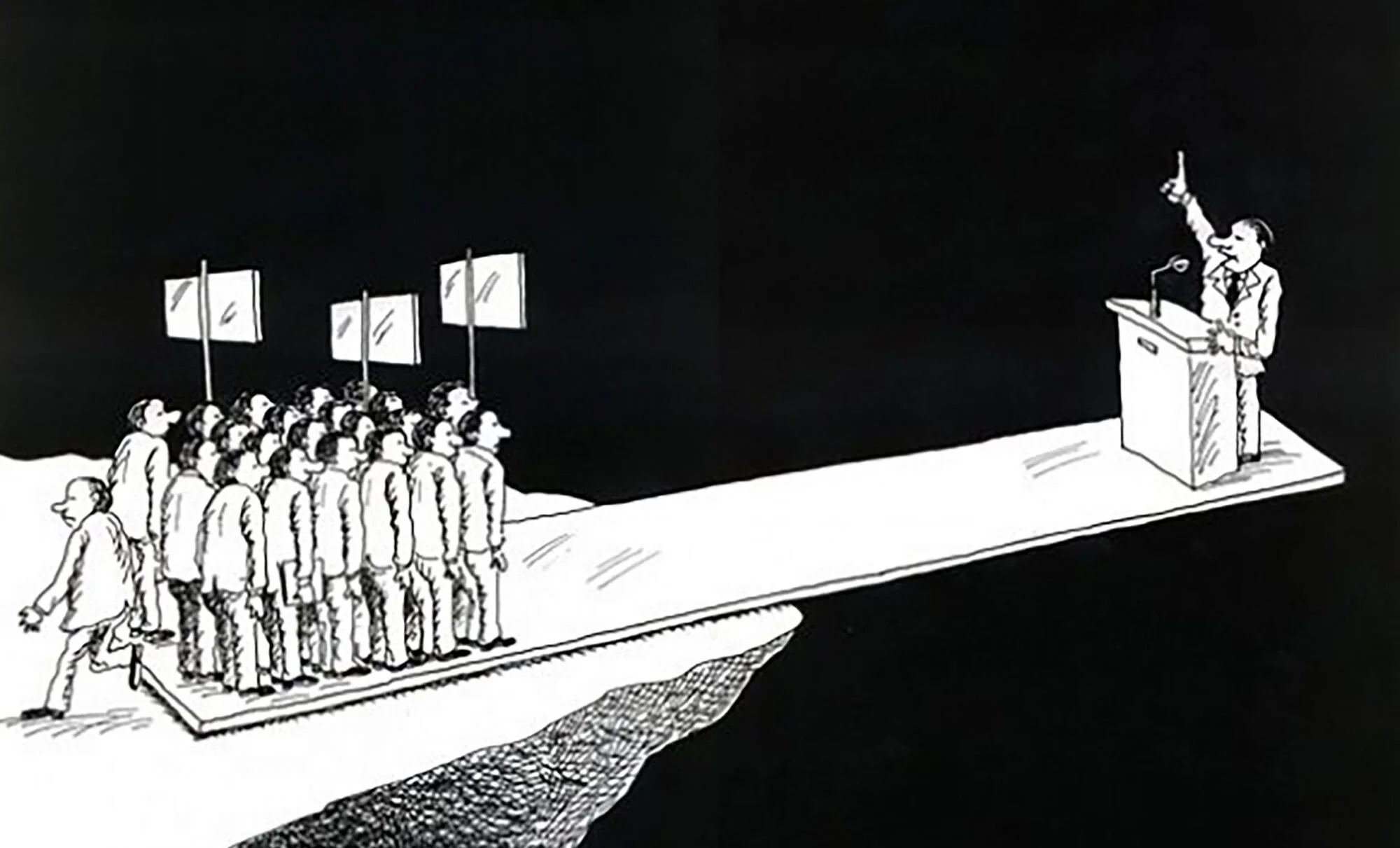
Speaking to an American university graduating class two years before he died, former playwright and Czech president Vaclav Havel said something that caused the auditorium to do some serious thinking:
“The deeper the experience of an absence of meaning – in other words, of absurdity – the more energetically meaning is sought.”
He knew his audience. America’s youth, like those in most nations then and today, was fed up with the kind of politics that got increasingly ugly the more it grew ineffective. Yet the final six words of his quote lit a fire – “the more energetically meaning is sought.” It was true of those students, as it is of us. We want more than a politics that just can’t inspire.Perhaps the greatest liability of our modern democracy isn’t merely ineffective politicians or self-centered citizens, but the actual gap that lies between them. Citizens view their elected representatives as kind of caricatures – holding political office while possessing little power to actually change anything. They are more likely to see their representatives on television or social media than they are face to face. The general perception is that they might truly be people of conscience, but that they would park that prized possession if it meant saying something - anything – to get elected, or hold the line on what their party says, even if contradicts when they had previously claimed. This might or might not be true, but it is the perception.If you write your politician and get an answer, it’s most likely that a political staffer composed it. And in a move that seems counterintuitive to many, you can’t just vote for the person you want, you must also back his or her party even if that party contains individuals or policies you might not prefer. Politics in this context seems a million kilometers away, frequently in the news but hardly ever in our dreams or hopes. So, we resort to watching the scandals, failures, and flawed personalities, convincing ourselves we’re watching real life soap operas. We know most politics isn’t like that at all, but it’s just more entertaining to see it that way.For politicians it isn’t much different. They leave it to their respective staffs to answer citizen inquiries and frequently seek some isolation and rest from the relentless pressure every elected official must live with. They know more about voter preferences through polls than by personal interaction with their constituents. In an angry age, contact with citizens frequently leads to umbrage, venting and mischaracterization. The average citizen doesn’t take the time to get to know their representative either and most remain flummoxed when asked to identify who represents their riding. The citizenry appears more like a distant crowd than a vital part of a politician’s intimate surroundings.This becomes the exact opposite of what democracy was designed to be – the flowing back and forth between citizens their elected representatives to create a better riding, city, country and the broader world. Democracy can’t work when we’re all faking our adherence to it, but neither can it function when its supporters remain hidden behind their prejudices, partisanship or indifference. Democracy was to be about engagement, not a distant shadow.There is only one way that we can recover our joint political life, and that is to close the distance, to dispose of our suspended apprehension and come together for the sake of our communities. When democracy becomes dehumanized and depersonalized, politics ends up to being powerless. It keeps people from rising up against those who control systems of finance, power and, yes, politics, who remain in place because the rest of us couldn’t get our act together to challenge them. The middle-class was never meant to be an economic category but an army of guardians willing to extend the franchise to everyone.Democracy has become about who we are – rich or poor, young or old, race, religion, partisan, institutional or individual – instead of what we can become. We can’t move together if we remain in our separate parts. The word “democracy” itself means “rule of the people,” but can never be attained if it doesn’t work for all of us. It’s time to close the distance between ourselves and our political representatives before social cohesion and political cooperation become impossible.