
A Different Path
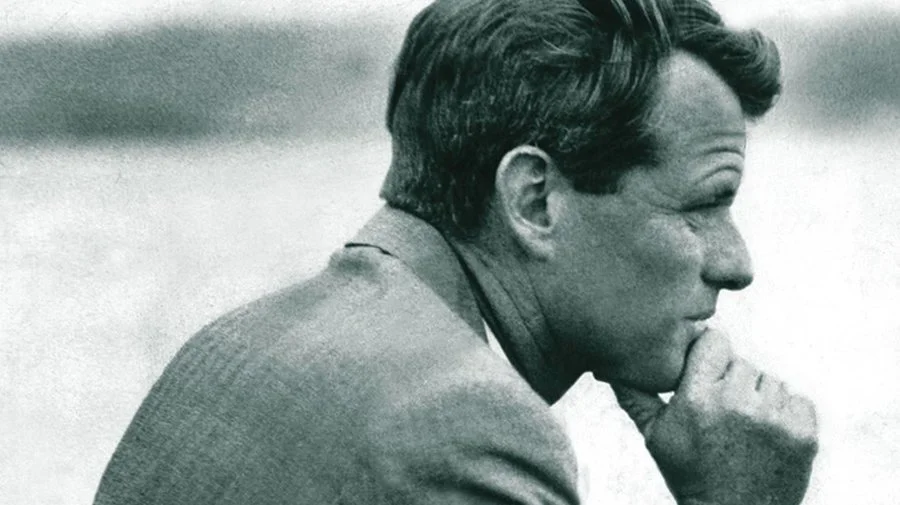
Fifty years ago this past week (March 16, 1968), Robert Kennedy announced he would be running for president in the same Senate Caucus Room his brother had made his announcement eight years earlier. We all know how it ended, but few recognized the personal transformation he went through during that brief campaign.Ironically, RFK chose an opposite path to most of today’s politicians, opting to migrate from a place of attack and negativity to one of hope, social justice and a sense of ethical responsibility. True, he had frequently been somewhat moralistic earlier in his career, but it always seemed to propel him into attack mode, especially against corruption and greed. He became his JFK’s watchdog as his attorney general in his relentless pursuit of evil.But following his brother’s tragic death something changed in him. He commented to friends that all of his negative announcements were turning people off of government and hope altogether and that if he was going to run for president himself he wanted a different message. He found his passion in a morally uplifting campaign against poverty, racism and war. In a brief 82-day contest he had reversed himself and chose to give American hopes instead of hatred. It was to become a campaign for the ages before an assassin’s bullet in a Los Angeles hotel ended it all.In a transformational period of only a few weeks, Robert Kenney reminded his listeners that ethics and moral accountability weren't just about fighting against the wrong but living and proclaiming lives of righteous hope and the elevation of all people to a better life. He who had mastered the politics of attack now donned the cloak of atonement, reminding his country that they had a rendezvous with destiny, one that sought fairness and equality instead of fear and extremism.Fifty years later we are now more aware of his weaknesses yet remain remarkably blind to his personal transformation from cynic to champion, from merely a man to a messenger for social justice. He concluded, for instance, that moral courage was more rare than courage in battle and was the essential quality for those wishing to change their world to a fairer place. He became a full example of that in is fighting against the poverty that was cheapening America and shaming it before the world, just as he did against the racism that had divided the country almost to the breaking point.Robert Kennedy gave up the easier route of going into attack mode and took to proposing a more humble and fair America. In so doing, he drew an entirely new generation of young people, tired of the same old negative political strife, into the political process. It was a muscular philosophy, one established on ethical principle as opposed to excessive politics. He believed in the ardour of religious faith over an empty kind of nihilism, of generations working together for the sake of justice, and a politics that worked for everyone and not just the elites.We can’t know how he would have worked out his vision had he obtained power, but this we do understand: in a turbulent age rife with anger and division, he reversed himself from a leader of harsh justice to one of hopeful redemption of an entire country in its reach for greatness.
“Few will have the greatness to bend history itself; but each of us can work to change a small portion of events, and in the total of all those acts will be written the history of this generation" - Robert Kennedy
That transformation of a single leader who gave hope to a generation sends a clear message to today’s political order – bash away all you want, but if you can’t build a more hopeful age, step aside and give others a crack at it. If you place your party and power over people and principle, transfer to some other line of work. It’s one thing to achieve political power and another entirely to use it to lift everyone. Robert Kennedy never lived to achieve it, but left instead a foreshadowing of politics as it could be in an angered era. It remains with us today, reminding us to pursue ethics over extremism, hope over hatred, people over power, meaning over money and inclusion over inflexibility.