
Inequality in the Fast Lane
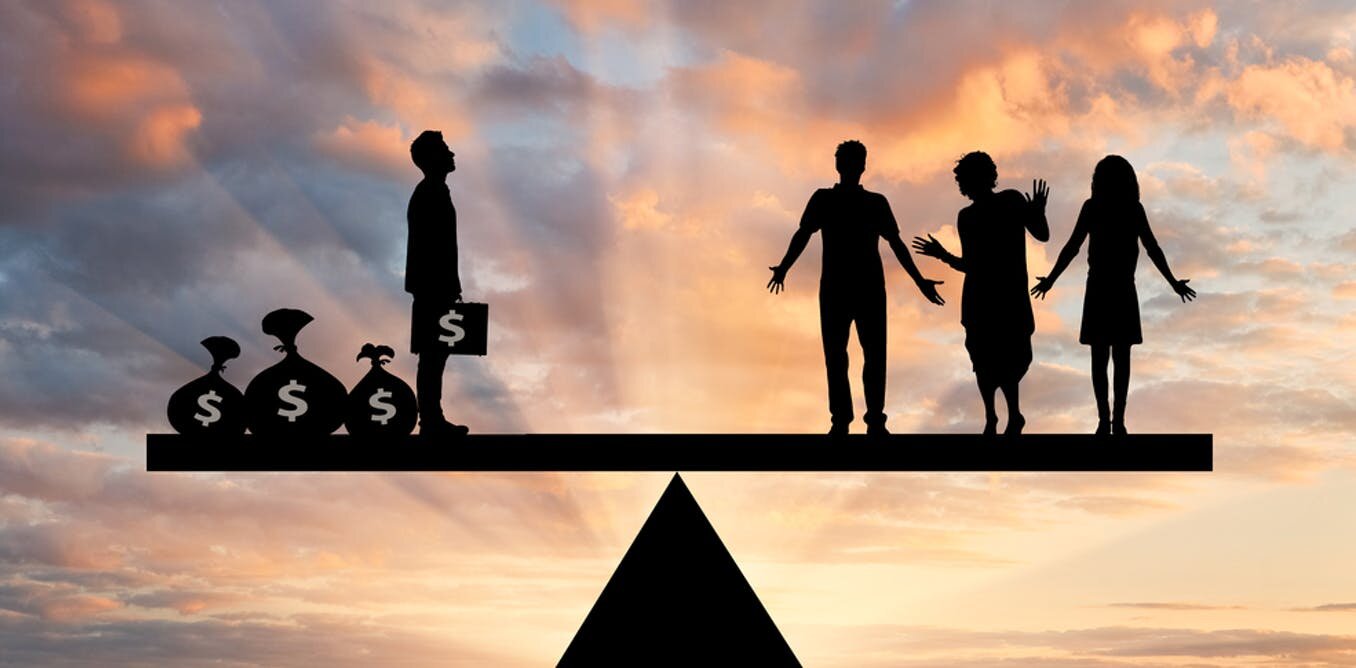
In the midst of all the election hubbub following the stunning Democratic Senate win in Alabama, one Republican congressman used the occasion to call on the Republican Party to dump Steve Bannon, one of the early architects of Trump’s presidency.Congressman Peter King is worried over where his own party is headed in recent weeks and although his speaking out against Bannon raised a lot of eyebrows, it was something he said only a couple of weeks earlier that carries much more significance. While the Republican tax cut plan was heralded by some in Washington, King was flummoxed by the nonsensical hurry to get it passed when it was, in fact, the deepest cut in corporate taxes seen in decades. “You’re rewriting a tax code for a generation, and you’re doing it in ten days,” King called out, concluding, “In 1986, it took two years to put together a tax reform bill.”Something so vast, with clear implications on future generations, should have deserved serious thought and execution, especially at a time when corporate profits are at record highs. But Washington is anything but deeply contemplative these days – everything is action and reaction, often within the 24-hour news cycle.Last week I wrote about how this new tax reform could well push the American economy into dangerous territory and the economies of many other nations along with it. One person responded to the article, claiming that the wealthy in America already paid too much in taxes and that it wasn’t fair. “Fair” is a relative term. What is fair about the 2016 Credit Suisse report estimating that there is roughly $256 trillion in total global wealth and that it's growing more unequal by the day? “While the bottom half collectively own less that 1 percent of total wealth, the wealthiest 10 percent own 89 percent of all global assets.” Ironically, the Trump/Republican tax cuts will help that 10 percent even more, and after a few more years lower-income Americans will get no benefit from the cuts.A nonpartisan group of economists that spoke out strongly against the tax cut listed 10 dangers, as outlined in New York Magazine:
- Less home ownership, with a chance of another housing market-fuelled recession
- An even more severe affordable housing crisis
- More manufacturing workers losing jobs to automation and outsourcing
- An even more beleaguered labour movement
- More Americans dying or going bankrupt for want of adequate health care
- Fewer non-rich people getting graduate degrees
- Lesser progressive governments at the state level
- Less research into rare medical problems
- More wealthy families sending their kids to elite private schools
- The extreme wealthy will gain even more control over government
Other economists have written their own lists of dangers, including the official Office of Management and Budget (OMB), but it didn’t seem to matter. As the New York Magazine concluded:
“And this, more than anything else, is why the true costs of Trump’s giveaway to the one percent can’t be measured in lost revenue alone: Vast economic inequality erodes social trust, stymies growth, and enables a tiny, oligarchic elite to exert so much influence over our politics they can get Congress to pass their preferred legislation before the public even has time to learn what it does.”
These rushed tax cuts will have their most pervasive effects on the poor, the poorly educated, women, newcomers, the precariously employed – not to mention the environment, research and democratic accountability. There’s a reason that Wall Street is in a state of jubilation these days as the Republicans, along with their president, just distributed to the elite economic order some of the greatest Christmas presents in a generation.It was a number of years ago now that indigenous artist, poet and activist John Trudell wrote: “I’m not looking to overthrow the American government, the corporate state already has.” His words were prophetic then but are in full bloom now.Only an outpouring of citizen activism can alter the destructive course the global economy is journeying down, led by America. We can be angry about it, rail against political leaders and financial barons, and scurry away from democratic engagement, but in the end the decision is ours. As Leszek Kolakowski put it: “In politics, being deceived is no excuse.” As another ethical voice put it years ago: “The opposite of justice isn’t injustice; it is silence.” We’ve all been quiet too long.